Genius | Crypto
"Genius" in Crypto feed
-
Cointelegraph.com - 09:23 Feb 12, 2026
 The American Bankers Association pressed the OCC to delay new national trust bank charters for crypto and stablecoin firms until the GENIUS Act framework is fully in place. The American Bankers Association (ABA) is urging the Office of the Comptroller of the Currency (OCC) to slow its approval of national trust bank charters for crypto and stablecoin firms until the regulatory landscape under the Guiding and Establishing National Innovation for US Stablecoins (GENIUS) Act is clearer. In a Wednesday comment letter on the OCC’s national bank chartering notice of proposed rulemaking, the trade group warned that recent and future applicants engaged in stablecoin and digital asset activities face still‑unsettled oversight from multiple federal and state regulators. The ABA said that the OCC should not advance applications where an institution’s full regulatory obligations, including under forthcoming GENIUS Act rulemakings, are not yet fully defined. Read more
 -
Cointelegraph.com - 16:37 Feb 02, 2026
 Five New York officials reportedly said Tether and Circle had been incentivized to not work with law enforcement, allowing them to profit off crimes involving stablecoins. Several New York district attorneys have reportedly warned about the US federal stablecoin law, the GENIUS Act, claiming it fails to adequately address fraud. According to a Monday CNN report, New York Attorney General Letitia James and four district attorneys signed onto a letter saying that the GENIUS Act will “provide legal cover” for stablecoin issuers to potentially participate in fraud. The letter reportedly pointed a finger at issuers Tether and Circle, claiming that the companies have profited off crimes in stablecoin markets, specifically accusing Tether of only freezing some suspicious transactions in USDt (USDT). Read more
 -
Cointelegraph.com - 16:08 Jan 14, 2026
 Banks argue that stablecoin rewards offered through exchanges exploit a GENIUS Act loophole, blurring the line between payment tokens and savings accounts. The GENIUS Act was designed to keep stablecoins as payment tools rather than savings products. As a result, it bans issuers from paying interest or yield to stablecoin holders. Community banks argue that a loophole exists because exchanges and affiliated partners can still offer rewards on stablecoin balances, even if the issuer itself does not pay yield. Smaller banks are more concerned than large banks because they rely heavily on local deposits. Any outflow of deposits could directly reduce lending to small businesses and households. Read more
 -
Cointelegraph.com - 01:53 Jan 07, 2026
The Community Bankers Council has asked the Senate for a crypto market structure bill that will ban exchanges and others offering interest on stablecoins. A group of US community bankers is pressuring Congress to change the GENIUS Act to close a supposed “loophole” that allows yield-generating stablecoins to undercut banks. The American Bankers Association’s Community Bankers Council said in a letter on Monday to the Senate that it must tighten the stablecoin regulating bill passed last year to stop stablecoin issuers from offering yield to tokenholders through third parties. “Some companies have exploited a perceived loophole allowing stablecoin issuers to indirectly fund payments to stablecoin holders through digital asset exchanges and other partners,” the group of more than 200 community bank leaders said. Read more -
Cointelegraph.com - 12:24 Dec 27, 2025
 Coinbase CEO Brian Armstrong warned that reopening the GENIUS Act would cross a “red line,” accusing banks of lobbying Congress to block stablecoin rewards and limit competition. Coinbase CEO Brian Armstrong said any attempt to reopen the GENIUS Act would cross a “red line,” accusing banks of using political pressure to block competition from stablecoins and fintech platforms. In a Sunday post on X, Armstrong said he was “impressed” banks could lobby Congress so openly without backlash, adding that Coinbase would continue pushing back on efforts to revise the law. “We won’t let anyone reopen GENIUS,” he wrote. “My prediction is the banks will actually flip and be lobbying FOR the ability to pay interest and yield on stablecoins in a few years, once they realize how big the opportunity is for them. So it’s 100% wasted effort on their part (in addition to being unethical),” Armstrong added. Read more
 -
CoinDesk - 16:03 Dec 17, 2025
The bank said bipartisan Senate talks on market structure legislation and parallel GENIUS Act rulemaking could deliver a workable U.S. crypto framework by early 2026. -
Cointelegraph.com - 18:15 Dec 16, 2025
 The Federal Deposit Insurance Corp.'s proposal outlines how banks could seek approval to issue payment stablecoins as US regulators move from legislation to rule-making. The Federal Deposit Insurance Corp. (FDIC) is moving forward with rule-making under the US GENIUS Act by proposing a framework for how regulated banks could apply to issue payment stablecoins, a key early step in implementing the law’s stablecoin provisions. In a 38-page document posted to the FDIC’s website, the agency detailed proposed approval requirements for the issuance of payment stablecoins by subsidiaries of FDIC-supervised institutions. As Bloomberg reported, the proposal is subject to a public consultation period before advancing to the next stage of the rulemaking process. Read more
 -
Cointelegraph.com - 18:41 Nov 06, 2025
 The US Treasury Department accepted comments related to the implementation of the stablecoin bill until Tuesday as part of the law’s planned rollout. Stablecoin issuer Circle has advocated for a level playing field among banks, nonbanks and stablecoin issuers as the US Treasury Department considers implementing the GENIUS Act following its signing into law in July. In comments submitted on Tuesday as part of the Treasury’s notice of proposed rulemaking for GENIUS, Circle was one of many crypto companies that weighed in on how the US government should implement the law establishing a framework for payment stablecoins. While the company reiterated many of the principles for which proponents of the bill had advocated, such as having stablecoins “fully backed with cash and high quality liquid assets,” it also urged the government to set clear requirements for enforcement and consequences for noncompliance. Read more
 -
Cointelegraph.com - 00:45 Oct 06, 2025
 Traditional banks will be battling with stablecoin issuers for retail depositors when the stablecoin-focused GENIUS Act takes full effect in a win for everyday people. The stablecoin-focused GENIUS Act, which was enacted in July, will trigger an exodus of deposits from traditional bank accounts into higher-yield stablecoins, according to the co-founder of Multicoin Capital. “The GENIUS Bill is the beginning of the end for banks’ ability to rip off their retail depositors with minimal interest,” Multicoin Capital’s co-founder and managing partner, Tushar Jain, posted to X on Saturday. “Post Genius Bill, I expect the big tech giants with mega distribution (Meta, Google, Apple, etc) to start competing with banks for retail deposits,” Jain added, arguing that they would offer better stablecoin yields with a better user experience for instant settlement and 24/7 payments over traditional banking players. Read more
 -
CryptoSlate - 19:15 Sep 19, 2025
Stablecoin builders have a narrow window to establish competitive advantages before the GENIUS Act’s full implementation, as critical regulatory details remain undetermined. According to a report by Variant Fund policy lead Salah Ghazzal, early compliance preparation could create lasting market moats while competitors wait for complete regulatory clarity. The legislation establishes clear directional requirements but […] The post Stablecoin builders rush to preempt regulatory challenges with GENIUS Act on horizon appeared first on CryptoSlate. -
CryptoSlate - 18:30 Sep 19, 2025
The U.S. Treasury Department launched a formal process to transform the newly enacted GENIUS Act into a framework of regulations for stablecoins, inviting the public and crypto industry to weigh in on key compliance issues. The department opened an advance notice of proposed rulemaking on Sept. 18, the first step in gathering feedback before drafting […] The post Treasury opens comment period to shape GENIUS Act into stablecoin regulation appeared first on CryptoSlate. -
Cointelegraph.com - 21:36 Sep 10, 2025
Sate Senator Keith Kelley of Alabama echoed concerns made by some banking groups after the passage of the GENIUS Act in July. Keith Kelley, a Republican state senator representing Alabama’s 12th district, is sounding the alarm for the potential impact of the federal stablecoin bill, the GENIUS Act, two months after it was signed into law by US President Donald Trump. In a Wednesday op-ed for 1819 News, Kelley said there was a loophole in the GENIUS Act that, if exploited, could “devastate” the economies of rural areas like many in Alabama. According to the senator, the bill would allow “cryptocurrency platforms to distribute financial rewards,” incentivizing people to withdraw funds or close accounts at small community banks in the state. Read more -
CryptoSlate - 20:30 Aug 20, 2025
Federal Reserve officials focused significantly on stablecoins during their July 29-30 meeting, analyzing potential impacts on the financial system following the passage of the GENIUS Act. In the minutes released on Aug. 20, the members of the Federal Open Market Committee (FOMC) mentioned the digital tokens multiple times. Stablecoins discussed extensively The officials mentioned “payment […] The post Fed discusses stablecoins extensively in recent FOMC meeting following GENIUS Act passage appeared first on CryptoSlate. -
Cointelegraph.com - 11:26 Aug 20, 2025
Crypto advocacy groups accuse Wall Street bankers of trying to tilt stablecoin rules in their favor, warning Congress against changes to the GENIUS Act. Two of the crypto industry’s leading advocacy bodies are pushing back against Wall Street bankers’ latest attempt to roll back the United States’ newly minted stablecoin law. In a joint letter to the Senate Banking Committee on Tuesday, the Crypto Council for Innovation (CCI) and the Blockchain Association urged lawmakers to reject recommendations from the American Bankers Association (ABA) and state banking groups. As reported, several US banking groups, led by the Bank Policy Institute (BPI), have urged Congress to tighten the GENIUS Act by closing what they call a loophole that could allow stablecoin issuers and their affiliates to pay yields indirectly. Read more -
Cointelegraph.com - 14:32 Aug 19, 2025
 The Banking Policy Institute wants lawmakers to further fine-tune the GENIUS Act to prevent any possibility of interest-bearing stablecoins. The US banking lobby isn’t keen on interest-bearing stablecoins or their supposed challenge to financial systems — but it may be too late to amend these “loopholes” in the GENIUS Act. The Banking Policy Institute (BPI), an advocacy group for the banking industry led by JPMorgan CEO Jamie Dimon, wrote a letter to Congress last week, arguing that stablecoins present a risk to existing credit systems. The BPI urged regulators to close supposed loopholes in the GENIUS Act, a new law regulating the stablecoin industry in the US, lest a shift from bank deposits increase lending costs and reduce loans to businesses. Read more
 -
Cointelegraph.com - 20:30 Aug 18, 2025
The comments, due by Oct. 17, will focus on “innovative methods to detect illicit activity involving digital assets,” as required by the GENIUS Act. The US Treasury Department has issued a call for comments related to the passage of the Guiding and Establishing National Innovation for US Stablecoins (GENIUS) Act, signed into law by President Donald Trump in July. In a Monday notice, the Treasury said “interested individuals and organizations” could provide feedback to the government department on “innovative or novel methods, techniques, or strategies to detect and mitigate illicit finance risks involving digital assets.” Treasury officials said the call for comments by Oct. 17 was part of the requirements under the GENIUS Act. In a Monday X post, Treasury Secretary Scott Bessent called the move “essential” for implementing the law to “[secure] American leadership in digital assets.” After receiving comments from the public, the Treasury will research the methods proposed and submit reports to the Senate Bank... -
Cointelegraph.com - 13:30 Aug 15, 2025
 Critics misunderstand the GENIUS Act’s actual influence. It doesn’t free Bitcoin from taxes but breaks Wall Street’s stranglehold on dollar clearing. Opinion by: Zachary Kelman No, the GENIUS Act doesn’t remove all government control over money. It doesn’t make Bitcoin tax-free. It doesn’t “legalize” decentralized finance (DeFi). And no — it’s not a Trojan horse for a Mark-of-the-Beast-style CBDC, especially with the anti-CBDC provisions passed alongside it. What the GENIUS Act does — and what we should cheer — is break the stranglehold that a handful of powerful banks and regulators have maintained over global dollar clearing for decades. It ends their monopoly on who gets access to clean dollars — and makes their quiet mandate to monitor how that money is used, and whether it aligns with political agendas in Washington or on Wall Street, far more difficult — perhaps even out of reach. Read more
 -
Cointelegraph.com - 20:18 Aug 11, 2025
 The US GENIUS Act may boost stablecoin adoption, but its ban on yield-bearing stablecoins could drive trillions into tokenized real-world assets. The landmark US GENIUS Act could serve as a major catalyst for stablecoin adoption both domestically and abroad. But rather than simply boosting demand for dollar-backed digital currencies, it may unintentionally push capital into the tokenization market as investors seek yield on their holdings. That was one of the key takeaways from a recent interview with Will Beeson, a former Standard Chartered executive and now founder and CEO of Uniform Labs, a developer of institutional liquidity solutions for tokenized financial markets. A central provision of the GENIUS Act is its blanket ban on yield-bearing stablecoins, which prevents holders from earning interest on their digital dollar balances. According to Beeson, this restriction will accelerate the flow of capital into tokenized real-world assets (RWAs). Read more
 -
CryptoSlate - 17:04 Aug 05, 2025
The total on-chain stablecoin transaction volume surged to a new all-time high of $1.5 trillion in July, marking a significant milestone in the sector. According to Sentora’s (formerly IntoTheBlock) data, this figure represents a sharp increase from the $1.26 trillion processed in June and surpasses the previous high seen in August 2024, when volumes topped […] The post US GENIUS Act sparks stablecoin boom with record $1.5 trillion transaction volume in July appeared first on CryptoSlate. -
Cointelegraph.com - 21:00 Aug 04, 2025
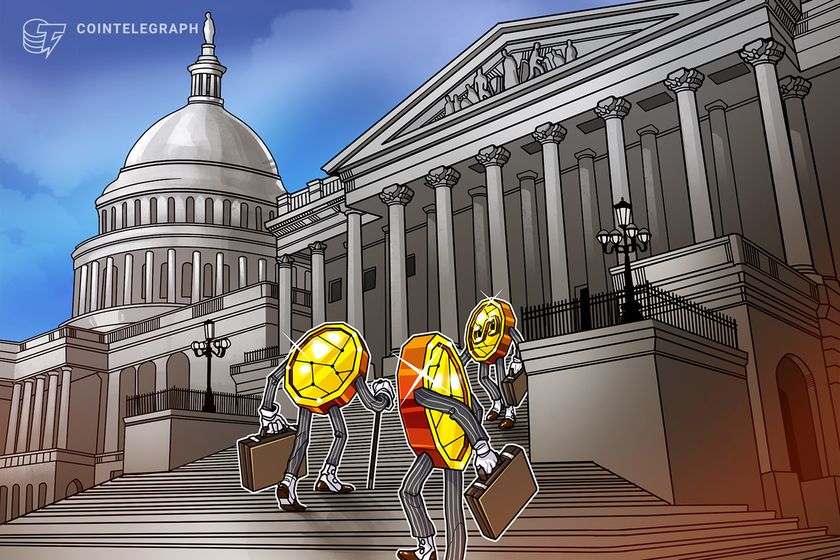 The GENIUS Act’s ban on yield could dampen the appeal of digital dollars, particularly as tokenization efforts in traditional finance gain momentum. The recent passage of the US GENIUS Act was widely celebrated as a major step forward for stablecoin adoption, but a key provision may curb the appeal of digital dollars compared to money market funds, raising questions about whether the bill’s authors were swayed by banking industry pressure to restrict yield-bearing stablecoins. The GENIUS Act expressly bans issuers from offering yield-bearing stablecoins, effectively preventing both retail and institutional investors from earning interest on their digital dollar holdings. Because of this, Temujin Louie, CEO of crosschain interoperability protocol Wanchain, cautioned against viewing the legislation as an unqualified win for the industry. Read more