House | Crypto
"House" in Crypto feed
-
Cointelegraph.com - 14:04 Mar 04, 2026
 Lawmakers asked if stablecoins could drain bank deposits and threaten financial stability, while Coinbase and Innovate Finance warned that strict regulation risks driving innovation offshore. The United Kingdom House of Lords grilled Coinbase’s top international policy executive on Wednesday over whether stablecoins would drain bank deposits and add new risks to the UK financial system, pressing him on everything from Silicon Valley Bank‑style runs to illicit finance and Know Your Customer (KYC) rules. During the Lords’ stablecoins inquiry, Tom Duff Gordon, Coinbase’s vice president for international policy, insisted that fully reserved, regulated stablecoins were “safer than uninsured bank deposits” because they are backed one‑to‑one by cash and high‑quality government securities and can be redeemed at par. He argued that stablecoins could materially reduce payment costs, speed up cross‑border payments, and underpin new artificial intelligence driven “agentic” payment flows. Read more
 -
Cointelegraph.com - 17:22 Nov 11, 2025
 Some agencies, such as the SEC, are expected to reopen the day after a funding bill becomes law, more than 40 days after reducing their operations and staff. The US government is moving closer to reopening after more than 40 days of being shut down, following several Democratic lawmakers in the Senate siding with Republicans to pass a funding bill. On Monday, the US Senate held a late-night vote for a bill “continuing appropriations and extensions for fiscal year 2026,” which passed 60 to 40 in the chamber. The bill is expected to fund the government through Jan. 31, 2026, provided it passes in the House of Representatives and is signed into law by President Donald Trump. As Tuesday is a US federal holiday, the House is not expected to reconvene to vote on the bill until Wednesday at the earliest. Prediction platform Polymarket has already adjusted its expectation that the US government will return to normal operations on Friday, likely following the passage of the House bill. Read more
 -
Decrypt - 12:00 Oct 13, 2025
Marco Margiotta, CEO of House of Doge, the corporate arm of the Dogecoin Foundation, discusses the company’s Nasdaq debut with Decrypt Senior Writer Sander Lutz. -
CryptoSlate - 21:32 Sep 22, 2025
Nine House Financial Services Committee members sent a letter to SEC Chairman Paul Atkins on Sept. 22, urging swift implementation of President Donald Trump’s Aug. 7 executive order enabling cryptocurrency investments in 401(k) retirement plans. The bipartisan coalition expressed support for expanding access to alternative assets to help 90 million Americans secure dignified retirement outcomes. […] The post House lawmakers urge SEC to implement Trump’s crypto 401k executive order appeared first on CryptoSlate. -
Cointelegraph.com - 21:31 Sep 16, 2025
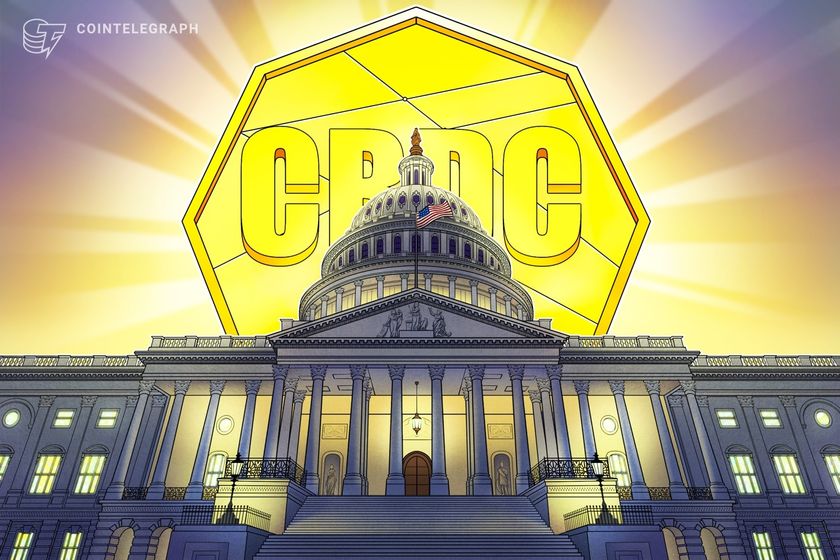 The House Rules Committee could add the CBDC bill to the final version of the market structure bill, but may not impact the Senate's own version of the legislation. The US House of Representatives may have a shorter legislative path to bar the Federal Reserve from issuing a central bank digital currency (CBDC) by using a market structure bill it passed in July. In a Monday hearing of the House Rules Committee, a draft agenda showed a proposal to add the text of the Anti-CBDC Surveillance State Act — also passed by the chamber in July, albeit by a narrow margin — to the Digital Asset Market Clarity Act. The engrossment method would add the CBDC bill to the final version of the existing market structure bill sent to the Senate for consideration. Read more
 -
CryptoSlate - 00:00 Jul 24, 2025
The House is considering a proposal that would require the Department of Veterans Affairs to examine how distributed ledger technology, such as blockchain, can enhance the agency’s claims systems. The “Veterans Affairs Distributed Ledger Innovation Act of 2025” (H.R. 3455), introduced May 15 by Rep. Nancy Mace, passed its first checkpoint with a June 11 […] The post Legislation on a blockchain pilot for Veteran Affairs claims awaits House floor vote appeared first on CryptoSlate. -
Cointelegraph.com - 19:36 Jul 17, 2025
 The three bills on Republicans’ crypto agenda passed with bipartisan support despite continued pushback from Democrats over claims of corruption and conflicts of interest. After delays in Congress over Republican concerns with central bank digital currencies (CBDCs), the US House of Representatives has passed three pieces of crypto legislation. In a Thursday House session, lawmakers voted 294-134 to pass the Digital Asset Market Clarity (CLARITY) Act, a bill aimed at establishing a market structure for cryptocurrencies, 308-122 in favor of the Guiding and Establishing National Innovation for US Stablecoins (GENIUS) Act, and 219-210 for the Anti-CBDC Surveillance State Act. Almost 80 Democrats voted yes for the CLARITY Act and more than 100 for the GENIUS Act, with the bills having been expected to move through the chamber before Congress breaks for its August recess. Read more
 -
Cointelegraph.com - 17:33 Jul 16, 2025
 Though the House of Representatives may soon be able to consider the three bills, President Donald Trump didn’t get all Republicans to fall in line to support the legislation. The US House of Representatives has cleared the way for three Republican-led crypto bills to be considered in the chamber after a failed vote on Tuesday. In a Wednesday floor vote in the House, lawmakers voted 215-211 in favor of a resolution to reconsider a package with bills to regulate payment stablecoins, establish crypto market structure and restrict the development of a US central bank digital currency (CBDC). The passage could lead to amendments to the bills and votes on the legislation itself soon as part of Republicans’ plans to pass them before Congress breaks for an August recess. Read more
 -
CryptoSlate - 17:11 Jul 16, 2025
The House approved on July 16 a motion to reconsider the crypto‑related proposals package combining the GENIUS Act, the CLARITY Act, and the Anti‑CBDC Surveillance Act in a 215-211 vote. Alex Thorn, head of research at Galaxy Digital, said on X that analysts expect a vote on the GENIUS Act today. Because the House agreed […] The post House passes motion to reconsider crypto package containing the GENIUS Act appeared first on CryptoSlate. -
CryptoSlate - 20:00 Jul 15, 2025
President Donald Trump urged House Republicans on July 15 to support a procedural motion that would advance three crypto bills during the chamber’s “Crypto Week,” but lawmakers resisted the bill in today’s voting session. Trump wrote on Truth Social that “all Republicans should vote yes,” arguing that the GENIUS Act will keep the US “lightyears ahead” of China and Europe […] The post House rejects crypto rule package despite Trump’s call, push for second vote later today appeared first on CryptoSlate. -
CryptoSlate - 13:31 Jul 05, 2025
The U.S. House of Representatives has designated the week starting July 14 as “Crypto Week,” as lawmakers consider three landmark bills: the CLARITY Act, the Anti-CBDC Surveillance State Act, and the Senate’s GENIUS Act, in a comprehensive push to establish the United States as a global leader in digital assets. Prominent crypto trader and influencer […] The post U.S. House of Representatives declares July 14th “Crypto Week” appeared first on CryptoSlate. -
Cointelegraph.com - 16:48 Jul 01, 2025
 Protect Progress, an affiliate of the cryptocurrency-backed Fairshake PAC, spent more than $1 million on media buys to support Democratic candidate James Walkinshaw. James Walkinshaw, a Democratic candidate seeking to replace the late Representative Gerry Connolly for Virginia’s 11th Congressional District, won a party primary after a cryptocurrency-backed political action committee (PAC) spent more than $1 million to support his race. On Saturday, Democrats in Virginia’s 11th district held a firehouse primary to decide on a possible replacement for Connolly after his death while in office. A special election to determine who will represent the district will be held on Sept. 9. Walkinshaw beat out other candidates to become the Democratic nominee for the House seat, and the cryptocurrency industry may have played a role in his success, given reports of media buys by the Protect Progress PAC. According to Federal Election Commission filings, the committee spent more than $1 million to support Walkinshaw in Jun...
 -
CryptoSlate - 18:09 Jun 26, 2025
The House passed HB 1664 on June 26, which designates the Secretary of Commerce as the President’s principal advisor on matters involving distributed-ledger technology The measure, introduced by Rep. Kat Cammack and co-sponsored by Rep. Darren Soto, passed by voice vote under suspension of the rules on June 26, according to the chamber’s floor summary. […] The post House clears HB 1664, setting Commerce Department as lead federal blockchain coordinator appeared first on CryptoSlate. -
CoinDesk - 16:53 Jun 10, 2025
The market structure bill got an overhaul in two House committees at the same time while the Senate's stablecoin bill is steaming toward a finish. -
Cryptonews.com - 15:12 Jun 07, 2025
Netflix’s latest reality venture, House of Streams, is set to debut on June 18 in the UK and Ireland, offering 1 Bitcoin to the winning contestant. The post Netflix’s ‘House of Streams’ to Award 1 Bitcoin to Winning Streamer appeared first on Cryptonews. -
Cointelegraph.com - 19:57 May 23, 2025
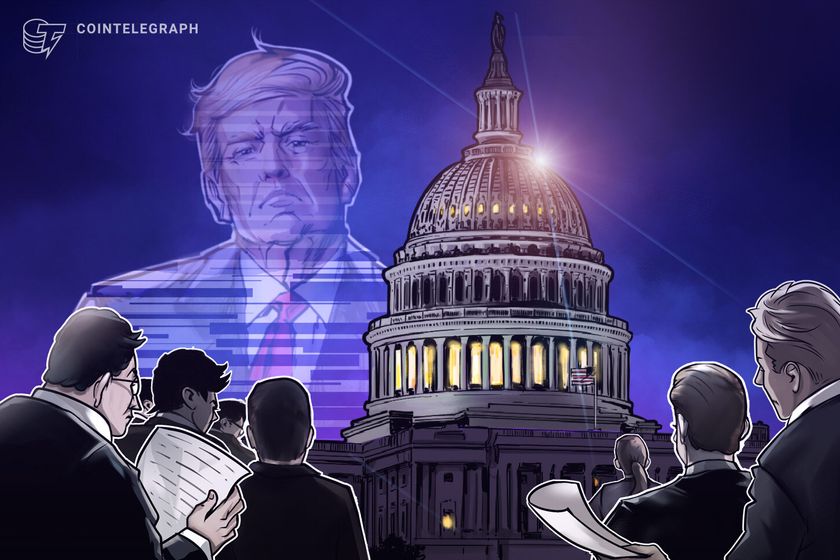 More than 30 members of the US Congress signed onto a letter alleging that Donald Trump could have violated the Constitution by inviting his memecoin investors to a private dinner. Members of the US House of Representatives called for the Justice Department to investigate Donald Trump’s May 22 dinner for his top memecoin investors, citing concerns about “foreign influence over US policy decisions” and “potential corruption and emoluments clause violations.” In a May 22 letter to the Justice Department, 35 House members asked the public integrity section acting chief, Edward Sullivan, to launch an inquiry over the memecoin dinner to determine whether it violated the federal bribery statute or the foreign emoluments clause of the US Constitution. Under the emoluments clause, a US president is barred from accepting any gift from a foreign state without the approval of Congress. Bloomberg reported that a majority of the attendees at the memecoin dinner were likely foreign nationals based on their connections to ...
 -
CryptoSlate - 21:15 May 21, 2025
US lawmakers advanced two blockchain-related legislative efforts on May 21, approving the GENIUS Act for debate and reintroducing the Blockchain Regulatory Certainty Act in the House. Lawmakers voted 69–31 to approve a motion to proceed on the Government and Enterprise Need for Innovation in the United States Act, or GENIUS Act, allowing formal debate and […] The post GENIUS Act clears Senate motion, House lawmakers reintroduce Blockchain Certainty Act appeared first on CryptoSlate. -
Decrypt - 16:35 Apr 30, 2025
BTC stable, BlackRock to Tokenise huge Fund, HOUSE hits $100M FOMO HOUR EP347 BTC stable, dominance rises towards 65%. Blackrock may tokenise $150bn money market fund. Senate could vote on Stablecoin legislation soon. BTC to hit $1m by 2028: Hayes. CBOE launches BTC index futures. BTC data storage debate grows. BTC whale loses $330m in hack. OFAC sanctions on Tornado cash ruled illegal. SEC extends rule review for DOGE ETF, XRP fund. SEC drops investigation into Paypal stablecoin. Libre to launch tokenised bonds on TON. UK plans regulatory framework for crypto assets. Bunq collabs with Kraken to launch trading services. FOMO HOUR brings you the biggest daily news, updates and events from inside and outside of the crypto and macro spheres! Join hosts Farokh, Mando and Tyler as they cover some of the biggest topics at present with some of the biggest names in the ecosystem. Streaming live 5 days per week, Monday to Friday 10:00 AM EST to 11:00 AM EST on YouTube and X. JOIN YEET = https://yeet.com/register?aff=f...