Monero | Crypto
"Monero" in Crypto feed
-
Cointelegraph.com - 10:33 Feb 17, 2026
 TRM Labs says Monero usage remains above pre-2022 levels as darknet markets shift toward XMR, while unusual node behavior may offer investigators network-level clues. Monero activity has remained steady even as major cryptocurrency exchanges have pushed the privacy coin off their platforms, according to new research by TRM Labs. Data shows transaction usage in 2024 and 2025 stayed above levels seen before 2022, suggesting demand did not fade even after many big trading platforms removed or restricted the token over traceability concerns, TRM Labs said. In 2024, major exchanges, including Binance and Kraken, moved to delist or phase out Monero (XMR) over compliance concerns. Pressure increased this year when Dubai’s financial regulator banned privacy coins like Monero and Zcash (ZEC) on licensed platforms in the Dubai International Financial Centre (DIFC). Read more
 -
CryptoSlate - 15:40 Feb 06, 2026
XMR dropped to $311 and ZEC to $221 over seven days while ZANO declined just 1.4% as Fear & Greed hit 9. Key Notes Monero fell 28.9% and Zcash dropped 33.4% over the past week while ZANO declined just 1.4% Fear & Greed Index fell to 9 on Feb. 6, classified as extreme fear, down […] The post Monero and Zcash Fall Over 28% in Past Week, but Privacy Peer ZANO Holds Steady appeared first on CryptoSlate. -
Cointelegraph.com - 17:02 Feb 04, 2026
 Dubai’s ban on privacy coins highlights how regulators are prioritizing transparency over anonymity in institutional crypto and regulated exchanges. Dubai does not criminalize privacy coins yet has ordered them to be removed from regulated financial channels. This means licensed firms in the DIFC can no longer trade, promote or package them into investment products. From a compliance perspective, privacy-by-default features conflict with AML and sanctions frameworks that require transaction visibility, making certain tokens structurally incompatible with regulated intermediaries. The policy reflects a broader global trend, as regulators in Europe, the US and parts of Asia are also restricting privacy-focused assets on licensed crypto platforms and within financial institutions. Read more
 -
Cointelegraph.com - 14:10 Jan 13, 2026
 Tightening KYC regulations and growing scrutiny on the digital economy are triggering more investor demand for privacy-preserving digital assets like Monero. Privacy-preserving cryptocurrency Monero surged to a new all-time high on Tuesday as tightening digital asset regulations contribute to heightened investor demand for privacy coins. Monero (XMR) rose to a new all-time high above $687 on Tuesday, up around 14% rise over the past 24 hours, according to TradingView data. Monero has gained roughly 45% in the past week, becoming the 12th largest crypto by market cap as the total market capitalization of privacy-focused coins rose by 3.5%, and trading volume soared 32%, CoinMarketCap data shows. Read more
 -
CryptoPotato - 09:48 Jan 13, 2026
While Zcash once led attention, interest has rotated back to Monero as privacy becomes strategically valuable. -
Cointelegraph.com - 15:57 Jan 11, 2026
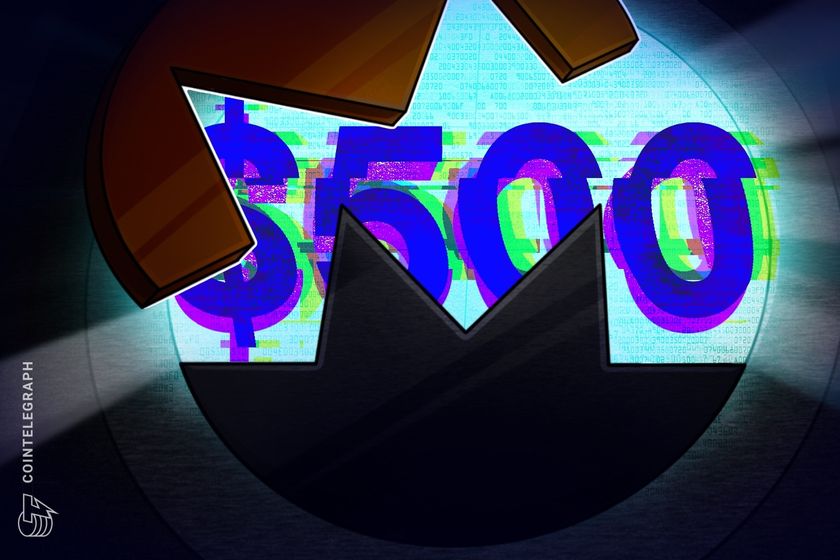 History shows XMR has repeatedly failed near record highs, risking another sharp pullback unless it decisively breaks above $500–$520. Key takeaways: Monero jumped above $500 as traders favored it over Zcash amid governance turmoil. History suggests XMR risks a sharp pullback unless it firmly breaks above $500–$520. Read more
 -
Decrypt - 12:25 Dec 02, 2025
Privacy coins like ZCash and Monero dropped as analysts say the "safe haven" narrative has broken, tying their fate to Bitcoin's cycles. -
Decrypt - 14:42 Nov 28, 2025
Monero surged 23% this week on futures speculation while Zcash fell equally, reflecting leverage and timing within the privacy narrative. -
CryptoSlate - 15:00 Nov 04, 2025
For nearly a decade, the rivalry between Zcash (ZEC) and Monero (XMR) defined the crypto privacy movement. The two digital assets promised what Bitcoin couldn’t: true transactional anonymity, but they took very different paths to achieve it. Monero made privacy mandatory, encrypting every transaction by default. Zcash made it optional, allowing users to choose between […] The post How Zcash reclaimed the privacy crown from Monero appeared first on CryptoSlate. -
Cointelegraph.com - 11:43 Oct 31, 2025
 Zcash defied the crypto market downturn with a 45% rally this week, making it the most valuable privacy-focused cryptocurrency, following Hayes’ call for a $10,000 price target. Some of the leading privacy coins are defying the gravity of the digital asset market, signaling growing investor demand for privacy-focused cryptocurrencies. Zcash (ZEC) surged to an over eight-year high of $388 on Friday after rising 7.6% in the last 24 hours, according to data aggregator CoinMarketCap. With a $6.2 billion market capitalization at the time of writing, ZEC flipped Monero (XMR) to become the most valuable privacy-focused cryptocurrency. ZEC’s 45% weekly rise bucked the broader crypto market downturn, which continued its consolidation after a much-awaited tariff deal between the US and China failed to materialize on Thursday. Read more
 -
Decrypt - 12:05 Sep 05, 2025
Qubic attempted a 51% attack on Monero while training its AI model AIGarth. It's now posting on social media—and the public isn’t impressed. -
Cointelegraph.com - 18:20 Aug 20, 2025
 Several solutions have been proposed to bolster Monero’s proof-of-work consensus mechanism to prevent 51% attacks on the network. The Monero community is exploring a potential overhaul of its proof-of-work (PoW) consensus mechanism to make the network resistant to 51% attacks. Community members suggested several proposals, including localizing mining hardware, switching to a merge mining algorithm, allowing XMR to be mined alongside Bitcoin (BTC) or other major cryptocurrencies, and adopting Dash’s ChainLocks solution. Dash’s ChainLocks uses “randomly selected masternodes” to reach a quorum on the first valid block broadcast by the network, locking the blockchain ledger into place and appending the chain only with blocks verified through the ChainLock system. This would function on top of the existing PoW Consensus. Read more
 -
Cointelegraph.com - 21:48 Aug 17, 2025
 The community for Qubic, an AI-focused blockchain project, voted to target the Dogecoin network over Zcash and Kaspa by a wide margin. The community for Qubic, the AI-focused blockchain project that executed a 51% attack on Monero this week and gained majority control of the network’s computing power, has voted to target Dogecoin (DOGE) next. Sergey Ivancheglo, the founder of the Qubic network, asked the Qubic community which application-specific integrated circuit (ASIC)-enabled, proof-of-work blockchain the group should target with its next 51% attack, including DOGE, Kaspa (KAS), and Zcash (ZEC). “The Qubic community has chosen Dogecoin,” Ivancheglo, who goes by the online handle Come-from-Beyond, wrote in a Sunday X post announcing the results of the vote. Read more
 -
Cointelegraph.com - 23:13 Aug 16, 2025
 Withdrawals and trading for Monero (XMR) on the Kraken exchange remain open, and deposits will resume once it is safe, the exchange said. Crypto exchange Kraken has temporarily paused Monero (XMR) deposits due to the ongoing 51% attack against the privacy-focused blockchain, which has compromised the security of the network. A 51% attack occurs when one mining pool controls more than 50% of a blockchain network’s total hashing power, giving it the ability to double-spend and reorder transactions on the ledger. The Kraken exchange wrote on Friday: Qubic, a layer-1 AI-focused blockchain and mining pool, claimed it controlled the majority of Monero’s hashrate on Monday and reorganized six blocks, prompting denials of the attack from the Monero community. Read more
 -
CryptoSlate - 20:19 Aug 16, 2025
Crypto exchange Kraken has announced the suspension of Monero (XMR) deposits following a confirmed 51% attack on the network on August 12. The attack was linked to the Qubic mining pool, which managed to control over half of Monero’s hashrate, peaking at 2.6GH/s. This dominance allowed Qubic to conduct a six-block deep reorganization of Monero’s […] The post Kraken suspends Monero deposits after 51% attack appeared first on CryptoSlate. -
Decrypt - 22:13 Aug 12, 2025
Monero is facing a purported 51% attack from an AI protocol called Qubic, which is claiming success—but experts aren’t convinced. -
CoinDesk - 16:05 Aug 12, 2025
Qubic says it has achieved hashrate dominance over Monero, sparking concerns over the future of the network's decentralization. -
Cointelegraph.com - 12:19 Aug 12, 2025
 Qubic claims it has achieved 51% control of Monero’s hashrate, prompting debate over whether the resulting six-block reorganization was a successful attack. Update (Aug. 12, 2025, at 1:30 pm UTC): This article has been updated to add a Qubic announcement. Layer-1 blockchain Qubic said it has “completed its attempt to dominate the Monero network,” claiming a month-long push culminated Monday with 51% control of Monero’s hashrate. According to a Monday blog post, the “month-long, high-stakes technical confrontation” concluded with Qubic reaching 51% of Monero’s hashrate. The effort coincided with a six-block-deep chain reorganization that discarded 60 previously valid blocks, according to the Monero Consensus Status dashboard. Read more
 -
CryptoSlate - 12:07 Aug 12, 2025
The privacy-focused Monero blockchain has suffered a 51% attack, meaning the network is not controlled by a single entity. XMR dropped just shy of 9% after developers flagged the event. On Aug. 12, Sergey Ivancheglo, known in the crypto community as “Come-from-Beyond” (CFB), claimed on X that Qubic had surpassed 51% of Monero’s network hash […] The post Monero hit by critical 51% attack as Qubic gains control of network appeared first on CryptoSlate. -
Cointelegraph.com - 12:26 Aug 04, 2025
 The Qubic mining pool, which is attempting a 51% takeover of Monero, is allegedly being hit by a distributed denial-of-service attack linked to the Monero community. Update (Aug. 4, 2025, at 1:50 pm UTC): This article has been updated to add commentary by XMRig developer Sergei Chernykh. A mining pool behind an attempted 51% takeover of Monero is reportedly under a distributed denial-of-service (DDoS) attack, disrupting the effectiveness of its attempt. In a Sunday X post, Sergey Ivancheglo, who claims responsibility for the takeover attempt, said the Qubic mining pool he controls is under a DDoS attack. He added that the attack resulted in the mining pool’s hashrate falling from 2.6 gigahashes per second down to 0.8 GH/s. Read more