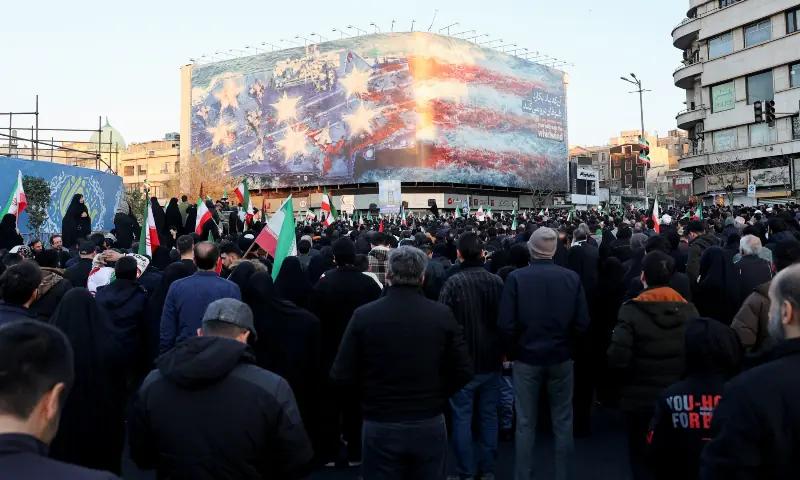
The assassination of Ayatollah Ali Khamenei, Iran’s Supreme Leader and Marjai Taqleed for millions of Shia Muslims, in coordinated US-Israeli airstrikes marks a turning point not only for the Islamic Republic of Iran but for the wider West Asian region. His assassination removes a figure who for more than three decades stood at the apex of Iran’s political, military and religious order. Yet those expecting the immediate collapse of the Iranian system may be misreading both its structure and its history. Ayatollah Khamenei was not merely a head of state. As Supreme Leader, he exercised ultimate authority over foreign policy, the armed forces and the direction of the revolution. As Marjai Taqleed, a source of emulation in Shia jurisprudence, he embodied religious legitimacy that extended beyond Iran’s borders. His passing, therefore, creates a vacuum that is institutional as much as personal. Under Iran’s constitution, an interim council comprising President Masoud Pezeshkian, the judiciary chief, and a cleric ...