China | Crypto
"China" in Crypto feed
-
Cointelegraph.com - 13:58 Oct 22, 2025
 DeepSeek was the only AI model to generate a positive return on Wednesday, despite having the smallest development budget among its peers. Chinese artificial intelligence models are outperforming their United States counterparts in cryptocurrency trading, according to data from blockchain analytics platform CoinGlass, as competition between leading generative AI chatbots intensifies. AI chatbots DeepSeek and Qwen3 Max, both developed in China, led the ongoing crypto trading experiment on Wednesday, with the former being the only AI model to generate a positive unrealized return of 9.1%. Qwen3, an AI model developed by Alibaba Cloud, came in second with a 0.5% unrealized loss, followed by Grok with a 1.24% unrealized loss, according to blockchain data platform CoinGlass. Read more
 -
Cryptonews.com - 22:30 Oct 21, 2025
DeepSeek predicts renewed upside for XRP, Cardano and Ethereum after a sharp pullback tied to tariff headlines and pre-FOMC caution. The AI firm has mapped ranges including $15,000 for ETH, $7–$10 for ADA by late 2025, and $5–$10 for XRP, citing seasonality and improving regulatory conditions. The post China’s DeepSeek AI Predicts the Price of Ethereum, Cardano, Ripple by the End of 2025 appeared first on Cryptonews. -
Cointelegraph.com - 22:00 Oct 19, 2025
 Bitcoin and other hard money assets are the only way to fix the economic problems caused by currency debasement, analyst Luke Gromen said. The US dollar’s hegemony is over, as evidenced by China’s recent announcement of export controls on rare earth minerals, a critical component in electronics manufacturing and military defense applications, according to analyst Luke Gromen. China’s rare earth mineral export controls prohibit the sale of the critical minerals to the US military industrial complex, which backs the value of the dollar through military force, Gromen told Marty Bent, founder of Truth For the Commoner (TFTC), on Sunday. The export controls prompted US President Donald Trump to announce additional 100% tariffs on China, and revealed that China “has a lot more leverage than a lot of the Western commentators are admitting,” Gromen said. He added: Read more
 -
CryptoSlate - 20:00 Oct 18, 2025
Bitcoin is once again caught in the crossfire of a high-stakes geopolitical standoff. This time, the knock-on effects are being felt across every corner of the crypto market. The script is familiar: The return of U.S.–China trade tensions has triggered a sharp correction in Bitcoin, echoing a pattern seen earlier this year. When escalating tariffs […] The post Trade wars and Bitcoin blues: déjà vu as U.S.–China tensions weigh on crypto appeared first on CryptoSlate. -
Cryptonews.com - 22:30 Oct 17, 2025
DeepSeek AI Predicts strong scenarios for XRP, Cardano, and Pepe amid a market that has surged to a Bitcoin ATH and then pulled back on tariff news ahead of the FOMC. Projections include XRP $3–$10 by year-end, ADA $5–$8 by late 2025, and Pepe $0.00001–$0.00003 on an ATH retest. The post China’s DeepSeek AI Predicts the Price of XRP, Cardano, PEPE by the End of 2025 appeared first on Cryptonews. -
CryptoSlate - 15:45 Oct 16, 2025
CMB International Asset Management tokenized the CMB International USD Money Market Fund on BNB Chain through the CMBMINT and CMBIMINT tokens on Oct. 15. The fund manages over $3.8 billion and ranked first among Asia-Pacific money market peers in Bloomberg’s performance rankings as of October 2025. Launched in 2024, the fund invests at least 70% […] The post $3.8B fund tokenized on BNB marks China’s boldest RWA move yet appeared first on CryptoSlate. -
Cointelegraph.com - 22:17 Oct 15, 2025
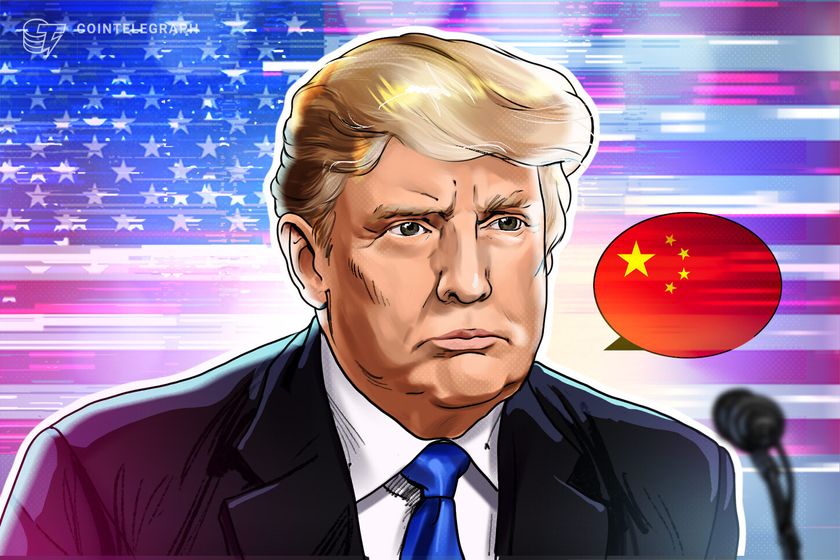 Asked by reporters whether the US is preparing for a trade war with China, US President Donald Trump responded: “Well, we’re in one now.” Update Oct 15, 10:55pm: This article has been updated to include comments from US Treasury Secretary Scott Bessent and the impact of tariffs on the Bitcoin mining industry. US President Donald Trump has confirmed the US is in an active trade war with China after threatening a 100% tariff on all Chinese imports last week. “Well, we’re in one now,” Trump said after being asked by White House reporters whether the US is preparing for a “sustained trade war with China.” ”If we didn’t have tariffs, we would be exposed as being a nothing, we would have no defense,” Trump explained, calling the tariffs an important measure for America’s national security. Read more
 -
CryptoSlate - 15:00 Oct 13, 2025
Crypto-based funds attracted $3.17 billion in new capital, even as markets reeled from tariff-related tensions between the United States and China, according to CoinShares weekly report. On Oct. 10, President Donald Trump announced that the US could raise tariffs in response to China’s new rare-earth export restrictions. The statement triggered a broad sell-off across risk […] The post Trump’s tariff on China spurs record $10 billion volume for Bitcoin funds appeared first on CryptoSlate. -
Cointelegraph.com - 19:56 Oct 12, 2025
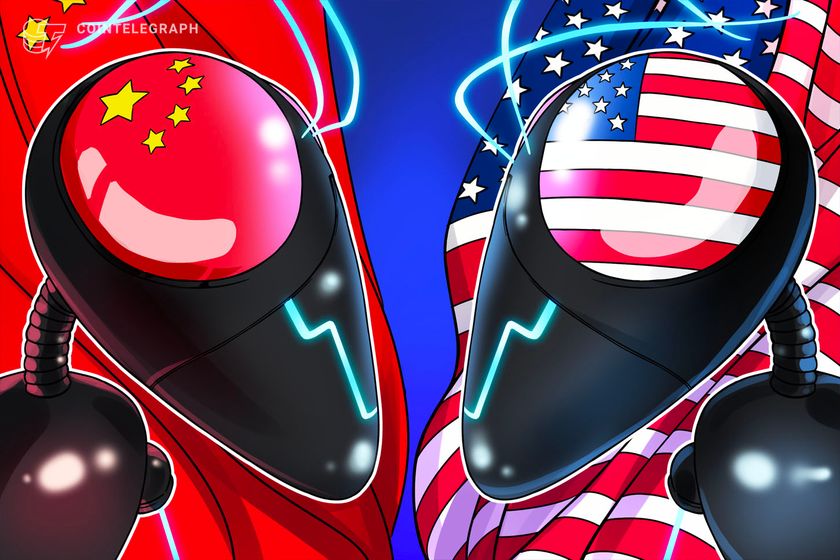 Tensions between the two countries appear to have cooled off on Sunday, as representatives from both sides signal a willingness to negotiate. Trade tensions between the US and China appear to be softening, as representatives from both governments issued statements on Sunday that signaled a willingness to resume trade negotiations, giving analysts hope of a market rebound. In a translated statement, China’s Ministry of Commerce said it is “ready to strengthen dialogue” with other countries on trade and the recently announced rare earth mineral export controls that inflamed trade tensions between the US and China. The spokespeople also said China would “actively consider” provisions in the rare earth export policy to facilitate trade and strengthen supply chains, including “license exemptions.” US President Trump issued this statement on the same day: Read more
 -
CoinDesk - 10:10 Oct 12, 2025
China’s commerce ministry says its Oct. 9 rare-earth export controls are lawful security steps, not bans, and that eligible civilian exports will be licensed. -
Cryptonews.com - 22:30 Oct 10, 2025
DeepSeek AI Predicts XRP, Shiba Inu, and Dogecoin could set new all-time highs before year-end, citing Uptober seasonality, U.S. regulatory progress, and bullish structures, with XRP’s path to $10, SHIB’s potential 8× range, and DOGE support from payments adoption and liquidity. The post China’s DeepSeek AI Predicts the Price of XRP, Shiba Inu and Dogecoin by the End of 2025 appeared first on Cryptonews. -
CryptoSlate - 21:55 Oct 10, 2025
Bitcoin (BTC) dropped 7% amid a broader market rout after President Donald Trump announced that the US is considering escalating tariffs against China in response to newly imposed rare-earth export controls. Total liquidations reached $9 billion over the past 24 hours, as BTC fell to as low as $105k in the drop. On a lengthy statement on […] The post Trump tariff threat against China causes Bitcoin to crash 7%, $9B in liquidations appeared first on CryptoSlate. -
Cointelegraph.com - 21:36 Oct 10, 2025
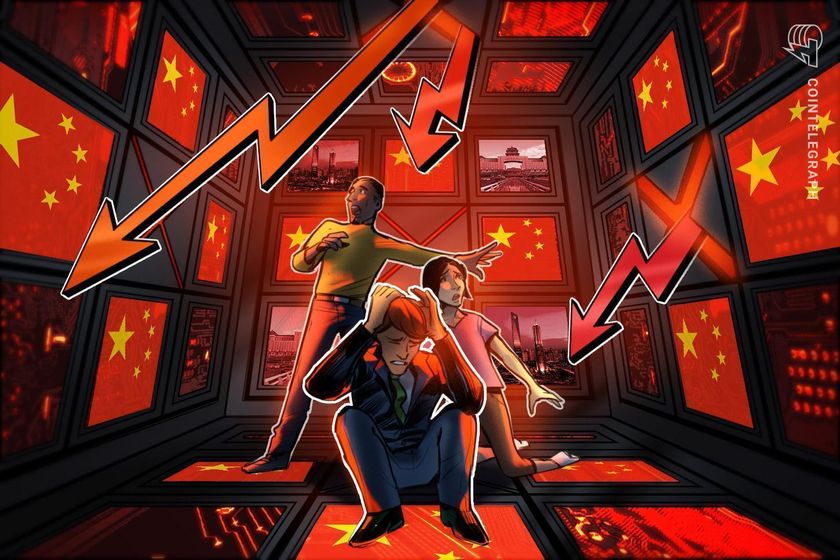 Bitcoin plunged to $102,000 in the Binance perpetual futures pair after Trump announced sweeping tariffs on China on Friday, reigniting fears of a broader trade and market sell-off. US President Donald Trump announced a 100% tariff on China on Friday, sending the price of Bitcoin (BTC) reeling below $110,000 at the time of writing. Trump said the tariffs were in response to China attempting to place export restrictions on rare earth minerals, which are crucial for creating computer chips. Trump wrote on Truth Social: Trump’s first tariff announcements in April sent shockwaves through crypto markets and sparked fears of a recession. Read more
 -
Cryptonews.com - 22:30 Oct 03, 2025
DeepSeek AI Predicts XRP, Solana, and Pepe have outlined paths for outsized gains, with Bitcoin having neared its peak and October seasonality in play. U.S. policy changes, from stablecoin reserves to SEC modernization, have provided added clarity for an altcoin advance. The post China’s DeepSeek AI Predicts Explosive Rallies for XRP, Solana and Pepe by the End of 2025 appeared first on Cryptonews. -
CryptoSlate - 22:00 Sep 28, 2025
There’s an awful lot of hype surrounding AI, and even more capital behind it. AI data centers are propping up the U.S economy right now, accounting for over 1% of GDP. So when someone suggests the race may not be being won, or worse, that the AI race may be over, it makes people sit […] The post Has the U.S. lost the AI race to China? appeared first on CryptoSlate. -
Cryptonews.com - 22:30 Sep 26, 2025
DeepSeek predicts upside for XRP, Pepe, and Cardano as ETF approvals have come into focus. XRP has been linked to case resolution and partnerships, PEPE to social momentum, and ADA to TVL growth and an ETF filing, with each token assessed against recent market conditions. The post China’s DeepSeek AI Predicts the Price of XRP, Pepe and Cardano by the End of 2025 appeared first on Cryptonews. -
Cointelegraph.com - 22:20 Sep 25, 2025
 China launched a digital yuan operations center in Shanghai focused on cross-border payments, blockchain services and digital-asset platforms. China’s central bank has opened a new operations center for the digital yuan in Shanghai. The center will oversee platforms for cross-border payments, blockchain services and digital assets as part of the digital yuan’s ongoing development. State-run Xinhua News Agency reported the news on Thursday, citing a statement from the People’s Bank of China. According to Xinhua, the center is designed to promote the digital yuan’s role in global finance. With the launch, officials unveiled a cross-border payments platform, a blockchain service platform and a digital asset platform. Read more
 -
Cryptonews.com - 22:30 Sep 19, 2025
China’s homegrown ChatGPT alternative, DeepSeek AI, predict that XRP, Dogecoin, and Pi Network could post substantial gains for investors before the year’s end.The broader crypto market seems to be laying the groundwork for such a move. Just last month, Bitcoin reached a fresh record high of $124,128, beating the prior peak of $122,838 set only […] The post China’s DeepSeek AI Predicts the Price of XRP, Dogecoin and Pi Coin by the End of 2025 appeared first on Cryptonews. -
Cryptonews.com - 22:30 Sep 12, 2025
DeepSeek predicts strong upside for XRP, Pi Coin, and Solana as Bitcoin sets a record, crypto market cap climbs above $4 trillion, and U.S. policies under the GENIUS Act and SEC’s Project Crypto provide regulatory clarity that analysts say could fuel conditions similar to the 2021 altcoin rally. The post China’s DeepSeek AI Predicts the Price of XRP, Pi Coin and Solana by the End of 2025 appeared first on Cryptonews. -
Decrypt - 06:39 Sep 09, 2025
Experts say early adoption will likely remain institutional as Ant Digital tracks 15 million renewable devices across China.