Hong Kong | Crypto
"Hong Kong" in Crypto feed
-
Cryptonews.com - 15:17 Jun 16, 2025
Market participants are increasingly interested in the digital asset space, says Hong Kong Financial Secretary Paul Chan Mo-po. Its development has advanced the businesses of financial institutions as well. The post Digital Assets Boost TradFi Businesses in Hong Kong, Says Financial Secretary appeared first on Cryptonews. -
Cointelegraph.com - 13:55 Jun 12, 2025
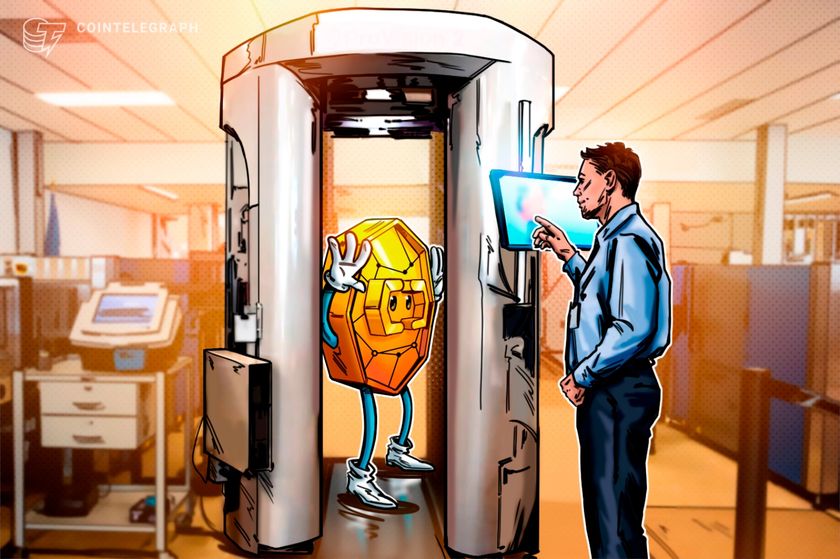 Hong Kong Customs and Excise Department teams up with the University of Hong Kong to build a crypto tracking tool amid a rise in money laundering cases involving digital assets. Hong Kong Customs and Excise Department is partnering with the University of Hong Kong to develop a digital tool to track cryptocurrency transactions in suspected money laundering schemes. On Thursday, Assistant Commissioner Mario Wong Ho-yin said customs officials would expand collaboration with academics, regional finance professionals and law enforcement to counteract increasingly complex and borderless financial crimes. “These money laundering threats are characterized by a transnational and borderless nature, and no single agency can tackle this problem alone,” Wong said during a media briefing, according to a report by the South China Morning Post. Read more
 -
Cointelegraph.com - 09:21 Jun 12, 2025
 Ant International plans to apply for stablecoin licenses in Hong Kong and Singapore, signaling growing fintech interest in regulated crypto payment systems, Bloomberg reported. Ant International reportedly plans to apply for stablecoin issuer licenses in Singapore and Hong Kong, signaling growing institutional cryptocurrency adoption among fintech firms. Ant International, a Singapore-based unit of the Jack Ma-backed Ant Group, is preparing to submit a license application in Hong Kong after the city’s stablecoin regulatory framework takes effect in August, according to a Bloomberg report citing unidentified sources. The company is expected to pursue similar licensing efforts in Singapore and Luxembourg. Ant Group is an affiliate of the Chinese conglomerate Alibaba Group, which owns and operates the world’s largest digital payment platform, Alipay, serving over 80 million merchants and 1.3 billion users worldwide. Read more
 -
Cryptonews.com - 17:47 Jun 11, 2025
Hong Kong has entered Phase 2 of its e-HKD pilot, running live trials in asset settlement, cross-border payments and programmable finance. Tests link bank rails with public chains via Chainlink, measuring how ERC-20 and ERC-3643 tokens uphold KYC and transfer limits under load. The post Hong Kong’s e-HKD Program Enters Critical Phase – Here’s What It Means appeared first on Cryptonews. -
CryptoSlate - 20:00 Jun 09, 2025
Visa and Chainlink have completed a key milestone in the Hong Kong Monetary Authority’s (HKMA) e-HKD+ Pilot Programme, successfully testing a cross-border blockchain transaction using central bank digital currency (CBDC) and stablecoins. The trial, conducted in partnership with ANZ, ChinaAMC, and Fidelity International, is one of the first real-world simulations of programmable money being used […] The post Visa, Chainlink successfully complete CBDC, stablecoin swap between Hong Kong, Australia appeared first on CryptoSlate. -
Cointelegraph.com - 18:43 Jun 09, 2025
 The study involving Chainlink's Cross-Chain Interoperability Protocol is one of many initiatives exploring use cases for a potential Hong Kong CBDC, or e-HKD. The Hong Kong government is partnering with Chainlink’s Cross-Chain Interoperability Protocol (CCIP) to test cross-border transactions between permissioned and permissionless blockchains, as well as settlements using different types of digital assets. The partnership is part of Phase Two of Hong Kong’s central bank digital currency (CBDC) initiative. According to a report from payments company Visa, the initiative will involve a hypothetical Australian investor who wishes to purchase a tokenized asset in Hong Kong. After requesting the purchase in a stablecoin pegged to Australia’s currency, the transaction will be routed via interactions across multiple blockchains. Finally, the purchased asset finds its way into the investor’s wallet, denominated in Hong Kong’s CBDC. Chainlink’s CCIP plays a role in the communication between different blockchains. Acc...
 -
Cointelegraph.com - 13:52 Jun 04, 2025
 Hong Kong reportedly plans to permit crypto derivatives for professional investors and expand its fintech ecosystem. Hong Kong’s securities regulator aims to introduce digital asset derivatives trading for professional investors as part of a broader strategy to expand product offerings and reinforce the city’s role in the global digital asset market, local media reported. Christopher Hui Ching-yu, secretary for Financial Services and the Treasury, confirmed the move on June 4, according to a report by the English-language newspaper China Daily HK. The Hong Kong Securities and Futures Commission (SFC) said that priority will be given to sound risk management, with trades conducted “in an orderly, transparent and secure manner,” the report said. Read more
 -
CryptoSlate - 16:46 May 21, 2025
Hong Kong has passed a landmark bill to regulate fiat-backed stablecoins, signaling its continued push to position itself as a global hub for digital finance. On May 21, Hong Kong lawmaker Johnny Ng confirmed that the Legislative Council approved the bill after its third reading. The new law is expected to take effect before the […] The post Hong Kong advances stablecoin legislation introducing new rules for issuers appeared first on CryptoSlate. -
Cointelegraph.com - 12:58 May 21, 2025
 Hong Kong's Legislative Council has passed the Stablecoin Bill, paving the way for licensed fiat-backed stablecoin issuers by year-end and positioning the region as a potential global Web3 hub. Hong Kong’s Legislative Council passed the Stablecoin Bill, paving the way for a regulated framework that could position the region as a global leader in digital assets and Web3 development. In a May 21 post on X, Legislative Council member Johnny Ng Kit-Chong said the bill had passed its third reading, clearing the final hurdle for adoption. “It is expected that by the end of this year, major institutions will be able to apply to the Hong Kong Monetary Authority to become licensed stablecoin issuers,” Ng said. Read more
 -
Cointelegraph.com - 00:49 May 18, 2025
 Hong Kong police have arrested 12 people tied to a $15 million crypto laundering operation, which was dismantled on the same day. Hong Kong police arrested 12 people involved in a cross-border money laundering scheme that relied on crypto and over 500 stooge bank accounts to launder HK$118 million ($15 million), local news outlets reported. The syndicate was dismantled on May 15, resulting in the arrest of nine men and three women in mainland China and Hong Kong. The suspects allegedly recruited others to open bank accounts to receive proceeds from fraud cases, which were then converted into crypto at crypto exchange shops to launder the illicit funds, Hong Kong Commercial Daily reported on May 17. Read more
 -
CryptoSlate - 17:00 May 03, 2025
The following is a guest post and opinion from Sandy Peng, Co-Founder of Scroll. Over 1,000 FinTech companies and nearly 5,000 startups now call Hong Kong home, a 15% jump in just one year. Hong Kong has rapidly transformed into one of Asia’s most dynamic innovation hubs, having just been named the second-most crypto-friendly city […] The post Hong Kong’s web3 moment: Blink and you’ll miss it appeared first on CryptoSlate.