January | Crypto
"January" in Crypto feed
-
Cryptonews.com - 23:30 Jan 05, 2026
Crypto markets have regained $3.25T as Bitcoin has crossed $93,000 for the first time since November, with XRP and several altcoins rising amid global uncertainty, prompting editors to list the best new memecoin under $0.01 today. Markets remain cautious as Europe stocks rose earlier sessions today The post Best New Meme Coin to Buy Under $0.01 – January 5 appeared first on Cryptonews. -
Cryptonews.com - 22:35 Jan 05, 2026
With Bitcoin trading below $94K and altcoins gaining traction, XRP, Pepe, and Bonk have been viewed among the best crypto assets for 2026. Institutional inflows and potential regulatory clarity have supported renewed optimism across the digital asset market. The post Best Crypto to Buy Now 5 January – XRP, PEPE, BONK appeared first on Cryptonews. -
CoinDesk - 17:20 Jan 05, 2026
The Fundstrat co-founder and Bitmine chair said bitcoin has yet to peak in January and reiterated his belief that ether is ‘dramatically’ undervalued. -
Cointelegraph.com - 09:04 Jan 05, 2026
 January’s unlock calendar is heavily concentrated, with four major projects accounting for more than one-third of all tokens set to enter circulation. More than $5.5 billion in cryptocurrencies are scheduled to unlock in January, with ONDO, BGB, HYPE and TRUMP tokens accounting for some of the biggest releases. According to Tokenomist’s token unlocks data tracker, January will see over $5.5 billion in token unlocks. About $2.5 billion will be released through a cliff unlock, which means the tokens are unlocked all at once. Another $3 billion will enter circulation through linear releases, distributing tokens gradually over time, creating less abrupt supply increases. Crypto vesting is the process of locking token allocations and releasing them over time to prevent early or sudden increases in circulating supplies. These schedules often include an initial lockup followed by periodic unlocks, aligning long-term incentives while managing market impact. Read more
 -
Cryptonews.com - 13:51 Jan 03, 2026
Solana’s RWA ecosystem hits a record $873M in January 2026, soaring 325% in 2025 as stablecoins dominate and tokenized finance gains global traction. The post Solana Price Prediction: RWA Ecosystem Hits $873M in January 2026, Up 325% in One Year appeared first on Cryptonews. -
Cryptonews.com - 23:40 Jan 02, 2026
The crypto market has gained nearly 2% with total capitalization surpassing $3.1 trillion. As Bitcoin and Ethereum rise, attention has turned to PEPENODE, the best new meme coin projected to deliver major returns after its presale success and Ethereum launch in early 2026. The post Best New Meme Coin to 100x in 2026 – January 2 appeared first on Cryptonews. -
Cryptonews.com - 22:35 Jan 02, 2026
XRP, Solana, and PEPE have been viewed as the best crypto prospects heading into 2026. Analysts have cited ETF inflows, network strength, and renewed memecoin momentum, while early investors are tracking Bitcoin Hyper as a possible emerging project in this evolving market cycle. The post Best Crypto to Buy Now 2 January – XRP, PEPE, Solana appeared first on Cryptonews. -
Decrypt - 14:01 Jan 02, 2026
January 2026 brings a rare slowdown, with a light slate that makes room for smaller games and backlog catch-up ahead of a busier February. -
Cryptonews.com - 23:06 Jan 01, 2026
The crypto market cap has edged 0.8% lower to about $3.06T, keeping the sector above $3T with $87.6B in daily volume. BTC has traded in a $85K–$88K band, while US spot BTC ETFs logged $348.1M outflows and ETH ETFs $72.1M on Dec. 31. Fear and Greed is 31, with ETH steadied at $2,900–$3,100 support range. The post Why Is Crypto Down Today? – January 1, 2026 appeared first on Cryptonews. -
Cryptonews.com - 22:30 Jan 01, 2026
Crypto markets have entered 2026 with Bitcoin near $87.5K, and altcoins far from prior peaks. XRP exchange supply has fallen to an eight-year low as spot ETFs have taken in $1.4B. Solana has led 2025 chain revenue; Dogecoin has traded near $0.12. $HYPER has raised $30M for a Bitcoin-aligned Layer 2. The post Best Crypto to Buy Now 1 January – XRP, Solana, Dogecoin appeared first on Cryptonews. -
Cointelegraph.com - 21:15 Dec 31, 2025
 With Congress in recess until the new year, sources familiar with the progress of a digital asset market structure bill are expecting consideration in early 2026. Members of the US Senate Banking Committee are expected to move forward with consideration of a digital asset market structure bill in the second week of January after months of delays. According to reports and people familiar with the matter, the Banking Committee could hold a markup for the Responsible Financial Innovation Act during the second week of January. The event would mark progress on advancing legislation that has been slowed by Democratic lawmakers’ concerns over decentralized finance, and the longest US government shutdown in history. Cody Carbone, CEO of digital asset advocacy organization The Digital Chamber, told Cointelegraph that “the second week of January will have at least one markup on pending market structure legislation in the Senate.” The US Senate Agriculture Committee is also considering its version of the market structur...
 -
Cryptonews.com - 14:24 Dec 30, 2025
Bitcoin trades near $87K as 2025 ends, with weak sentiment, ETF outflows, and a tightening triangle pointing to a potential breakout toward $100K in January. The post Bitcoin Price Prediction: BTC Price Trading Sideways in the Last Days of 2025, Is a Major Shift Coming in January? appeared first on Cryptonews. -
Cryptonews.com - 13:26 Dec 30, 2025
HYPER has gained nearly 8% in the past 7 days and stands out as one of the top-performing tokens in the top 20 during this period after recapturing its lead over Aster in the perps market. Does this favor a bullish Hyperliquid price prediction?Data from CoinMarketCap shows that Hyperliquid has a 19.5% market share at […] The post Hyperliquid Price Prediction: Hype Price With Encouraging 8% Weekly Gains, Is $30 Possible In January 2026? appeared first on Cryptonews. -
Cryptonews.com - 12:05 Dec 29, 2025
The Fermi Hard Fork is shaping up as a gateway for mainstream adoption – Binance Coin price predictions could flip bullish if traders bite. The post Binance Coin Price Prediction: Is BNB About to Explode in 2026 With Fermi Hard Fork Slated for January 14? appeared first on Cryptonews. -
Cryptonews.com - 08:38 Dec 26, 2025
Former Alameda co-CEO Caroline Ellison is set for release on Jan. 21, 2026, about 10 months earlier than her full sentence. The post Former Alameda CEO Caroline Ellison Set for Release in January 2026 appeared first on Cryptonews. -
Cointelegraph.com - 22:32 Dec 18, 2025
 White House AI and crypto czar David Sacks said the CLARITY Act will reach the Senate next month for debate and amendment before a full vote. The long-awaited Digital Asset Market Clarity Act, or CLARITY Act, is moving closer to law, with a Senate markup expected in January, says White House artificial intelligence and crypto czar David Sacks. Sacks posted to X on Thursday that Senate Banking Committee Chair Tim Scott and Agriculture Committee Chair John Boozman had confirmed that the bipartisan crypto bill will be shaped up by the Senate next month. The CLARITY Act would define crypto securities and commodities and clarify the roles of the Securities and Exchange Commission, the Commodity Futures Trading Commission, and other financial regulators. Read more
 -
Cointelegraph.com - 01:54 Dec 18, 2025
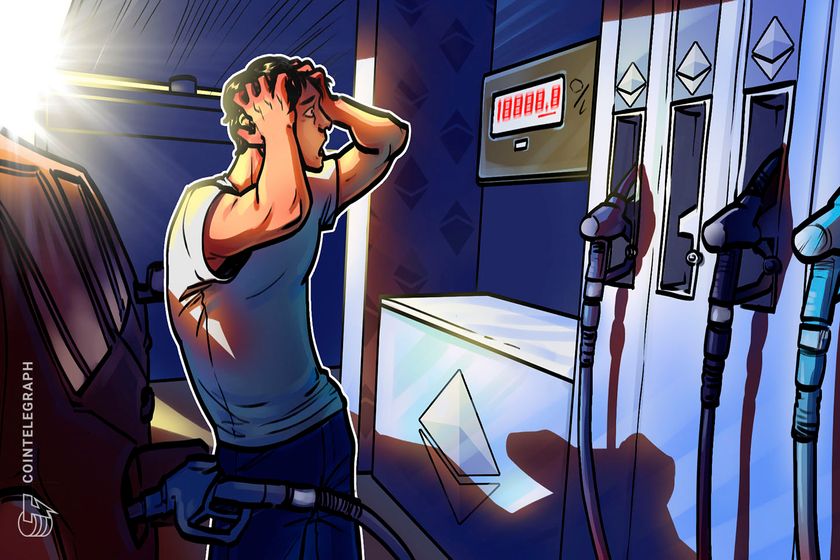 Ethereum could see another rise in transaction speed in January, with developers considering raising the gas limit to 80 million after the next blob parameter-only hard fork. Transaction throughput on the Ethereum network is set to be boosted again next month, with developers aiming to increase Ethereum’s gas limit from 60 million to 80 million in January. Christine Kim, vice president of the research team at Galaxy Digital, shared a summary of the All Core Developers meeting on Monday, in which Nethermind representatives said developers should be ready to move forward with a gas limit increase after the next BPO hard fork on Jan. 7. Ethereum Foundation developer operations engineer Barnabas Busa, however, noted that two client-level optimizations are needed before another increase in the block gas limit — namely, partial blob responses on the execution layer and the max blobs flag on the consensus layer. Read more
 -
Cointelegraph.com - 05:46 Dec 05, 2025
 Bitcoin’s downturn has barely anything to do with “anything crypto specific,” but it’s unlikely to surge early next year, says 21Shares co-founder Ophelia Snyder. Current market conditions will make it difficult for Bitcoin to replicate its early 2025 price gains going into 2026, says 21Shares co-founder Ophelia Snyder. “It’s unlikely that the factors driving the current volatility will fully resolve in the short term,” Snyder told Cointelegraph. “A repeat performance next January will depend heavily on broader market sentiment.” Read more
 -
Cryptonews.com - 12:37 Oct 29, 2025
As the markets finally start to recover and money rotates out of gold and back into risk assets, Solana is still one of the favorites among retail investors.With Qwen AI outperforming in the Alpha Arena trading contest, a lot of traders are suddenly paying attention to its opinions. We asked it for an Solana price […] The post Alibaba’s Qwen3-MAX AI With Explosive 3-Month Solana Price Prediction – Is SOL Going to Hit $320 By January 2026? appeared first on Cryptonews. -
Cryptonews.com - 19:50 Oct 28, 2025
Alibaba’s Qwen AI With Explosive 3-Month XRP Price Prediction – Could XRP Hit $4.20 By January 2026?
As the markets finally start to recover and money rotates out of gold and back into risk assets, XRP is still one of the favorites among retail investors.With Qwen AI outperforming in the Alpha Arena trading contest, a lot of traders are suddenly paying attention to its opinions. We asked it for an XRP prediction […] The post Alibaba’s Qwen AI With Explosive 3-Month XRP Price Prediction – Could XRP Hit $4.20 By January 2026? appeared first on Cryptonews.