Crypto
-
Decrypt - 21:25 Oct 29, 2025
President Trump appears to be easing his trade war for now, helping his Solana meme coin pump amid what an analyst called a “relief rally.” -
CoinDesk - 21:17 Oct 29, 2025
The oracle network token overcame selling pressure earlier Wednesday, but the technical picture remains mixed. -
Cointelegraph.com - 21:11 Oct 29, 2025
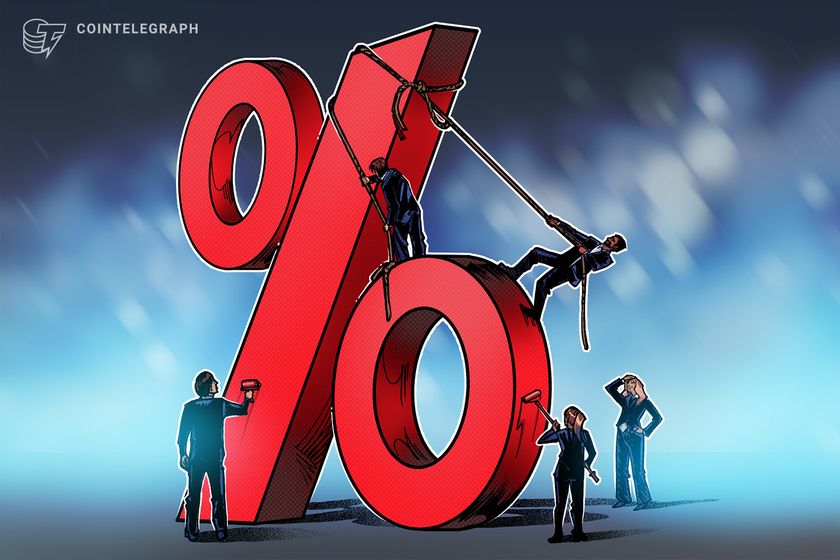 Analysts say the crypto market has already priced in Wednesday's interest rate cut, but the Federal Reserve remains divided on an additional cut in December. The Federal Reserve Open Market Committee (FOMC) announced a 25 basis point interest rate cut on Wednesday, bringing the target Federal Funds rate down to 3.75%-4%. Wednesday’s rate cut was “fully priced in” by investors, who widely anticipated the decision, according to Matt Mena, a market analyst at investment company 21Shares. Mena also forecast: Asset prices remained flat or fell by modest amounts on Wednesday following the FOMC decision, with the price of Bitcoin (BTC) falling by about 2.4% at the time of writing, following Federal Reserve Chair Jerome Powell’s comments signaling that FOMC members are divided on a December rate cut. Read more
 -
CoinDesk - 21:09 Oct 29, 2025
The MetaMask maker’s public debut could be the biggest Ethereum-native listing yet, amid a wave of crypto firms hitting U.S. markets. -
Cryptonews.com - 21:00 Oct 29, 2025
Cardano gains momentum after its inclusion in REX-Osprey's Top 10 Crypto Index ETF with staking capabilities, as technical indicators and Fed rate cuts support analyst predictions of a potential rally to $1.50. The post Cardano Price Prediction: ADA Added to REX-Osprey Top 10 Crypto Index ETF — Is a 120% Rally to $1.50 Next? appeared first on Cryptonews. -
CoinDesk - 20:50 Oct 29, 2025
The global payments firm previously held talks to acquire crypto payment infrastructure startup BNVK, according to reports. -
Cointelegraph.com - 20:50 Oct 29, 2025
 Bitget’s liquidity gains mirror an industrywide shift as exchanges such as Binance, OKX and Crypto.com compete to attract professional and institutional traders. Singapore-based crypto exchange Bitget has seen an uptick in institutional participation, with institutional traders now accounting for roughly 80% of total volume as of September, according to a report by Bitget in collaboration with blockchain analytics platform Nansen. The report noted that institutional activity on Bitget’s spot markets climbed from 39.4% of total volume on Jan. 1 to 72.6% by July 30. Futures trading saw an even more dramatic shift, with institutional market makers growing from just 3% of activity at the start of 2025 to 56.6% by late July. The study identified liquidity as the key measure of institutional adoption in crypto, noting that Bitget’s order-book depth, spreads and execution quality now match peers such as Binance and OKX across major trading pairs. Read more
 -
CryptoSlate - 20:30 Oct 29, 2025
Ferrari is making a pit stop in crypto, but only for its VIP clientele. The Italian automaker plans to issue a “Token Ferrari 499P” that its 100 most exclusive customers can use to bid on a Le Mans-winning race car. It’s a glossy crossover of luxury and blockchain: own a slice of Ferrari history via […] The post Elite Ferrari clientele to bid on Le Mans race car with digital tokens appeared first on CryptoSlate. -
Decrypt - 20:22 Oct 29, 2025
The U.S. Securities and Exchange Commission now has over 90 filings to consider as fund managers push for altcoin products. -
Decrypt - 20:09 Oct 29, 2025
In a letter sent to the SEC and Department of Labor, the senators warned that the Trump admin’s push to expose the $31 trillion retirement savings industry to crypto could end in disaster. -
Cointelegraph.com - 20:02 Oct 29, 2025
 A Chinese blockchain event was reportedly cut short on Tuesday due to overcrowding, but some attendees expressed concerns over the country's recent crackdowns. Some members of Solana’s Chinese community have reportedly expressed concerns that attendees were denied entry to a blockchain event as the country continues its crackdown on digital assets. According to a Wednesday report from the South China Morning Post, the Solana Accelerate APAC series event being held in Shenzhen on Tuesday was cut short amid claims of overcrowding, “leading the local police to conduct an inquiry on site.” Event organizers confirmed the venue had exceeded capacity and canceled the final hackathon “for public safety,” per the report. The police presence, however, reignited concerns on social media, with attendees reportedly expressing concerns about the country’s enforcement of crypto and blockchain. Read more
 -
Cryptonews.com - 19:59 Oct 29, 2025
The Federal Reserve delivered a 25-basis-point rate cut to 3.75%-4% and announced an end to quantitative tightening on December 1, sparking immediate crypto market volatility before Bitcoin stabilized above $112,000 with analysts eyeing near-term correction risks. The post Fed Delivers 25 Basis Point Cut, Rates Now at 4% – BTC to $150k? appeared first on Cryptonews. -
CoinDesk - 19:49 Oct 29, 2025
BTC is down but not out following Powell's hakwish commentary on rates. -
Decrypt - 19:24 Oct 29, 2025
An AI-penned romance stormed to No. 1 on Kadokawa’s Kakuyomu site after flooding it with machine-written chapters. Critics warn that AI-created novels could replace human writers. -
Cointelegraph.com - 19:00 Oct 29, 2025
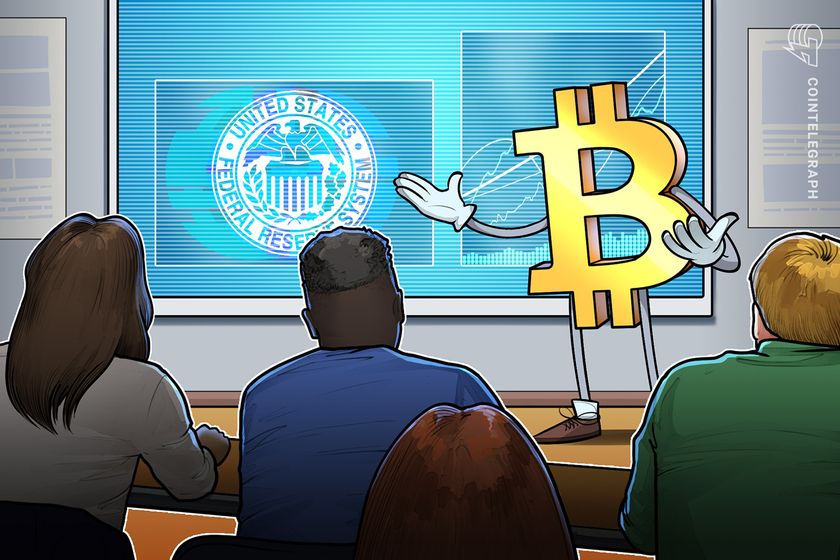 Bitcoin price fell to $109,200 despite the Federal Reserve confirming a 0.25% interest rate cut and the end of quantitative tightening. Traders expect future rate cuts, so why is BTC falling? Key points: Bitcoin’s sell-off accelerated after the Federal Reserve cut rates by 25 basis points. Weakness in crypto shows traders are looking at macroeconomic headwinds like a weakening jobs market and inflation, despite believing that interest rate cuts will continue into 2026. Read more
 -
CryptoSlate - 18:55 Oct 29, 2025
The Federal Reserve cut rates by 25 basis points today and hinted that its balance-sheet runoff may soon end, arguably the bigger story for Bitcoin. With the overnight reverse repo facility nearly empty at roughly $14 billion, any further quantitative tightening now drains bank reserves directly. That shift means even small tweaks to QT have […] The post Fed cuts 25 bps, but there is another hidden macro challenge looming appeared first on CryptoSlate. -
CoinDesk - 18:49 Oct 29, 2025
Though acknowledging growing weakness in the labor market, Powell said a December rate cut is not a "foregone conclusion." -
Cryptonews.com - 18:35 Oct 29, 2025
Democratic senators, including Elizabeth Warren, have asked the DOJ for details on Trump's pardon of Changpeng Zhao, calling it a favor for a white-collar criminal who enriched the president. The post Democrats Blast Trump’s ‘Corrupt’ CZ Pardon — Claim Crypto Lobby Spent Millions appeared first on Cryptonews.