Crypto
-
Cointelegraph.com - 22:04 Oct 23, 2025
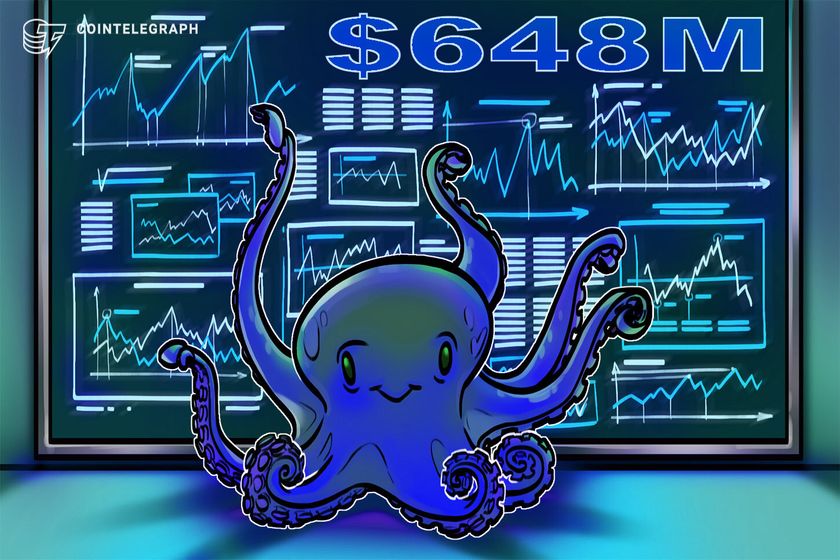 The exchange reported $648 million in quarterly revenue as trading activity, user growth, and new acquisitions boosted performance. Kraken reported $648 million in revenue for the third quarter of 2025, up 114% from a year earlier, which the company described as its strongest financial performance to date. Adjusted earnings before interest, taxes, depreciation and amortization (EBITDA) rose to $178.6 million as profit margins widened nine percentage points to 27.6%, Kraken said Wednesday. Total trading volume increased 106% year over year to $561.9 billion, while assets on the platform grew 89% to $59.3 billion. Kraken’s user base also expanded, reaching 5.2 million funded accounts by the end of the quarter. Read more
 -
Cryptonews.com - 22:00 Oct 23, 2025
Bitcoin steadies near $109K after Trump pardons Binance’s CZ, boosting sentiment even as EU sanctions target Russian crypto exchanges and stablecoins. The post Bitcoin Price Prediction: Trump Pardons CZ as EU Tightens Crypto Rules appeared first on Cryptonews. -
Cointelegraph.com - 21:53 Oct 23, 2025
 The majority of wealthy investors surveyed in Hong Kong plan to buy crypto this year, Japan to allow banks to hold Bitcoin. Asia Express. Standard Chartered Hong Kong will reportedly launch trading services for crypto exchange-traded funds (ETFs) in November. According to the banks wealthy clients study cited by local newspaper Ming Pao, nearly 80% plan to invest in digital assets within the next year, while more than 30% already hold some form of crypto exposure. The survey covered over 500 respondents with at least 1 million Hong Kong dollars (about $128,650) in liquid assets. Read more
 -
Cointelegraph.com - 21:53 Oct 23, 2025
The majority of wealthy investors surveyed in Hong Kong plan to buy crypto this year, Japan to allow banks to hold Bitcoin. Asia Express. Standard Chartered Hong Kong will reportedly launch trading services for crypto exchange-traded funds (ETFs) in November. According to the banks wealthy clients study cited by local newspaper Ming Pao, nearly 80% plan to invest in digital assets within the next year, while more than 30% already hold some form of crypto exposure. The survey covered over 500 respondents with at least 1 million Hong Kong dollars (about $128,650) in liquid assets. Read more -
Cointelegraph.com - 21:53 Oct 23, 2025
The majority of wealthy investors surveyed in Hong Kong plan to buy crypto this year, Japan to allow banks to hold Bitcoin. Asia Express. Standard Chartered Hong Kong will reportedly launch trading services for crypto exchange-traded funds (ETFs) in November. According to the banks wealthy clients study cited by local newspaper Ming Pao, nearly 80% plan to invest in digital assets within the next year, while more than 30% already hold some form of crypto exposure. The survey covered over 500 respondents with at least 1 million Hong Kong dollars (about $128,650) in liquid assets. Read more -
Cointelegraph.com - 21:53 Oct 23, 2025
The majority of wealthy investors surveyed in Hong Kong plan to buy crypto this year, Japan to allow banks to hold Bitcoin. Asia Express. Standard Chartered Hong Kong will reportedly launch trading services for crypto exchange-traded funds (ETFs) in November. According to the banks wealthy clients study cited by local newspaper Ming Pao, nearly 80% plan to invest in digital assets within the next year, while more than 30% already hold some form of crypto exposure. The survey covered over 500 respondents with at least 1 million Hong Kong dollars (about $128,650) in liquid assets. Read more -
Cointelegraph.com - 21:53 Oct 23, 2025
The majority of wealthy investors surveyed in Hong Kong plan to buy crypto this year, Japan to allow banks to hold Bitcoin. Asia Express. Standard Chartered Hong Kong will reportedly launch trading services for crypto exchange-traded funds (ETFs) in November. According to the banks wealthy clients study cited by local newspaper Ming Pao, nearly 80% plan to invest in digital assets within the next year, while more than 30% already hold some form of crypto exposure. The survey covered over 500 respondents with at least 1 million Hong Kong dollars (about $128,650) in liquid assets. Read more -
Cointelegraph.com - 21:53 Oct 23, 2025
The majority of wealthy investors surveyed in Hong Kong plan to buy crypto this year, Japan to allow banks to hold Bitcoin. Asia Express. Standard Chartered Hong Kong will reportedly launch trading services for crypto exchange-traded funds (ETFs) in November. According to the banks wealthy clients study cited by local newspaper Ming Pao, nearly 80% plan to invest in digital assets within the next year, while more than 30% already hold some form of crypto exposure. The survey covered over 500 respondents with at least 1 million Hong Kong dollars (about $128,650) in liquid assets. Read more -
Cointelegraph.com - 21:53 Oct 23, 2025
The majority of wealthy investors surveyed in Hong Kong plan to buy crypto this year, Japan to allow banks to hold Bitcoin. Asia Express. Standard Chartered Hong Kong will reportedly launch trading services for crypto exchange-traded funds (ETFs) in November. According to the banks wealthy clients study cited by local newspaper Ming Pao, nearly 80% plan to invest in digital assets within the next year, while more than 30% already hold some form of crypto exposure. The survey covered over 500 respondents with at least 1 million Hong Kong dollars (about $128,650) in liquid assets. Read more -
Cointelegraph.com - 21:53 Oct 23, 2025
The majority of wealthy investors surveyed in Hong Kong plan to buy crypto this year, Japan to allow banks to hold Bitcoin. Asia Express. Standard Chartered Hong Kong will reportedly launch trading services for crypto exchange-traded funds (ETFs) in November. According to the banks wealthy clients study cited by local newspaper Ming Pao, nearly 80% plan to invest in digital assets within the next year, while more than 30% already hold some form of crypto exposure. The survey covered over 500 respondents with at least 1 million Hong Kong dollars (about $128,650) in liquid assets. Read more -
Cointelegraph.com - 21:53 Oct 23, 2025
The majority of wealthy investors surveyed in Hong Kong plan to buy crypto this year, Japan to allow banks to hold Bitcoin. Asia Express. Standard Chartered Hong Kong will reportedly launch trading services for crypto exchange-traded funds (ETFs) in November. According to the banks wealthy clients study cited by local newspaper Ming Pao, nearly 80% plan to invest in digital assets within the next year, while more than 30% already hold some form of crypto exposure. The survey covered over 500 respondents with at least 1 million Hong Kong dollars (about $128,650) in liquid assets. Read more -
Cointelegraph.com - 21:53 Oct 23, 2025
The majority of wealthy investors surveyed in Hong Kong plan to buy crypto this year, Japan to allow banks to hold Bitcoin. Asia Express. Standard Chartered Hong Kong will reportedly launch trading services for crypto exchange-traded funds (ETFs) in November. According to the banks wealthy clients study cited by local newspaper Ming Pao, nearly 80% plan to invest in digital assets within the next year, while more than 30% already hold some form of crypto exposure. The survey covered over 500 respondents with at least 1 million Hong Kong dollars (about $128,650) in liquid assets. Read more -
Cointelegraph.com - 21:53 Oct 23, 2025
The majority of wealthy investors surveyed in Hong Kong plan to buy crypto this year, Japan to allow banks to hold Bitcoin. Asia Express. Standard Chartered Hong Kong will reportedly launch trading services for crypto exchange-traded funds (ETFs) in November. According to the banks wealthy clients study cited by local newspaper Ming Pao, nearly 80% plan to invest in digital assets within the next year, while more than 30% already hold some form of crypto exposure. The survey covered over 500 respondents with at least 1 million Hong Kong dollars (about $128,650) in liquid assets. Read more -
Cointelegraph.com - 21:53 Oct 23, 2025
The majority of wealthy investors surveyed in Hong Kong plan to buy crypto this year, Japan to allow banks to hold Bitcoin. Asia Express. Standard Chartered Hong Kong will reportedly launch trading services for crypto exchange-traded funds (ETFs) in November. According to the banks wealthy clients study cited by local newspaper Ming Pao, nearly 80% plan to invest in digital assets within the next year, while more than 30% already hold some form of crypto exposure. The survey covered over 500 respondents with at least 1 million Hong Kong dollars (about $128,650) in liquid assets. Read more -
Cointelegraph.com - 21:53 Oct 23, 2025
The majority of wealthy investors surveyed in Hong Kong plan to buy crypto this year, Japan to allow banks to hold Bitcoin. Asia Express. Standard Chartered Hong Kong will reportedly launch trading services for crypto exchange-traded funds (ETFs) in November. According to the banks wealthy clients study cited by local newspaper Ming Pao, nearly 80% plan to invest in digital assets within the next year, while more than 30% already hold some form of crypto exposure. The survey covered over 500 respondents with at least 1 million Hong Kong dollars (about $128,650) in liquid assets. Read more -
Cointelegraph.com - 21:53 Oct 23, 2025
The majority of wealthy investors surveyed in Hong Kong plan to buy crypto this year, Japan to allow banks to hold Bitcoin. Asia Express. Standard Chartered Hong Kong will reportedly launch trading services for crypto exchange-traded funds (ETFs) in November. According to the banks wealthy clients study cited by local newspaper Ming Pao, nearly 80% plan to invest in digital assets within the next year, while more than 30% already hold some form of crypto exposure. The survey covered over 500 respondents with at least 1 million Hong Kong dollars (about $128,650) in liquid assets. Read more -
Cointelegraph.com - 21:53 Oct 23, 2025
The majority of wealthy investors surveyed in Hong Kong plan to buy crypto this year, Japan to allow banks to hold Bitcoin. Asia Express. Standard Chartered Hong Kong will reportedly launch trading services for crypto exchange-traded funds (ETFs) in November. According to the banks wealthy clients study cited by local newspaper Ming Pao, nearly 80% plan to invest in digital assets within the next year, while more than 30% already hold some form of crypto exposure. The survey covered over 500 respondents with at least 1 million Hong Kong dollars (about $128,650) in liquid assets. Read more -
Cointelegraph.com - 21:53 Oct 23, 2025
The majority of wealthy investors surveyed in Hong Kong plan to buy crypto this year, Japan to allow banks to hold Bitcoin. Asia Express. Standard Chartered Hong Kong will reportedly launch trading services for crypto exchange-traded funds (ETFs) in November. According to the banks wealthy clients study cited by local newspaper Ming Pao, nearly 80% plan to invest in digital assets within the next year, while more than 30% already hold some form of crypto exposure. The survey covered over 500 respondents with at least 1 million Hong Kong dollars (about $128,650) in liquid assets. Read more -
Cointelegraph.com - 21:53 Oct 23, 2025
The majority of wealthy investors surveyed in Hong Kong plan to buy crypto this year, Japan to allow banks to hold Bitcoin. Asia Express. Standard Chartered Hong Kong will reportedly launch trading services for crypto exchange-traded funds (ETFs) in November. According to the banks wealthy clients study cited by local newspaper Ming Pao, nearly 80% plan to invest in digital assets within the next year, while more than 30% already hold some form of crypto exposure. The survey covered over 500 respondents with at least 1 million Hong Kong dollars (about $128,650) in liquid assets. Read more -
Cointelegraph.com - 21:40 Oct 23, 2025
 Washington is considering direct investments in US quantum computing companies as it seeks to keep pace with China’s tech capabilities. The United States is reportedly in “early talks” with quantum computing companies to provide financial assistance to the sector, citing national security interests. Department of Commerce officials are exploring investing in quantum computer technology using funds earmarked for the CHIPS Act to remain competitive with China, Bloomberg reported on Thursday. The officials signaled that the government wants something in exchange for the financing, which could include a stake in the companies, the sources said. Read more