Crypto
-
CryptoSlate - 21:55 Oct 10, 2025
Bitcoin (BTC) dropped 7% amid a broader market rout after President Donald Trump announced that the US is considering escalating tariffs against China in response to newly imposed rare-earth export controls. Total liquidations reached $9 billion over the past 24 hours, as BTC fell to as low as $105k in the drop. On a lengthy statement on […] The post Trump tariff threat against China causes Bitcoin to crash 7%, $9B in liquidations appeared first on CryptoSlate. -
Cryptonews.com - 21:54 Oct 10, 2025
After a 9% crash, investors ask: is Bitcoin done or just reloading? Bitcoin price prediction points to $130K potential ahead. The post Bitcoin Price Prediction: Is This 9% Crash the Calm Before a $130K Storm? appeared first on Cryptonews. -
CoinDesk - 21:51 Oct 10, 2025
BTC tumbled 10% on Friday, while ETH, SOL and XRP crashed 15%-30% in a crypto flash crash as trade tensions escalate between the U.S. and China. -
Cryptonews.com - 21:38 Oct 10, 2025
ASTER price prediction has turned bearish following a 20% slide amid community backlash over Stage 2 airdrop allocations and wash-trading concerns. Price has tested the $1.50–$1.56 support within a triangle, with $1.80–$2.12 resistance levels limiting recovery prospects. The post ASTER Price Prediction: Community Rage Over “Disappointing” Airdrop as ASTER Falls 20% to $1.55 – Is This the Bottom? appeared first on Cryptonews. -
Cointelegraph.com - 21:36 Oct 10, 2025
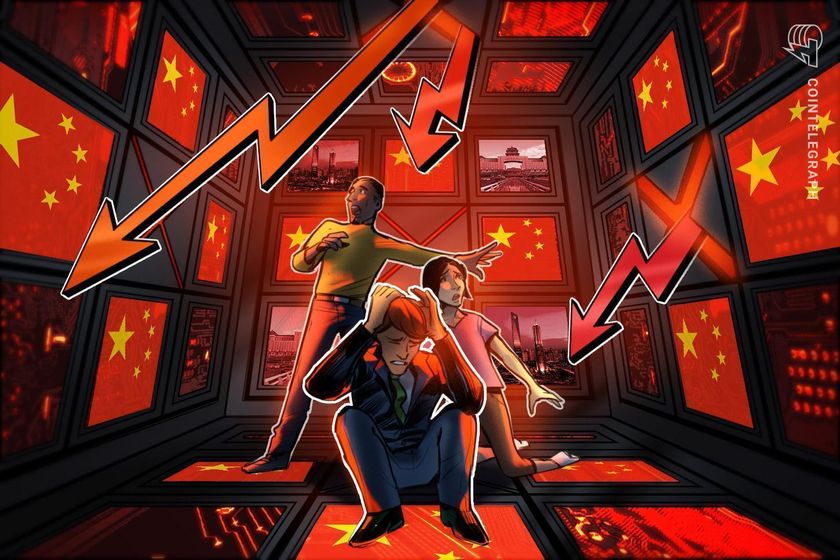 Bitcoin plunged to $102,000 in the Binance perpetual futures pair after Trump announced sweeping tariffs on China on Friday, reigniting fears of a broader trade and market sell-off. US President Donald Trump announced a 100% tariff on China on Friday, sending the price of Bitcoin (BTC) reeling below $110,000 at the time of writing. Trump said the tariffs were in response to China attempting to place export restrictions on rare earth minerals, which are crucial for creating computer chips. Trump wrote on Truth Social: Trump’s first tariff announcements in April sent shockwaves through crypto markets and sparked fears of a recession. Read more
 -
Cointelegraph.com - 21:27 Oct 10, 2025
 A global survey finds investors are deepening exposure to blockchain and AI, though many remain skeptical that decentralized finance will take over traditional markets. Institutional investors are deepening their involvement in digital assets and emerging technologies such as blockchain and AI, according to a new State Street report — though many remain split on whether decentralized finance can ever fully blend with traditional markets. The study found that digital assets currently make up about 7% of institutional portfolios, a figure expected to climb to 16% by 2028. Most holdings are concentrated in digital cash (stablecoins) and tokenized versions of listed equities or fixed income, with respondents allocating about 1% of their portfolios to each and asset managers maintaining greater exposure. Read more
 -
CryptoSlate - 21:17 Oct 10, 2025
Norwegian officials launched an investigation on Oct. 10 into a suspected leak of confidential information after online wagers on this year’s Nobel Peace Prize winner surged just hours before the official announcement. Authorities said the spike in betting activity on Polymarket appeared to indicate insider knowledge of the Nobel Committee’s decision. Venezuelan opposition leader María Corina […] The post Abnormal Polymarket bets on potential Nobel Prize winner cause Norway to launch probe appeared first on CryptoSlate. -
Cryptonews.com - 21:08 Oct 10, 2025
Dogecoin price prediction has assessed DOGE’s 24-hour gain, week-over-week outperformance, exchange outflows near $41.9M, and a weekly ascending triangle that has resembled 2020 as TDOG has listed on DTCC and on-chain accumulation has persisted alongside meme-sector activity. The post Dogecoin Price Prediction: Millions in DOGE Suddenly Disappear From Exchanges – Is a Major Price Spike Coming? appeared first on Cryptonews. -
CoinDesk - 21:08 Oct 10, 2025
The unnamed investor bought nearly 13 million shares from the company and some executives. The firm intends to use the proceeds to boost its Helios data center project. -
Cryptonews.com - 21:04 Oct 10, 2025
CZ has received a Google alert on a state-linked hack attempt. Investigations have tied fresh Lazarus activity to fake IT hires, credential-stealing malware, traced laundering via Tornado Cash, and prior breaches as U.S. actions against DPRK-linked networks have been reported. The post CZ Targeted by ‘Government-Backed’ Hackers – Is North Korea’s Lazarus Group Behind It? appeared first on Cryptonews. -
Cointelegraph.com - 21:00 Oct 10, 2025
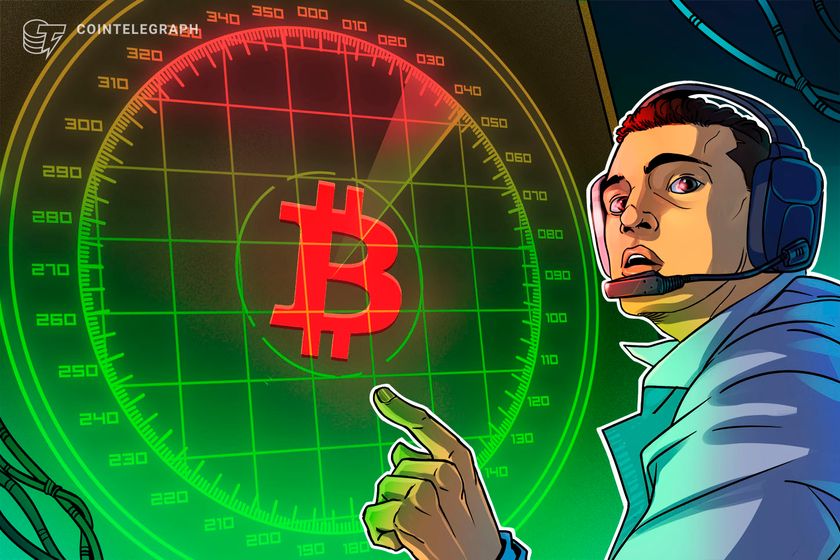 Bitcoin struggled to regain momentum as traders stayed cautious, gold hit record highs, and US-China trade tensions fueled a broader market sell-off. Key takeaways: Derivatives data show limited confidence among Bitcoin traders despite strong ETF inflows, keeping downside risks on the table. Gold’s surge and falling Treasury yields highlight growing investor fear as fiscal stress and trade disputes weigh on traders’ sentiment. Read more
 -
Decrypt - 20:54 Oct 10, 2025
BlackRock's Bitcoin ETF tops profit charts while Coinbase breaks into NY's staking market. Plus: S&P's new hybrid crypto index. -
Cryptonews.com - 20:46 Oct 10, 2025
A consortium of nine banks has confirmed plans tied to Wall Street to explore a reserve-backed Stablecoin for G7 payments on public blockchains, engaged regulators, and evaluated a $50T payments landscape alongside tokenized deposit pilots. The post Wall Street Banks Unite to Launch Stablecoin Rivaling Tether and Circle appeared first on Cryptonews. -
Cointelegraph.com - 20:37 Oct 10, 2025
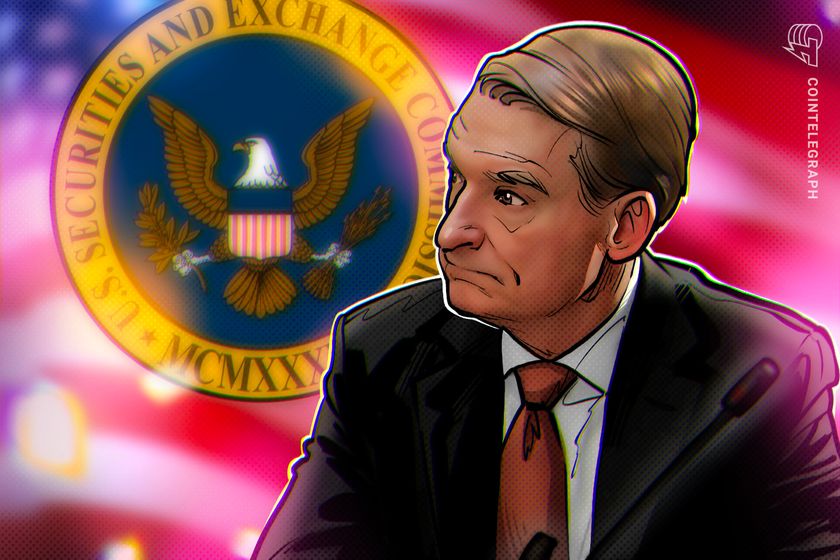 Could a future US presidential administration undo all of Paul Atkins’ work in a matter of days? Cointelegraph spoke to legal and regulatory experts to find out. Paul Atkins wants to cement his vision for the crypto markets before political tides shift again in Washington. As the new chair of the US Securities and Exchange Commission, he’s moving quickly to “future-proof” SEC policies, a push that could define how much freedom the crypto industry enjoys after President Donald Trump leaves office. In a conference hosted by the Managed Funds Association in New York on Tuesday, Atkins said the SEC would work quickly to adopt rules that could “future-proof” his agenda. He specifically referred to removing or weakening regulations on public and private markets, both of which could impact the cryptocurrency industry after Trump or Atkins leaves. “We have, I think, an amazing opportunity to get together and, in a can-do spirit, kind of create something that’s lasting,” said Atkins on US regulators collaborating. “M...
 -
Cryptonews.com - 20:36 Oct 10, 2025
LunarCrush has indicated ASTER’s AltRank and social engagement have slipped even as its DEX volume has surpassed $44M. Traders have observed a potential double bottom, with wallet activity appearing steady and no clear signs of forced exits. The post LunarCrush Data Shows ASTER Cooldown – DEX Volume Grows, Bulls Await Confirmation appeared first on Cryptonews. -
Decrypt - 20:24 Oct 10, 2025
Decentralized perps exchange Aster has delayed its airdrop due to issues around token allocations, following complaints from users. -
CryptoPotato - 20:19 Oct 10, 2025
Binance data shows that Bitcoin's emotional index is climbing sharply. -
CryptoSlate - 20:13 Oct 10, 2025
Bitcoin’s steady climb to a new all-time high this October has revived the familiar question of whether the next breakout could mark the first sustained run to $150,000. The optimism follows a surge in derivatives positioning and ETF inflows, suggesting that institutional momentum may be reshaping the cycle’s upper bound rather than simply fueling another […] The post Can Bitcoin really reach $150K, what would it take? appeared first on CryptoSlate. -
Cryptonews.com - 20:11 Oct 10, 2025
BNB Chain has climbed to new price highs as exchange inflows and onchain activity have risen. Network upgrades have improved capacity, finality, and costs, while builders and institutions have disclosed support, even as observers have noted ongoing debates over structure and adoption. The post Why BNB Matters: Key Drivers Behind The Rally and BNB Chain’s Growth appeared first on Cryptonews. -
Decrypt - 20:00 Oct 10, 2025
Top banks including Bank of American, Goldman Sachs, and Citi are exploring issuing a stablecoin, according to a Friday announcement.