Crypto
-
Cointelegraph.com - 11:15 Sep 16, 2025
 Crypto Finance, part of the Deutsche Börse Group, launched AnchorNote to let institutions trade across venues without moving assets out of custody. Crypto Finance, a subsidiary of Deutsche Börse Group, launched a new off-exchange settlement solution to improve capital efficiency and trading flexibility for institutional crypto investors. The new product, Crypto Finance AnchorNote, allows institutions to trade on different platforms without moving their assets out of custody. It also helps them settle trades off-exchange and earn yields within a compliant, risk-controlled setup, according to a Tuesday announcement. “With Crypto Finance AnchorNote, we are closing a critical gap between custody and capital efficiency,” said Philipp Dettwiler, head of custody and settlement at Crypto Finance. The launch is initially focused on the Swiss market, with a broader European rollout expected in the near term. Read more
 -
Cointelegraph.com - 10:40 Sep 16, 2025
 Whale selling and a reduction in XRP ledger activity over the past two months increased the downside potential for XRP price to drop toward $2. Key takeaways: XRP’s failure to hold $3 points to a continued downside risk to $2.40-$2.00. Whales continue to sell XRP. Read more
 -
Cointelegraph.com - 09:07 Sep 16, 2025
 SC Ventures plans to launch a digital asset fund in 2026, with a focus on global digital asset investment opportunities. Update Sept. 16, 11:33 am UTC: This article has been updated to clarify that SC Ventures is launching a digital asset fund, not a crypto fund. Update Sept. 16, 1:38 pm UTC: This article has been updated to include comments from an SC Ventures representative. Standard Chartered’s venture arm is preparing to launch a $250 million digital asset investment fund in 2026, signaling growing institutional appetite for digital assets. Read more
 -
Decrypt - 06:30 Sep 16, 2025
The Fellowship PAC has filed with the FEC, touting a $100 million war chest to defend U.S. leadership in digital assets. -
Decrypt - 05:19 Sep 16, 2025
Leveraged bets on altcoins are mounting ahead of the Fed’s rate decision, raising the risk of sharp price swings across crypto markets. -
Decrypt - 02:46 Sep 16, 2025
An update filed in a New York court marks how a resolution “in principle” has been reached in a case that has spanned over two years. -
CoinDesk - 01:34 Sep 16, 2025
Competing narratives emerge as Glassnode points to profit-taking risks and weak spot demand, while QCP highlights ETF inflows and rotation into higher-beta assets. -
Cointelegraph.com - 00:21 Sep 16, 2025
 Strategy’s Michael Saylor and BitMine’s Tom Lee are among 18 industry leaders who will look at ways to pass the BITCOIN Act and enable budget-neutral ways to buy Bitcoin. US lawmakers are set to meet with 18 crypto industry executives, including Strategy chairman Michael Saylor, on Tuesday to discuss how Congress can move forward with President Donald Trump’s Strategic Bitcoin Reserve. Those in attendance will also include Fundstrat CEO Tom Lee, who is also the chairman of BitMine, as well as MARA CEO Fred Thiel, according to crypto advocacy group The Digital Chambers, which shared the full list with Cointelegraph on Monday. The industry executives are looking to build momentum behind the BITCOIN Act, a measure introduced by US Senator Cynthia Lummis in March that calls on the government to acquire one million Bitcoin (BTC) over five years. Read more
 -
CryptoSlate - 00:00 Sep 16, 2025
KindlyMD’s NAKA shares slumped to $1.28 on Sept. 15, down by 54% in the past 24 hours and over 90% over one month. The healthcare-turned-Bitcoin (BTC) treasury company faces mounting pressure from equity dilution plans and broader investor fatigue toward digital asset treasury strategies. The Nasdaq-traded medical firm transformed into a Bitcoin treasury company after […] The post NAKA shares plunge 54% in a day, reinforcing investor exhaustion toward Bitcoin treasury companies appeared first on CryptoSlate. -
CryptoSlate - 23:30 Sep 15, 2025
Credit Saison, Japan’s third-largest credit card company, said Monday it is creating a new venture fund to back early-stage blockchain firms working in the real-world asset sector, according to local media reports. The vehicle, known as Onigiri Capital, has raised $35 million so far from Credit Saison and other backers and, according to a company […] The post Japanese TradFi giant Credit Saison launches $50M blockchain fund to bridge US startups with Asia appeared first on CryptoSlate. -
Cryptonews.com - 23:30 Sep 15, 2025
Demand for crypto mining equipment is falling in traditional Bitcoin mining hotspots, while Russian crypto miners in larger urban areas are buying more rigs. The post Russian Crypto Miners Relocating to Big Urban Areas – But Face Fresh Challenge appeared first on Cryptonews. -
Decrypt - 22:53 Sep 15, 2025
The Gemini AI app hit #1 in app stores, and now Google is the fourth-most valuable company in the world. -
CryptoSlate - 22:45 Sep 15, 2025
Investors have not priced in Ethereum’s (ETH) potential to replace Wall Street’s outdated settlement infrastructure, according to SharpLink CEO Joseph Chalom and EigenLayer founder Sreeram Kannan. During a Sept. 15 Milk Road podcast discussion, Chalom, who previously led BlackRock’s digital asset initiatives, outlined the fundamental friction plaguing traditional finance. Current systems require day-long settlement periods, […] The post Ethereum positioned to replace Wall Street infrastructure, yet remains undervalued by investors appeared first on CryptoSlate. -
Cryptonews.com - 22:35 Sep 15, 2025
Crypto price prediction Today reflects a 2% drop in total market cap, with XRP, Pump.fun and Hyperliquid posting daily losses yet holding weekly gains. Traders have taken profits, but the FOMC’s upcoming rate decision could drive renewed momentum across these leading tokens. The post Crypto Price Prediction Today 15 September – XRP, PUMP, Hyperliquid appeared first on Cryptonews. -
Cryptonews.com - 22:30 Sep 15, 2025
ChatGPT predicts XRP, Solana, and Pepe could deliver substantial gains by the holiday season. Bitcoin has hit a record $124,128 before retreating on inflation data, while U.S. regulation advances under the GENIUS Act and SEC’s Project Crypto, setting the stage for a possible new altcoin surge. The post New ChatGPT Model Predicts the Price of XRP, Solana and Pepe by the End of 2025 appeared first on Cryptonews. -
Cryptonews.com - 22:30 Sep 15, 2025
The best crypto investments have been analyzed amid U.S. regulatory changes and surging adoption. XRP has outperformed Bitcoin, Dogecoin has advanced on ETF speculation, Pi Network eyes mainnet launch, and HYPER’s presale continues to grow, shaping the digital asset market outlook for 2025. The post Best Crypto to Buy Now 15 September – XRP, Pi Coin, Dogecoin appeared first on Cryptonews. -
CryptoPotato - 22:27 Sep 15, 2025
Optimism (OP) tops weekly cliff unlocks at $91.5M, outpacing the likes of Arbitrum ($47.8M) and LayerZero ($51.1M). -
CryptoSlate - 22:00 Sep 15, 2025
Bitcoin (BTC) trades at the upper edge of its $108,000-$116,000 air gap range ahead of the Federal Reserve meeting on Sept. 17, and relies on the policy messaging. BTC traded at $115,046.29 as of press time, down by 0.2% in the past 24 hours. According to the Bitfinex Alpha report, Bitcoin needs a sustained break […] The post Bitcoin faces $107,000 or $125,000 move as FOMC meeting determines market direction appeared first on CryptoSlate. -
Cryptonews.com - 21:56 Sep 15, 2025
Paul Atkins has said the SEC will send notices before enforcement to warn firms of technical violations, reflecting a change from regulation-by-enforcement. He has criticized past unpredictability. The SEC has planned an Oct. 17 privacy hearing and has created a cross-border fraud task force. The post Crypto Firms Will Receive Notice Ahead of Enforcement Actions, SEC Chair Paul Atkins Pledges appeared first on Cryptonews. -
Cointelegraph.com - 21:51 Sep 15, 2025
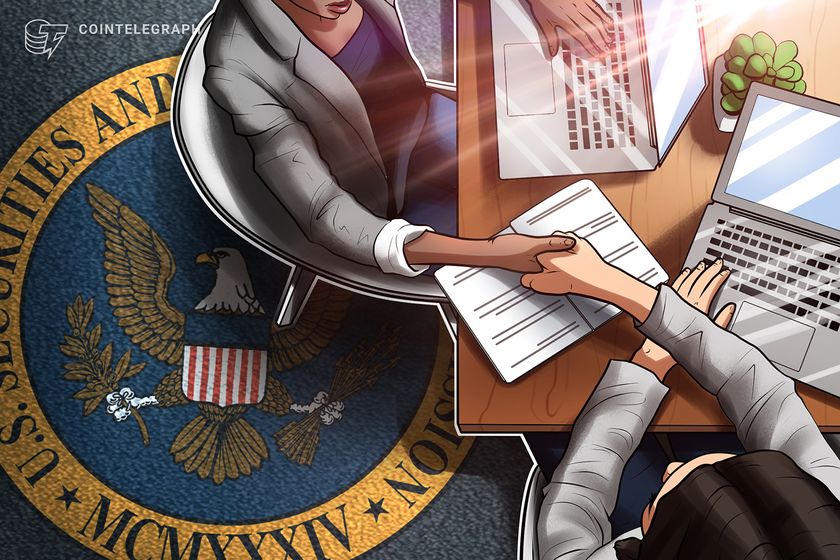 Almost three years after the SEC filed a complaint involving allegations with the Gemini Earn product, the crypto company and regulator said they had reached a potential deal. The US Securities and Exchange Commission (SEC) and Gemini Trust Company filed a status update in court, letting a federal court know they had reached a “resolution in principle” to resolve a securities case stemming from a 2023 complaint. In a Monday filing in the US District Court for the Southern District of New York (SDNY), the SEC and Gemini Trust said that, “subject to review and approval” by the commission, the two parties requested that all litigation in the civil case be indefinitely stayed. The filing stated that both parties would file another status report if the case weren’t resolved by Dec. 15. Read more