Crypto
-
Decrypt - 21:00 Apr 03, 2026
The FIFA World Cup will feature a prediction market platform built on ADI Chain, with the network’s token hitting a new high Friday. -
Cointelegraph.com - 20:47 Apr 03, 2026
 The draft bill, yet to be signed into law by the king, marked a significant policy change for Cambodia officials in addressing scam centers. Cambodia's parliament passed legislation targeting compounds used to defraud victims through scams, including those involving cryptocurrency. In a Friday notice, the Senate of the Kingdom of Cambodia announced that the chamber had unanimously approved the draft law with no amendment, with 58 senators voting yes. According to reports, the draft bill, which would still need the king’s approval before becoming law, imposed prison time between two to five years and up to $125,000 in fines for certain crimes, or twice the time in prison and penalties if part of a gang or targeting multiple victims. “The draft law stipulates the establishment of criminal rules to fill the gaps and deficiencies in the current law, which will contribute significantly to addressing challenges that pose serious risks to social security, the economy and citizens, including affecting Cambodia's rep...
 -
CryptoSlate - 19:25 Apr 03, 2026
Bitcoin, once promoted by some investors as a hedge against geopolitical turmoil, is behaving like a liquidity-sensitive risk asset at a time when energy prices are climbing, and macro stress is spreading. This comes as the conflict between the United States and Iran deepens, with shock rippling through oil, the dollar, and broader financial conditions […] The post Bitcoin’s safe haven story breaks as war shock revives $10,000 risk if oil hits $150 a barrel appeared first on CryptoSlate. -
CoinDesk - 19:18 Apr 03, 2026
The financial services giant with almost $12 trillion in client assets is moving closer to direct crypto trading, offering subscription for early access to the Schwab Crypto account. -
CryptoPotato - 19:10 Apr 03, 2026
Rather than requiring changes to Bitcoin's core rules, the approach lets users opt into quantum-resistant protection at the contract level. -
Cointelegraph.com - 19:04 Apr 03, 2026
 In a recent Cointelegraph interview, macro investor James Lavish explains why markets are pricing in a quick end to the Iran war — and what could happen if that assumption is wrong. In the latest interview with Cointelegraph, macro investor and former hedge fund manager James Lavish issued a stark warning to Bitcoin holders and global investors: markets may be pricing in a quick resolution to the Iran conflict — but if that assumption proves wrong, the consequences could be severe. Lavish argued that if the conflict drags on and keeps pressure on oil prices, the result could be a fresh inflation shock, renewed fears of stagflation and a major repricing across global markets. In his view, this scenario would put the Federal Reserve in an impossible position: unable to raise rates aggressively without risking recession, yet unable to cut rates due to persistent inflation. Read more
 -
CoinDesk - 19:02 Apr 03, 2026
Prominent blockchain sleuth ZachXBT alleged faster action by Circle could have limited crypto losses, but freezing asset without legal authorization carries legal risks. -
Cryptonews.com - 19:02 Apr 03, 2026
Bitcoin trades at $66,739 with $66,000 support critical. Analysts target $80,439 bull case, $50,000 bear case. Plus: what quantum computers mean for Bitcoin's long-term security. The post BTC USD Price Hanging in The Balance: What is Quantum Computer, and Can Bitcoin Survive it? appeared first on Cryptonews. -
Decrypt - 18:29 Apr 03, 2026
Publicly traded Bitcoin miner MARA cut 15% of its staff this week after selling $1.1 billion in Bitcoin to fuel an AI push. -
Cryptonews.com - 18:19 Apr 03, 2026
XRP trades at $1.31, down 29.6% YTD, as XRPL developers rebuild core infrastructure across 6 workstreams. Here's what the technicals say about recovery odds. The post XRP Price Prediction: Can These 6 Ongoing Developments Save Ripple appeared first on Cryptonews. -
Decrypt - 18:13 Apr 03, 2026
President Trump insisted that the Strait of Hormuz could easily be reopened "with a little more time." -
Cointelegraph.com - 18:03 Apr 03, 2026
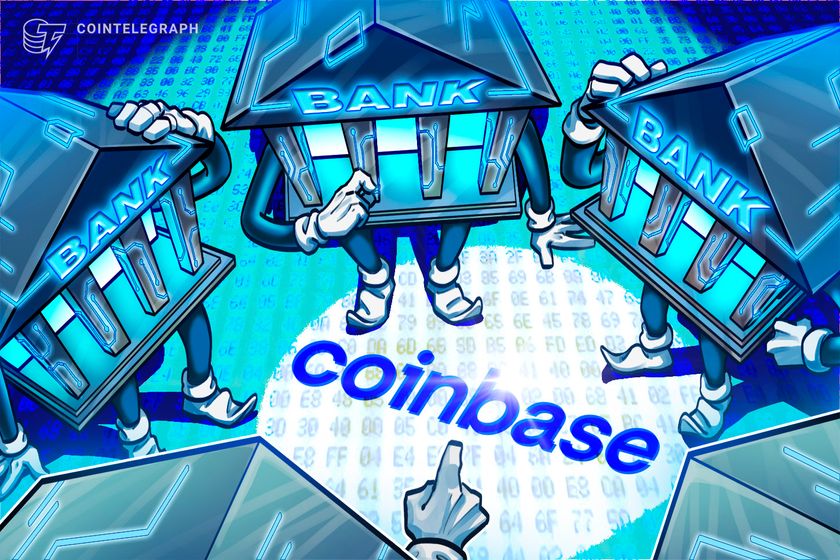 The Independent Community Bankers of America warns Coinbase’s trust charter falls short of regulatory standards and could pose risks to consumers and the financial system. The Independent Community Bankers of America has opposed the Office of the Comptroller of the Currency’s (OCC) conditional approval of Coinbase’s national trust bank charter, warning the application falls short of regulatory standards and could pose risks to consumers and the financial system. On Thursday, ICBA said Coinbase’s application shows deficiencies in risk controls, profitability and resolution planning, and argued the OCC lacks statutory authority to expand trust powers for crypto-related activities without applying the full set of banking regulations. The group said the decision reflects a broader trend of nonbank entities seeking access to the benefits of bank charters without meeting the same regulatory requirements. It wrote: Read more
 -
CryptoPotato - 17:37 Apr 03, 2026
The cryptocurrency has climbed to its highest level since late January. -
Decrypt - 17:28 Apr 03, 2026
Dmail’s team said it struggled with infrastructure costs and failed monetization attempts despite five years of development. -
Cointelegraph.com - 17:12 Apr 03, 2026
 Stephanie Cutter will join the prediction markets company as a policy adviser, having previously worked in Democratic lawmakers’ campaigns. Predictions market platform Kalshi announced that a former staffer of US President Barack Obama had joined the company as a policy adviser. In a Thursday notice, Kalshi said Stephanie Cutter would join the prediction markets company from Precision Strategies, a communications firm she co-founded in 2013. Kalshi said the addition of Cutter came as the company planned to “deepen its relationships in DC and across the country.” According to Kalshi co-founder and CEO Tarek Mansour, Cutter’s experience allowed her to “get [the] message to the right people,” highlighting her background in government and politics. The predictions market already has staff with ties to the US government, including the appointment of the president’s son, Donald Trump Jr., as a strategic adviser in January 2025, the week before his father took office. Read more
 -
Cointelegraph.com - 17:12 Apr 03, 2026
 Circle had several hours or days to freeze illicit USDC funds in many of the 15 cases presented, but failed to act, according to ZachXBT. Onchain detective ZachXBT claims that Circle, the issuer of the USDC (USDC) stablecoin, has failed to freeze or blacklist about $420 million in illicit fund flows since 2022. Circle can freeze illicit funds and blacklist wallet addresses, but either took “minimal” action to freeze illicit flows or failed to act in 15 separate hack-and-fraud cases, including those linked to North Korean (DPRK) state-affiliated hackers, ZachXBT said. The stablecoin issuer allegedly failed to freeze $9 million in USDC from the GMX decentralized exchange (DEX) hack in July 2025, and blacklisted wallets linked to the $200 million Cetus DEX hack in May 2025 after USDC was converted into Ether (ETH), according to ZackXBT. Read more
 -
Decrypt - 17:09 Apr 03, 2026
Acting Attorney General Todd Blanche directed his staff last year to lay off crypto developers—but also oversaw their continued prosecution. -
CryptoSlate - 17:05 Apr 03, 2026
Stablecoin issuer Circle is facing mounting scrutiny from blockchain researchers after millions of USD Coin (USDC) were stolen and flowed unimpeded through its proprietary bridge during the $285 million exploit of the Solana-based Drift Protocol. The inaction during the April 1 attack, which is now the largest decentralized finance (DeFi) hack of 2026, stands in […] The post Circle under fire as $230M in stolen USDC flows unblocked days after freezing legitimate accounts appeared first on CryptoSlate. -
Decrypt - 16:34 Apr 03, 2026
The Solana-based project reached out to wallets holding stolen funds on Ethereum. -
CoinDesk - 16:32 Apr 03, 2026
Price tracks broader crypto flows, with range-bound structure intact until $1.35 breaks.