Crypto
-
CryptoSlate - 12:20 Nov 25, 2025
On Nov. 24, security firm Aikido detected a second wave of the Shai-Hulud self-replicating npm worm, compromising 492 packages with a combined 132 million monthly downloads. The attack struck major ecosystems, including AsyncAPI, PostHog, Postman, Zapier, and ENS, exploiting the final weeks before npm’s Dec. 9 deadline to revoke legacy authentication tokens. Aikido’s triage queue […] The post Malicious worm compromises crypto domains in supply-chain attack appeared first on CryptoSlate. -
CryptoPotato - 12:13 Nov 25, 2025
Ethereum holds above $2.7K as Wyckoff support and bullish divergence emerge. Treasuries add 70K ETH while retail exits near key levels. -
CryptoPotato - 12:03 Nov 25, 2025
Walletium unveils Mild Staking—an exclusive, demand-driven mechanism that credits rewards in TEX, the wallet’s native utility token, directly inside a fast, secure, commission-free experience on Telegram. Users can stake supported assets—TRON/TRX, TON, BTC, BNB, ETH, SOL, and USDT on each network—and receive a daily TEX credit tied to real internal activity across Walletium’s liquidity flows […] -
Cointelegraph.com - 11:52 Nov 25, 2025
 The fresh debt draw shows how Metaplanet is using both debt and preferred equity to accelerate Bitcoin purchases and income-generation strategies. Tokyo-listed Bitcoin treasury company Metaplanet has drawn another $130 million in Bitcoin-backed credit, expanding its use of collateralized borrowing to accelerate BTC purchases, income-generation strategies and potential share buybacks. On Tuesday, Metaplanet disclosed it executed the loan on Friday under a previously announced credit facility. The borrowing forms part of the company’s $500 million credit line, which allows it to raise short-term liquidity using its Bitcoin (BTC) as collateral. With the fresh capital, the company has now drawn $230 million in cumulative loans from the facility, up from the $100 million disclosed for an earlier Oct. 31 credit pull. Read more
 -
CryptoSlate - 11:49 Nov 25, 2025
The memecoin market is at a subtle inflection point. Amidst sector-wide consolidation, hype flickers across different public chains—Solana one day, Base the next, with no one knowing where it will land tomorrow. Countless traders find themselves adrift in a sea of a thousand islands, where each island (chain) is rumored to hold treasure, but a […] The post The Next Memecoin Paradigm: Charting a Broader Course Beyond Chain-Centric Islands appeared first on CryptoSlate. -
CoinDesk - 11:46 Nov 25, 2025
BTC drifts or stabilizes during Asia trading hours, softens slightly during the European handover and then absorbs most of its losses once U.S. equity markets open. -
Cointelegraph.com - 11:34 Nov 25, 2025
 A suspected airdrop farmer burned through their entire $112,000 of MON rewards in hundreds of failed transaction attempts. A crypto airdrop farmer lost more than $112,000 in newly issued tokens by burning the entire reward on failed blockchain transactions. In crypto, a professional airdrop farmer (or squatter) is a person who interacts with emerging protocols solely for the airdrop rewards, often using multiple wallets to compound the rewards. Cryptocurrency wallet 0x7f4 received about $112,700 worth of Monad (MON) tokens as a reward for activity leading up to the launch. Read more
 -
CryptoPotato - 11:27 Nov 25, 2025
A rare setup has appeared as Bitcoin hits depressed Sharpe levels. -
Cointelegraph.com - 11:19 Nov 25, 2025
 Strike CEO Jack Mallers said JPMorgan closed his accounts without explanation, reigniting fears of Operation Chokepoint 2.0 and renewed pressure on crypto companies. Banking giant JPMorgan Chase’s decision to cut ties with the CEO of Bitcoin payments company Strike is reigniting concerns about a renewed wave of US “debanking,” an issue that haunted the crypto industry during the 2023 banking turmoil. Jack Mallers, CEO of the Bitcoin (BTC) Lightning Network payments company Strike, said Sunday on X that JPMorgan closed his personal accounts without explanation. “Last month, J.P. Morgan Chase threw me out of the bank,” Mallers wrote. “Every time I asked them why, they said the same thing: We aren’t allowed to tell you.” Read more
 -
Decrypt - 10:57 Nov 25, 2025
A federal judge has temporarily blocked OpenAI from using "Cameo" or confusingly similar marks for its Sora AI video generation products. -
Cointelegraph.com - 10:56 Nov 25, 2025
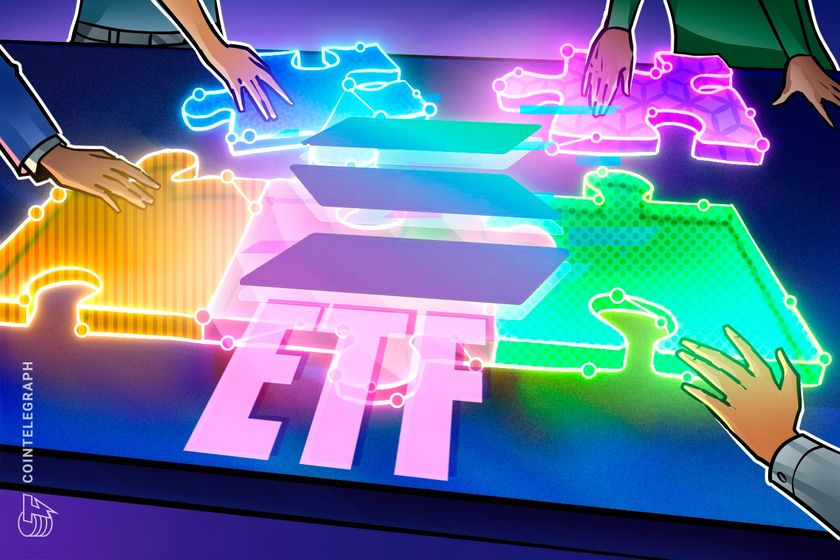 Solana ETFs have pulled in $369 million so far this month as investors appear to favor yield-bearing products, while Bitcoin and Ether ETFs faced billions in redemptions. Despite steep redemptions from Bitcoin and Ethereum ETFs, Solana attracted $369 million of inflows this month as investors increasingly positioned SOL as a yield-generating asset. According to Bohdan Opryshko, co-founder and chief operating officer of Everstake, both institutions and retail holders are “treating Solana as a yield-generating asset rather than a speculative trade.” He told Cointelegraph that Solana’s native staking rewards of 5%–7% have created an appeal that Bitcoin (BTC) ETFs cannot match, and only a limited set of Ethereum products currently offer. Read more
 -
Cointelegraph.com - 10:31 Nov 25, 2025
 Federal Decree Law No. 6 expands the UAE central bank’s authority over DeFi, ending the “just code” defense and imposing penalties of up to $272 million. A new financial law in the United Arab Emirates is set to bring decentralized finance (DeFi) and the broader Web3 industry under regulatory parameters, signaling an important shift for the industry. The UAE’s new central bank law, Federal Decree Law No. 6 of 2025, introduces “one of the most consequential regulatory shifts” for the crypto industry in the region, Irina Heaver, a local crypto lawyer and founder of NeosLegal, told Cointelegraph. “It brings protocols, DeFi platforms, middleware, and even infrastructure providers into scope if they enable activities such as payments, exchange, lending, custody, or investment services,” Heaver said. Read more
 -
CryptoSlate - 10:21 Nov 25, 2025
Wall Street has finally built a bridge to the internet’s most famous meme coin, but on day one, no one crossed it. On Nov. 24, Grayscale’s Dogecoin ETF (GDOG) began trading on the NYSE Arca without logging a single unit of net creation, a stark signal that the appetite for “meme-beta” in a regulated wrapper […] The post Spot Dogecoin ETF launch gets no inflows revealing concerning market reality appeared first on CryptoSlate. -
CryptoPotato - 09:28 Nov 25, 2025
[PRESS RELEASE – Zug, Switzerland, November 25th, 2025] TrustLinq enables cryptocurrency spending for individuals and businesses by facilitating direct crypto-to-fiat payments without a bank account. TrustLinq, a Swiss-regulated crypto-to-fiat payment intermediary, announced the launch of its pioneering crypto-to-fiat payment platform that enables cryptocurrency holders to send fiat payments directly from crypto holdings to anyone, anywhere […] -
CryptoPotato - 09:27 Nov 25, 2025
XRP holds above $2 amid ETF inflows of $164M and key technical support. Analysts eye potential upside to $7 if the level continues to hold. -
Cointelegraph.com - 09:17 Nov 25, 2025
 The Pump.fun co-founder disputed claims of a massive off-ramp and said Pump.fun’s USDC shifts were routine treasury operations. Pseudonymous Pump.fun co-founder Sapijiju rejected claims that the project cashed out more than $436 million in stablecoins, calling the allegations “complete misinformation” from the blockchain analytics firm Lookonchain. In an X post, Sapijiju addressed the report, insisting that none of the transferred funds were sold. He said the USDC originated from the PUMP token’s initial coin offering (ICO) and was simply redistributed to internal wallets as part of the company’s treasury management process. “What’s happening is a part of Pump’s treasury management, where USDC from the $PUMP ICO has been transferred into different wallets so the company’s runway can be reinvested into the business,” Sapijiju. “Pump has never directly worked with Circle.” Read more
 -
CryptoPotato - 08:59 Nov 25, 2025
Whales with 1,000+ BTC are still selling, while mid-sized wallets (10–1,000 BTC) quietly accumulated the dip.