Cointelegraph.com
Source:
https://cointelegraph.com
Found 10245 news
-
Cointelegraph.com - 06:02 Jan 29, 2026
 The validator entry queue for the Ethereum network is heavily congested, with 3.6 million ETH lined up to be staked with a forecasted 63-day wait. Ether held on crypto exchanges has declined over the last six months as the price of Ether has held steady, while holders are continuing to participate in staking, according to Santiment. In an X post on Tuesday, Santiment shared data from Sanbase showing that after July saw the highest amount of Ether (ETH) on exchanges with 12.31 million tokens, the amount has steadily declined to 8.15 million. Santiment analysts predict that the amount of Ether on exchanges could continue to decline as price movements remain muted and more ETH is sent for staking. Ether has been drifting between $2,801 and $3,034 in the last seven days, according to CoinGecko. Read more
 -
Cointelegraph.com - 05:53 Jan 29, 2026
 Cere Network is facing a second lawsuit this month that accuses its co-founder and board of fraud in relation to a public token launch for the platform in 2021. Update (Jan 29, 10:30 a.m. UTC): This article has been updated to correct the name of the plaintiff. The co-founder and board of crypto infrastructure platform Cere Network are facing a $100 million lawsuit that alleges a pump-and-dump scheme tied to the project’s 2021 token launch. In a lawsuit filed in a San Francisco federal court on Tuesday, Vivian Liu, who said she worked for and invested in the company, claimed Cere co-founder Fred Jin, his brother, his wife, and the company’s board stole $41 million from investors. Read more
 -
Cointelegraph.com - 02:00 Jan 29, 2026
 Sony has added a $13 million investment to its partnership with Startale, signaling a longer-term infrastructure strategy, a year after Soneium’s mainnet debut. Sony Group Corp. made a follow-on investment in Startale Group, deepening its involvement in the Soneium blockchain about a year after the network’s mainnet launch. In a Thursday announcement sent to Cointelegraph, Startale disclosed an additional investment of $13 million from the Sony Innovation Fund. The funding round came after Soneium moved from testnet experimentation into live operation, allowing Sony to observe how the network performed under real-world conditions. Data from Soneium’s public block explorer shows the network has processed about 524 million transactions since its mainnet launch in January 2025. Over the same period, Nansen data shows Avalanche and Algorand recorded 442 million and 383 million transactions, respectively. Transaction counts alone do not indicate user adoption or economic activity. Read more
 -
Cointelegraph.com - 00:24 Jan 29, 2026
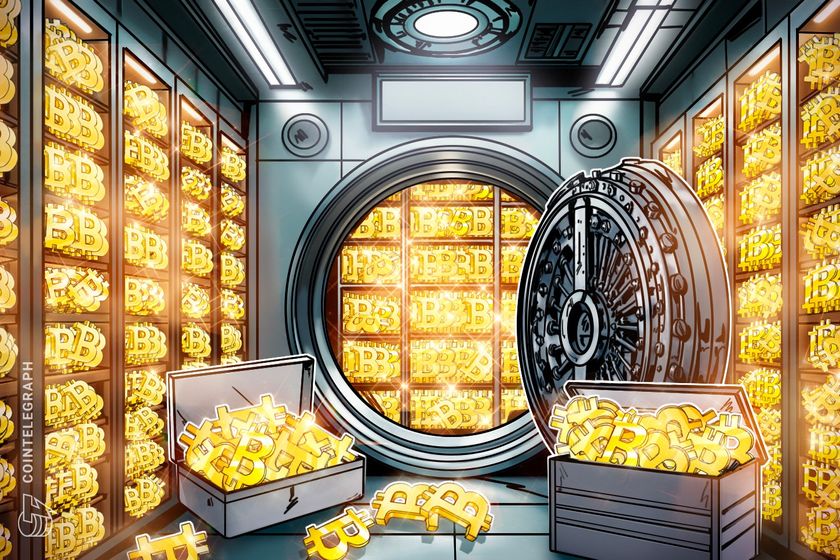 Strive has now become one of the top 10 largest corporate Bitcoin holders, with a treasury of 13,132 BTC, worth $1.17 billion. Bitcoin treasury company Strive said it has retired 92% of the debt it inherited after acquiring Semler Scientific earlier this month, and bought another 334 Bitcoin, following the closure of a preferred stock offering. Strive said on Wednesday that it saw $600 million in demand for its Variable Rate Series A Perpetual Preferred Stock, trading under “SATA,” and had upsized its target raise from $150 million to $225 million in response. The stock offering is a form of long-duration equity financing designed to fund Bitcoin (BTC) accumulation without increasing leverage. Read more
 -
Cointelegraph.com - 21:54 Jan 28, 2026
 US President Donald Trump's administration is seeking to break a deadlock over crypto market structure legislation as lawmakers remain divided on stablecoin yield. Officials in the administration of US President Donald Trump are reportedly set to sit down with executives from the banking and cryptocurrency industries on Monday as lawmakers attempt to revive the stalled CLARITY Act. People familiar with the matter told Reuters the meeting will be hosted by the White House’s crypto council and will bring together industry trade groups to discuss how the bill treats interest and other rewards offered on dollar-pegged stablecoins. The legislation has been held up in the Senate for months, with a scheduled Banking Committee vote postponed earlier this month amid concerns from lawmakers and industry groups over the stablecoin interest provision. Read more
 -
Cointelegraph.com - 21:30 Jan 28, 2026
 Built on Ripple’s GTreasury acquisition, the platform integrates cash management with blockchain settlement as digital assets gain a foothold on corporate balance sheets. Ripple has expanded its push into enterprise finance with the launch of a corporate treasury platform that combines traditional cash management tools with digital asset infrastructure. According to a blog post on Tuesday, the platform combines GTreasury’s treasury management software with Ripple’s blockchain and stablecoin rails, allowing companies to manage cash, payments and liquidity from a single system while maintaining existing controls and workflows. Ripple said the platform is designed to address common treasury pain points such as multi-day settlement cycles and limited visibility across accounts, using digital asset infrastructure to shorten settlement times and reduce cross-border payment friction. Read more
 -
Cointelegraph.com - 21:18 Jan 28, 2026
 The FOMC paused rate cuts, but a weakening dollar may be doing the easing instead, reshaping expectations for Bitcoin, crypto markets and US monetary policy. The US Federal Reserve voted to leave interest rates unchanged on Wednesday, a decision that was widely anticipated by investors. While the move signals a pause for now, market commentators suggest a path toward monetary easing could still emerge indirectly. Members of the Federal Open Market Committee (FOMC) voted to hold the federal funds rate steady for the first time since July, keeping it in a range of 3.5% to 3.75%, while cautioning that inflation remains “somewhat elevated.” Two Fed officials dissented, voting in favor of an additional 25-basis-point rate cut. Read more
 -
Cointelegraph.com - 20:12 Jan 28, 2026
 More than a month after announcing plans to move deeper into prediction markets, Coinbase said it would launch its offering for ”sports, politics, culture and more.” Cryptocurrency exchange Coinbase announced the rollout of prediction markets offering in all 50 US states in partnership with Kalshi. In a Wednesday X post, Coinbase said it was offering trades on “any real-world outcomes across sports, politics, culture and more” following the launch of prediction markets. The announcement followed the exchange’s plans for onchain prediction markets in partnership with Kalshi in December. Event contracts on prediction market platforms such as Kalshi and Polymarket allow users to bet on the outcomes of a variety of topics, from sporting events to US politics, with the probability of each event assigned by user participation. The launch came about a week ahead of one of the biggest sporting events in the US, the National Football League’s Super Bowl championship game. Read more
 -
Cointelegraph.com - 19:25 Jan 28, 2026
 The funding represented a 37% increase in Fairshake’s cash on hand since it last disclosed its holdings in July 2025. Crypto-backed political action committees (PACs) are gearing up for the 2026 US midterm elections, with industry-funded groups signaling plans to expand their influence as debates over digital asset regulation intensify on Capitol Hill. Fairshake, the cryptocurrency industry-backed PAC, disclosed on Wednesday holding $193 million in cash on hand ahead of this year’s US midterm elections. In an announcement shared with Cointelegraph, Fairshake spokesperson Josh Vlasto said the PAC had received $25 million from Ripple Labs and $24 million from a16z in addition to a $25 million contribution from cryptocurrency exchange Coinbase in 2025. According to Vlasto, these donations contributed to Fairshake having more than $193 million in cash on hand as of January, about a 37% increase since it last disclosed its holdings in July. At the time of publication, the $193 million figure was not publicly avai...
 -
Cointelegraph.com - 19:14 Jan 28, 2026
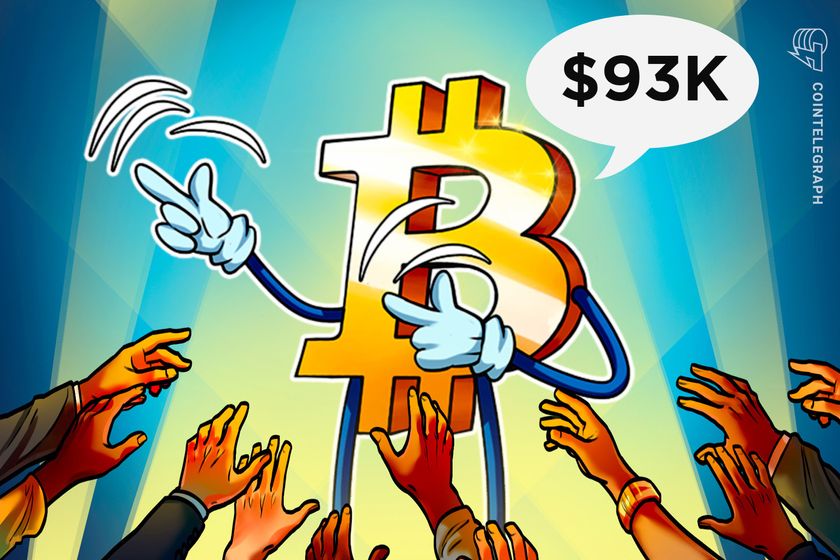 Bitcoin retreated from intraday highs after the US Fed left interest rates unchanged, but futures market data suggests traders may attempt to seize the short liquidity in BTC’s $93,500 range. Bitcoin (BTC) staged a quick rally to $90,600 on Wednesday, but the gains evaporated as the US Federal Reserve decision to forgo an interest rate cut was announced. Despite the whipsaw price action from Bitcoin, data shows traders eyeing a potential move to $93,500. One analyst said that the price level stands out as a key liquidation zone, with over $4 billion in leveraged short positions at risk of liquidation. Key takeaways: Over $4.5 billion in BTC short liquidations sit near $93,500, making it a possible stop-hunt level for traders. Read more
 -
Cointelegraph.com - 17:55 Jan 28, 2026
 The US financial regulator has just one Senate-confirmed commissioner, leading to lawmakers' concerns about the Commodity Futures Trading Commission's balance and effectiveness. US lawmakers are expected to return to Capitol Hill on Wednesday after inclement weather delayed committee meetings and votes, with attention turning to how senators will handle proposed amendments to a long-awaited crypto market structure bill. On Thursday, senators on the Senate Agriculture Committee are scheduled to meet for a markup on the Digital Commodity Intermediaries Act (DCIA), a bill to establish a digital asset market structure framework. The markup is one of the first attempts by the chamber to advance market structure legislation amid the Senate Banking Committee postponing its markup after Coinbase pulled its support for the bill. Read more
 -
Cointelegraph.com - 17:40 Jan 28, 2026
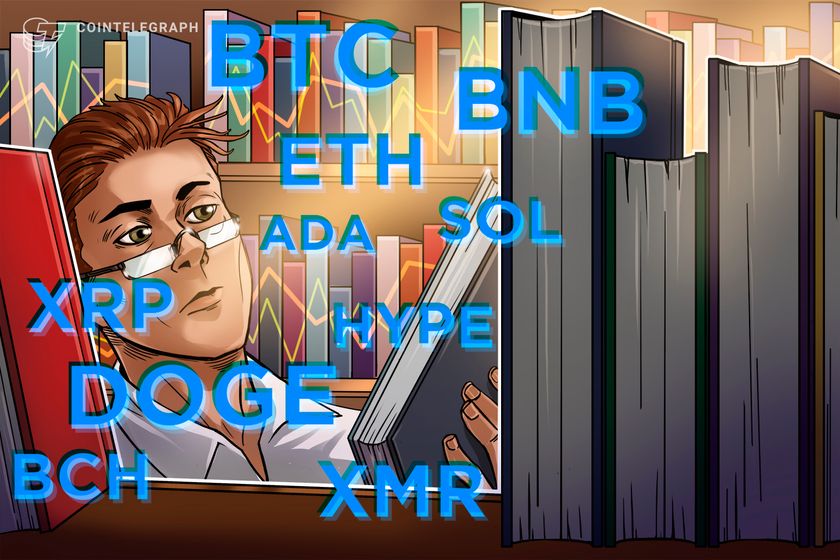 Bitcoin rallied above $90,000 as the US dollar index weakened, gold hit new highs and traders positioned ahead of Wednesday's FOMC. Will a rate cut or pause extend the BTC, altcoin rally? Key points: Bitcoin is facing resistance at $90,500, but a positive sign is that the bulls have kept up the pressure. Several major altcoins are attempting to start a recovery, but are expected to face selling at higher levels. Read more
 -
Cointelegraph.com - 17:34 Jan 28, 2026
 The digital wallet allows insurance premiums and claims to be settled in crypto through a regulated custody partnership with Zodia Custody. Dubai Insurance has launched a crypto-enabled digital wallet that allows policyholders to pay insurance premiums and receive claims settlements in digital assets. The wallet is designed to support the receipt of premiums and the payment of insurance claims in digital assets and is built on institutional custody infrastructure provided by Zodia Custody. The company said the wallet operates within existing regulatory and compliance frameworks in the United Arab Emirates (UAE), and described it as the first such offering in the country’s insurance sector. Read more
 -
Cointelegraph.com - 16:31 Jan 28, 2026
 Bitcoin disappointed with an apparent failed breakout above $90,000 after gold soared to fresh highs and US dollar strength nosedived. Bitcoin (BTC) attempted a rebound past $90,000 at Wednesday’s Wall Street open as markets awaited US macro cues. Key points: Bitcoin struggles to hold a $90,000 uptick as gold surges and US dollar strength crumbles. Read more
 -
Cointelegraph.com - 16:18 Jan 28, 2026
 Fidelity will issue a stablecoin through its newly approved national trust bank, signaling deeper institutional use of blockchain-based payment infrastructure. Fidelity Investments plans to launch a new stablecoin next month, marking a logical next step for the asset manager as it expands its digital-asset infrastructure following conditional approval for a national trust bank from the Office of the Comptroller of the Currency. Bloomberg reported Wednesday that the Fidelity Digital Dollar, or FIDD, will be issued by Fidelity Digital Assets, National Association, the national trust bank approved by US regulators in December. Fidelity Digital Assets president Mike O’Reilly told the publication that stablecoins could “serve as foundational payment and settlement services,” citing benefits such as real-time settlement and round-the-clock availability. Read more
 -
Cointelegraph.com - 15:23 Jan 28, 2026
 HYPE has entered a classic breakout stage after its onchain activity exploded, with a 45% price rally to $50 next in the cards. Hyperliquid's native token, HYPE (HYPE), is up 23% over the last 24 hours to trade at $33, significantly outperforming other top-cap cryptocurrencies. The altcoin has gained 58% over the last three days to an eight-week high of $34.50 as commodities trading on Hyperliquid surged to new highs. Key takeaways: HYPE has surged over 57% in 72 hours, driven by high commodities trading on Hyperliquid HIP-3 DEXs. Read more
 -
Cointelegraph.com - 14:45 Jan 28, 2026
 Banks warn stablecoins could siphon deposits from the banking system, but policy and regulatory experts say there’s little evidence of it happening yet. Banks warn that stablecoins, especially those paying yield, could pull deposits out of the banking system, but policy and finance experts say there’s little evidence of that so far. Major US bank Standard Chartered recently estimated in a research note that increasing stablecoin adoption could drain bank deposits. The report estimates “that US bank deposits will decrease by one-third of stablecoin market cap,” which stood at $308.15 billion at time of writing, according to DeFiLlama data. The debate has intensified as US lawmakers weigh whether to prohibit interest on stablecoin holdings under a proposed version of the crypto market structure bill, or CLARITY Act, which has been delayed by protests from inside the crypto industry despite banking sector support. Read more
 -
Cointelegraph.com - 14:20 Jan 28, 2026
Just because you can mine crypto on essentially any device doesn’t mean you should. Check out the wildest Bitcoin mining experiments ever. -
Cointelegraph.com - 14:20 Jan 28, 2026
Just because you can mine crypto on essentially any device doesn’t mean you should. Check out the wildest Bitcoin mining experiments ever. -
Cointelegraph.com - 14:20 Jan 28, 2026
Just because you can mine crypto on essentially any device doesn’t mean you should. Check out the wildest Bitcoin mining experiments ever.
10245 items