Cointelegraph.com
Source:
https://cointelegraph.com
Found 10245 news
-
Cointelegraph.com - 20:42 Jan 16, 2026
 It's unclear when US lawmakers will return to address a market structure bill, but CEO David Solomon said Goldman Sachs was monitoring its progress for tokenization and stablecoins. David Solomon, CEO of banking giant Goldman Sachs, has weighed in on the pending digital asset market structure legislation, action on which was recently postponed by the US Senate Banking Committee. In a Thursday earnings call discussing the company’s fourth quarter results for 2025, Solomon said many people at Goldman Sachs were “extremely focused” on issues including the Digital Asset Market Clarity (CLARITY) Act in the US Congress due to its potential impact on tokenization and stablecoins. A markup of the bill scheduled for Thursday was postponed after Coinbase said it would no longer support the legislation as written. In a markup session, a congressional committee debates a bill and proposes amendments while considering whether it should advance to the full chamber for a vote. Read more
 -
Cointelegraph.com - 19:49 Jan 16, 2026
 The new policy will allow borrowers to use Bitcoin, Ether, crypto ETFs and US dollar-backed stablecoins for asset verification and income estimates without liquidation. Newrez plans to treat eligible cryptocurrency holdings as qualifying assets in its mortgage underwriting process, a move that could broaden access to home loans for crypto holders. The change is expected to take effect in February across the lender’s non-agency products, covering home purchases, refinancings and investment properties. While borrowers can already use assets such as stocks and bonds in underwriting, crypto holders have typically been required to sell their positions. At launch, Newrez said it will recognize Bitcoin (BTC), Ether (ETH), spot exchange-traded funds (ETFs) backed by those assets, and US dollar-backed stablecoins. The crypto assets must be held with US-regulated crypto exchanges or fintech platforms, brokerages or nationally chartered banks, the company said. Read more
 -
Cointelegraph.com - 19:20 Jan 16, 2026
 Bitcoin ETF inflows have rebounded, but the total assets under management remains 24% below the all-time high, indicating the recovery has just started. Bitcoin’s (BTC) rally above $97,000 was supported by surging inflows to the spot Bitcoin ETFs, and one analyst says the demand must continue for BTC to break through the $100,000 barrier. Key takeaways: US spot Bitcoin ETFs recorded $1.8 billion in weekly net inflows, the strongest since early October 2025. Read more
 -
Cointelegraph.com - 19:00 Jan 16, 2026
 Bitcoin breached the $95,000 mark this week amid a wider market recovery, as investors digested regulatory delays to the much-awaited CLARITY Act in the US. Cryptocurrency markets posted a broad recovery this week, led by gains in major coins, even as investor attention remained focused on the uncertainty of pending US crypto legislation. Bitcoin (BTC) rose over 5% during the past week to top the $95,000 mark, while Ether (ETH) pumped by around 6.6% on developments related to the top Ethereum treasury companies. US spot Bitcoin exchange-traded funds (ETFs) also returned with a bang, with the funds logging four consecutive days of net positive inflows of around $1.7 billion in total, according to Farside Investors. Read more
 -
Cointelegraph.com - 18:15 Jan 16, 2026
 The deal followed Riot announcing last week that it sold more than $160 million of its Bitcoin holdings as part of a strategy shift, to broaden use of its data centers. Shares of Riot Platforms jumped more than 11% after the crypto miner said it sold Bitcoin to help finance a land acquisition in Texas. In a Friday notice, Riot said the $96 million deal for 200 acres of land in Rockdale, Texas was funded entirely by the sale of about 1,080 Bitcoin (BTC). The miner also signed a data center lease and services agreement with semiconductor company Advanced Micro Devices (AMD), initially deploying 25 megawatts (MW) of “critical IT load capacity.” “These results mark a pivotal moment that cements Riot’s position as a leading data center developer, less than twelve months since the launch of our formal process to evaluate our assets for AI/HPC use,” said Riot CEO Jason Les. Read more
 -
Cointelegraph.com - 18:13 Jan 16, 2026
 The crypto market rally lost momentum as Bitcoin met resistance near $98,000, but technical charts suggest traders will actively buy dips to underlying support levels in altcoins and BTC. Key points: Bitcoin is attempting to find support near the $94,500 level, signaling a positive sentiment. Buyers will have to defend the support levels in select major altcoins, or else the recovery may fizzle out. Read more
 -
Cointelegraph.com - 17:07 Jan 16, 2026
 BTC price surged nearly 150% after a similar BTC–gold undervaluation signal in late 2022, highlighting how extreme discounts have preceded major rallies. Bitcoin (BTC) slipped into its deepest undervaluation against gold (XAU) on Friday, reviving expectations of a potential capital rotation away from the precious metal and back into cryptocurrency markets in 2026. Key takeaways: Bitcoin is at a record undervaluation versus gold, a level historically linked to major BTC bottoms. Read more
 -
Cointelegraph.com - 15:48 Jan 16, 2026
 Bitcoin market research warned that BTC faced another bear market in 2026 if it was unable to reclaim its yearly moving average. Bitcoin (BTC) bulls risk a reality check as BTC price action mimics the 2022 “bear market rally.” Key points: Bitcoin “appears” to be at the start of another bear market as price remains below its yearly moving average. Read more
 -
Cointelegraph.com - 15:00 Jan 16, 2026
 The CLARITY Act is becoming a fight over who controls yield as rules split DeFi companies and incumbents and risk pushing onchain US dollar yield offshore. Since missing its Jan. 15 markup date and being pushed to the end of the month, the Digital Asset Market Clarity (CLARITY) Act is becoming a proxy fight over who gets to intermediate US dollar yield onchain — open decentralized finance (DeFi) protocols and payment rails, or a narrow club of large custodians and banks? With the latest draft tightening how rewards on stablecoins can be offered, critics, including stablecoin issuers and institutional DeFi platforms, warn the bill risks exporting onchain credit offshore rather than making it safer in the United States. Coinbase’s decision to pull support for the bill this week laid bare industry fears that the compromise has tipped too far toward incumbents, the text locking in a punitive model for DeFi and rewards. Read more
 -
Cointelegraph.com - 14:20 Jan 16, 2026
Bitcoin analyst Willy Woo says Bitcoin’s near term future is bright. CLARITY act may have a nasty surprise for XRP holders. Trade Secrets. -
Cointelegraph.com - 14:20 Jan 16, 2026
Bitcoin analyst Willy Woo says Bitcoin’s near term future is bright. CLARITY act may have a nasty surprise for XRP holders. Trade Secrets. -
Cointelegraph.com - 14:00 Jan 16, 2026
 As DePIN projects generate revenue and AI agents move onchain, builders are shifting focus from speculation to fundamentals, but questions remain about Web3’s decentralization ethos. Crypto entered 2026 with a familiar dichotomy: The industry is maturing, but its decentralized identity is at risk. Still, following years heavily dominated by speculation, 2025 became the year that pushed builders and investors toward fundamentals and proved that blockchain can support real-world goods, services and infrastructure. In this week’s episode of Byte-Sized Insight, Cointelegraph explores what that shift looked like on the ground, particularly through the lens of the emerging “machine economy.” Leonard Dorlöchter, co-founder of peaq, argues that 2025 was a turning point in how projects were evaluated. Read more
 -
Cointelegraph.com - 13:58 Jan 16, 2026
 Renewed spot Ethereum ETF inflows topped $474 million this week while network metrics smashed records, positioning ETH for a rally to $4,500 in the coming weeks. Ether (ETH) traded at $3,310, up 11% year-to-date, as renewed ETF buying and record onchain activity placed it on a path toward $4,500 over the next few weeks. Key takeaways: Spot Ethereum ETFs recorded $474.6 million in inflows over four days, outpacing new supply amid a surge in institutional buying. Read more
 -
Cointelegraph.com - 13:57 Jan 16, 2026
 A growing amount of the blockchain industry’s fees are captured by DeFi protocols rather than the underlying networks, signaling a potential investor shift to front-end facing applications. Revenue in the crypto industry is increasingly flowing to user-facing applications rather than the underlying blockchain networks, according to recent data, signaling a potential shift in where investors and developers focus their attention. Decentralized finance (DeFi) applications now capture five times the fees generated by blockchains, according to data shared by Jamies Coutts, chief crypto analyst at crypto intelligence platform Real Vision. The trend suggests that more of the industry’s fees will be captured by DeFi applications like wallets, decentralized exchanges (DEXs) and other protocols, while the underlying networks will attract a smaller share of revenue. Read more
 -
Cointelegraph.com - 13:46 Jan 16, 2026
 The apparent shutdown follows years of scrutiny of one of crypto’s largest fraud marketplaces. A Telegram-based escrow service linked to an illicit online marketplace appears to be winding down operations after refunding more than $130 million in stablecoins, a move that analysts say may disrupt a major hub for crypto-related scams. Tudou Guarantee, a service linked to the Huione Group, has apparently refunded $130 million in Tether USDt (USDT) to the group’s public merchants since the beginning of 2026, according to data shared by blockchain analytics company Bitrace. Refunds began with about $3.7 million on Jan. 1 and peaked at about $18.1 million on Sunday, Bitrace said. Earlier on Friday, the company seemingly announced the shuttering of operations through its Telegram channel, according to screenshots shared by Bitrace. Read more
 -
Cointelegraph.com - 13:00 Jan 16, 2026
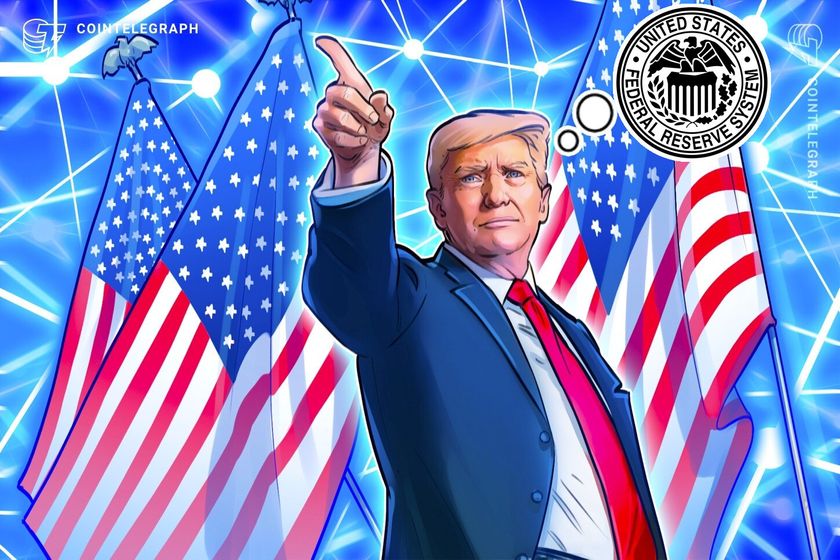 US President Donald Trump is bringing criminal charges against the head of the Fed in what many see as a political move motivated by a desire for lower interest rates. The US Department of Justice, at the direction of President Donald Trump, has opened a criminal investigation into Federal Reserve Chairman Jerome Powell. The DOJ alleges that the chair has misallocated funds in the course of renovations of Federal Reserve office buildings, a claim that Powell has denied. The Fed chair said that the charges were politically motivated and “a consequence of the Federal Reserve setting interest rates based on our best assessment of what will serve the public, rather than following the preferences of the President.” Read more
 -
Cointelegraph.com - 12:45 Jan 16, 2026
 US President Donald Trump said the “leaker on Venezuela has been found and is in jail” as some Polymarket accounts tied to early bets on Maduro’s ouster go silent. US President Donald Trump said the “leaker on Venezuela” has been jailed, a remark that has renewed scrutiny of prediction markets following a series of well-timed bets earlier this month. “The leaker on Venezuela has been found and is in jail right now,” Trump said in the Oval Office on Wednesday, according to a video posted by The Wall Street Journal. Although Trump did not mention prediction markets, blockchain analysts such as Lookonchain have speculated that the leaker may be linked to a cluster of Polymarket accounts that placed concentrated bets on Venezuela outcomes just hours before the news became public. Read more
 -
Cointelegraph.com - 12:35 Jan 16, 2026
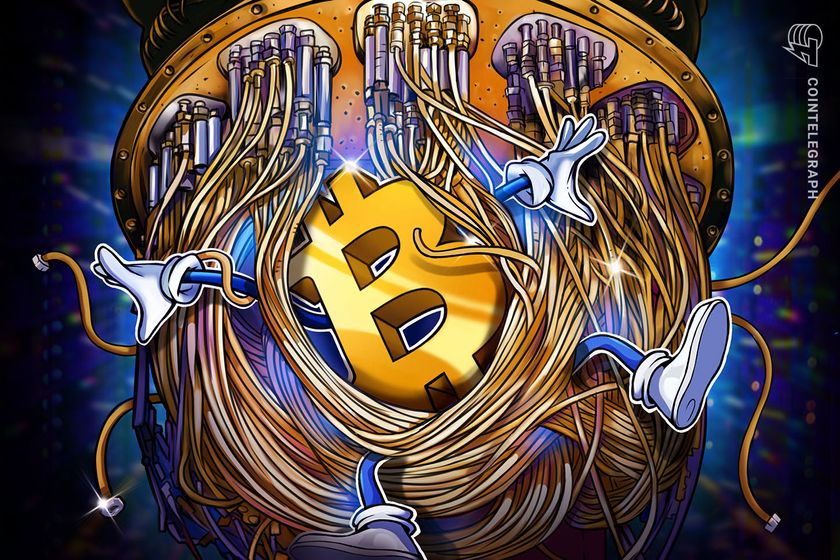 Jefferies’ Greed & Fear strategist Christopher Wood has slashed a 10% Bitcoin allocation from his portfolio and moved into gold, citing the quantum risk to BTC, Bloomberg reports. Investment bank Jefferies’ longtime “Greed & Fear” strategist Christopher Wood has reportedly eliminated Bitcoin from his flagship model portfolio, citing mounting concerns that advances in quantum computing may undermine the cryptocurrency’s long-term security. According to a report by Bloomberg, Wood said in the latest edition of his Greed & Fear newsletter, that the 10% Bitcoin (BTC) allocation he first added in late 2020 has been replaced by a split position in physical gold and gold mining stocks. He argued that quantum breakthroughs would weaken Bitcoin’s claim to be a dependable store of value for pension‑style investors. Read more
 -
Cointelegraph.com - 11:30 Jan 16, 2026
 The rules allow banks to combine token activity with payments and financial services under central bank and tech park oversight. Belarus has introduced a legal framework for so-called “cryptobanks,” formally integrating digital asset activity into the country’s regulated banking system under direct state oversight. On Friday, Belarusian President Alexander Lukashenko signed Decree No. 19, defining how crypto banks may operate and what conditions they must meet to enter the market. The decree positions cryptobanks as joint-stock companies authorized to combine token-based operations with traditional banking, payments and related financial services. Rather than creating a parallel sector for crypto, the framework ties digital asset activity to existing financial oversight mechanisms and infrastructure. Read more
 -
Cointelegraph.com - 10:39 Jan 16, 2026
 Google will require proof of FIU registration acceptance for crypto apps, raising compliance hurdles for offshore exchanges serving South Korean users. Google is rolling out updated crypto app requirements in South Korea, a move that may significantly restrict access to offshore crypto exchanges by tying app availability to local regulatory clearance. According to South Korean media outlet News1, starting Jan. 28, crypto exchange and wallet apps listed on Google Play in South Korea must upload documentation proving that their Virtual Asset Service Provider (VASP) registration with the country's Financial Intelligence Unit (FIU) has been accepted. Google reportedly clarified that developers listing crypto exchange and custodial wallet apps must upload proof of completed FIU registration acceptance through its developer console. Read more
10245 items