Cointelegraph.com
Source:
https://cointelegraph.com
Found 10266 news
-
Cointelegraph.com - 20:09 Oct 31, 2025
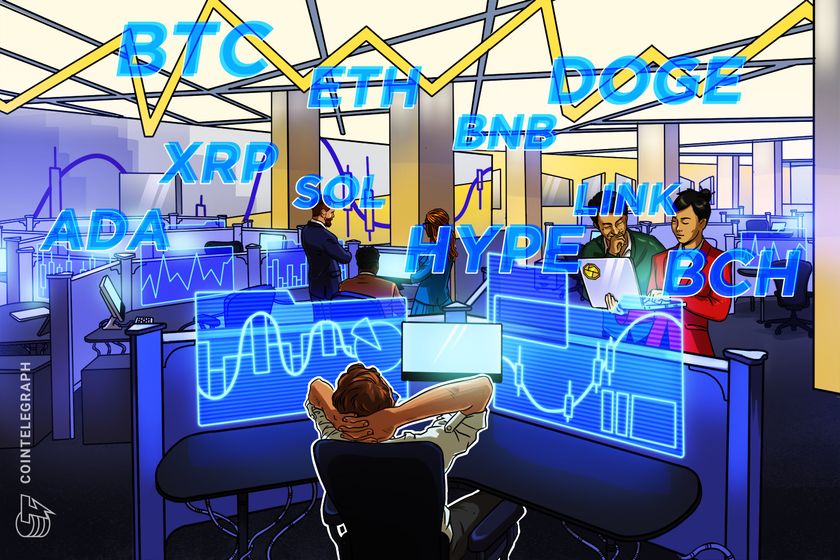 Bitcoin bulls defended the $107,000 level, but the net outflows from the spot Bitcoin ETFs increase the risk of a breakdown in the near term. Key points: For the first time in seven years, Bitcoin is at risk of ending October in the red. Several altcoins have dropped to their crucial support levels, indicating selling on rallies. Read more
 -
Cointelegraph.com - 20:00 Oct 31, 2025
 Citi and Western Union lead Wall Street’s stablecoin charge as Bitcoin miners and lenders shake up the post-halving crypto landscape. The race to develop stablecoin infrastructure is heating up across Wall Street and corporate America. Citigroup is moving ahead with plans to expand its stablecoin payment capabilities, amid growing speculation that major financial institutions are exploring stablecoin initiatives following the passage of the US GENIUS Act — comprehensive legislation expected to take effect in early 2027. The momentum extends beyond banks. Western Union announced plans to build a stablecoin payment network on Solana, underscoring how traditional payment providers are embracing blockchain for faster and cheaper cross-border transactions. Meanwhile, the Bitcoin (BTC) mining landscape is becoming increasingly competitive, with smaller operators rapidly closing the gap on industry leaders. And in digital lending, Ledn reported more than $1 billion in Bitcoin-backed loan originations this year — evi...
 -
Cointelegraph.com - 20:00 Oct 31, 2025
Citi and Western Union lead Wall Street’s stablecoin charge as Bitcoin miners and lenders shake up the post-halving crypto landscape. The race to develop stablecoin infrastructure is heating up across Wall Street and corporate America. Citigroup is moving ahead with plans to expand its stablecoin payment capabilities, amid growing speculation that major financial institutions are exploring stablecoin initiatives following the passage of the US GENIUS Act — comprehensive legislation expected to take effect in early 2027. The momentum extends beyond banks. Western Union announced plans to build a stablecoin payment network on Solana, underscoring how traditional payment providers are embracing blockchain for faster and cheaper cross-border transactions. Meanwhile, the Bitcoin (BTC) mining landscape is becoming increasingly competitive, with smaller operators rapidly closing the gap on industry leaders. And in digital lending, Ledn reported more than $1 billion in Bitcoin-backed loan originations this year — evi... -
Cointelegraph.com - 19:59 Oct 31, 2025
 Need to know what happened in crypto today? Here is the latest news on daily trends and events impacting Bitcoin price, blockchain, DeFi, NFTs, Web3 and crypto regulation. Today in crypto, US Treasury Secretary Scott Bessent praised Singapore’s approach to digital asset regulation. The Bitcoin white paper, published by Satoshi Nakamoto, turned 17 years old, but a struggling BTC price has marred the occasion, as it faces its first red October in seven years. Elsewhere, Michael Saylor said that Strategy is unlikely to look at acquiring other Bitcoin treasury firms as there’s too much uncertainty. US Treasury Secretary Scott Bessent has praised Singapore’s proactive approach to digital assets and stablecoin regulation, highlighting what he described as a model for effective and secure innovation in financial technology. Speaking at the Asia-Pacific Economic Cooperation (APEC) summit in South Korea, Bessent met with Singapore Prime Minister Lawrence Wong to discuss financial cooperation and the future of digital ...
 -
Cointelegraph.com - 19:18 Oct 31, 2025
 Custodia said it was “actively considering” petitioning the appellate court for a rehearing following the Tenth Circuit judgment, filed more than five years after its application. A US appellate court has ruled against Custodia Bank, the crypto-friendly institution founded by Caitlin Long, siding with the Federal Reserve in a lower court decision. In a Friday judgment in the US Court of Appeals for the Tenth Circuit, three circuit judges affirmed a lower court ruling in the District of Wyoming. The appeal, filed in April 2024 after the court ruled against granting Custodia a US Federal Reserve master account, was the latest setback since the crypto-friendly bank first submitted its application in October 2020. “This case comes clothed in 21st Century terms: cryptocurrency, digital assets, instant wire transfers, and master accounts,” said the Friday judgment. “But there is nothing new about this issue. Courts have probed the legality of our nation’s central bank and interpreted the relevant statutes since the...
 -
Cointelegraph.com - 19:18 Oct 31, 2025
Custodia said it was “actively considering” petitioning the appellate court for a rehearing following the Tenth Circuit judgment, filed more than five years after its application. A US appellate court has ruled against Custodia Bank, the crypto-friendly institution founded by Caitlin Long, siding with the Federal Reserve in a lower court decision. In a Friday judgment in the US Court of Appeals for the Tenth Circuit, three circuit judges affirmed a lower court ruling in the District of Wyoming. The appeal, filed in April 2024 after the court ruled against granting Custodia a US Federal Reserve master account, was the latest setback since the crypto-friendly bank first submitted its application in October 2020. “This case comes clothed in 21st Century terms: cryptocurrency, digital assets, instant wire transfers, and master accounts,” said the Friday judgment. “But there is nothing new about this issue. Courts have probed the legality of our nation’s central bank and interpreted the relevant statutes since the... -
Cointelegraph.com - 19:00 Oct 31, 2025
 Michael Saylor still foresees a $150,000 Bitcoin price by the end of the year, despite temporary concerns with import tariff escalations. This week started with a promising cryptocurrency market recovery after a $19 billion market crash earlier in the month, as demand for digital assets started rising with a potential end to the tariff wars on the horizon. Crypto investor attention was largely focused on US President Donald Trump’s meeting with China’s President Xi Jinping, aimed at securing a trade deal to avert new import tariffs. However, the positive momentum took a sharp turn on Wednesday, when Bitcoin exchange-traded funds (ETFs) posted $470 million in outflows despite the US Federal Reserve decision to cut interest rates by 25 basis points. Read more
 -
Cointelegraph.com - 19:00 Oct 31, 2025
Michael Saylor still foresees a $150,000 Bitcoin price by the end of the year, despite temporary concerns with import tariff escalations. This week started with a promising cryptocurrency market recovery after a $19 billion market crash earlier in the month, as demand for digital assets started rising with a potential end to the tariff wars on the horizon. Crypto investor attention was largely focused on US President Donald Trump’s meeting with China’s President Xi Jinping, aimed at securing a trade deal to avert new import tariffs. However, the positive momentum took a sharp turn on Wednesday, when Bitcoin exchange-traded funds (ETFs) posted $470 million in outflows despite the US Federal Reserve decision to cut interest rates by 25 basis points. Read more -
Cointelegraph.com - 18:46 Oct 31, 2025
 Older, more established altcoins are likely to be the focus of institutional interest and investment, Maen Ftouni told Cointelegraph. Older cryptocurrencies with an exchange-traded fund (ETF) or expected to receive an ETF will soak up much of the capital deployed during the next altcoin season, according to Maen Ftouni, CEO of CoinQuant, a company that produces algorithmic trading tools. “Not every single coin is going to have massive returns; the liquidity is going to be concentrated into certain places, dinosaurs being one of them, of course,” Ftouni told Cointelegraph at the Global Blockchain Congress 2025 in Dubai, UAE. Ftouni said institutional capital will be directed toward “dinosaur” coins, and attributed the 2024 rally in older cryptocurrencies like XRP (XRP) and Cardano (ADA) to this phenomenon. He said: Read more
 -
Cointelegraph.com - 18:46 Oct 31, 2025
Older, more established altcoins are likely to be the focus of institutional interest and investment, Maen Ftouni told Cointelegraph. Older cryptocurrencies with an exchange-traded fund (ETF) or expected to receive an ETF will soak up much of the capital deployed during the next altcoin season, according to Maen Ftouni, CEO of CoinQuant, a company that produces algorithmic trading tools. “Not every single coin is going to have massive returns; the liquidity is going to be concentrated into certain places, dinosaurs being one of them, of course,” Ftouni told Cointelegraph at the Global Blockchain Congress 2025 in Dubai, UAE. Ftouni said institutional capital will be directed toward “dinosaur” coins, and attributed the 2024 rally in older cryptocurrencies like XRP (XRP) and Cardano (ADA) to this phenomenon. He said: Read more -
Cointelegraph.com - 18:00 Oct 31, 2025
 Zcash’s rise mirrors a shifting mood toward privacy in an increasingly monitored online world. Cryptocurrencies focused on privacy have come onto investors’ radar recently, ranking among the most popular token categories. According to CoinGecko, which tracks a combined market capitalization of almost $22 billion across privacy coins, their value rose 52.2% in the past 24 hours. Rival data aggregator CoinMarketCap places the category at nearly $55 billion, with Zcash (ZEC) now leading the pack. One of the early privacy-focused cryptocurrencies, Zcash launched in October 2016. It traded below $80 at the start of this October but exploded 375% over the month to reach $380 by Halloween, flipping Monero (XMR) as the largest privacy token by market cap. Read more
 -
Cointelegraph.com - 18:00 Oct 31, 2025
Zcash’s rise mirrors a shifting mood toward privacy in an increasingly monitored online world. Cryptocurrencies focused on privacy have come onto investors’ radar recently, ranking among the most popular token categories. According to CoinGecko, which tracks a combined market capitalization of almost $22 billion across privacy coins, their value rose 52.2% in the past 24 hours. Rival data aggregator CoinMarketCap places the category at nearly $55 billion, with Zcash (ZEC) now leading the pack. One of the early privacy-focused cryptocurrencies, Zcash launched in October 2016. It traded below $80 at the start of this October but exploded 375% over the month to reach $380 by Halloween, flipping Monero (XMR) as the largest privacy token by market cap. Read more -
Cointelegraph.com - 17:24 Oct 31, 2025
 Scott Bessent met Prime Minister Lawrence Wong during the APEC 2025 summit, as world leaders gathered to address global growth, energy security and technology. US Treasury Secretary Scott Bessent praised Singapore’s leadership in stablecoin and digital asset adoption during a meeting with Prime Minister Lawrence Wong on Friday, according to an official readout from the US Department of the Treasury. The discussion was held at the Asia-Pacific Economic Cooperation (APEC) 2025 summit in Gyeongju, South Korea, where world leaders are meeting to discuss global growth, energy security and technology. Bessent also told APEC leaders during the Economic Leaders’ Informal Dialogue that through their work with APEC economies, the US is “seeing record levels of capital being invested into advanced manufacturing and technology sectors.” Read more
 -
Cointelegraph.com - 17:24 Oct 31, 2025
Scott Bessent met Prime Minister Lawrence Wong during the APEC 2025 summit, as world leaders gathered to address global growth, energy security and technology. US Treasury Secretary Scott Bessent praised Singapore’s leadership in stablecoin and digital asset adoption during a meeting with Prime Minister Lawrence Wong on Friday, according to an official readout from the US Department of the Treasury. The discussion was held at the Asia-Pacific Economic Cooperation (APEC) 2025 summit in Gyeongju, South Korea, where world leaders are meeting to discuss global growth, energy security and technology. Bessent also told APEC leaders during the Economic Leaders’ Informal Dialogue that through their work with APEC economies, the US is “seeing record levels of capital being invested into advanced manufacturing and technology sectors.” Read more -
Cointelegraph.com - 16:40 Oct 31, 2025
 Crypto users must deal with costly fees, protocol-level restrictions and multiple service providers to execute simple stablecoin transactions. The number of different stablecoin tickers and token standards is fragmenting liquidity across the crypto ecosystem and burdening users with a poor experience that is costly, technical,and time-consuming, according to onchain sleuth ZachXBT. Cross-chain bridging restrictions, gas and transaction fees that must be paid in the native token of the blockchain being used, and a lack of universal token support across exchanges are all obstacles users face in transferring stablecoins across the crypto ecosystem, ZachXBT said. He gave the following example: From there, the user may realize that their exchange of choice doesn’t support the token or a swap on that token and is forced to bridge to a different blockchain, spend more on gas fees, download another wallet or sign up for another exchange to execute the transaction. The lack of a smooth user experience and intuitive us...
 -
Cointelegraph.com - 16:40 Oct 31, 2025
Crypto users must deal with costly fees, protocol-level restrictions and multiple service providers to execute simple stablecoin transactions. The number of different stablecoin tickers and token standards is fragmenting liquidity across the crypto ecosystem and burdening users with a poor experience that is costly, technical,and time-consuming, according to onchain sleuth ZachXBT. Cross-chain bridging restrictions, gas and transaction fees that must be paid in the native token of the blockchain being used, and a lack of universal token support across exchanges are all obstacles users face in transferring stablecoins across the crypto ecosystem, ZachXBT said. He gave the following example: From there, the user may realize that their exchange of choice doesn’t support the token or a swap on that token and is forced to bridge to a different blockchain, spend more on gas fees, download another wallet or sign up for another exchange to execute the transaction. The lack of a smooth user experience and intuitive us... -
Cointelegraph.com - 16:36 Oct 31, 2025
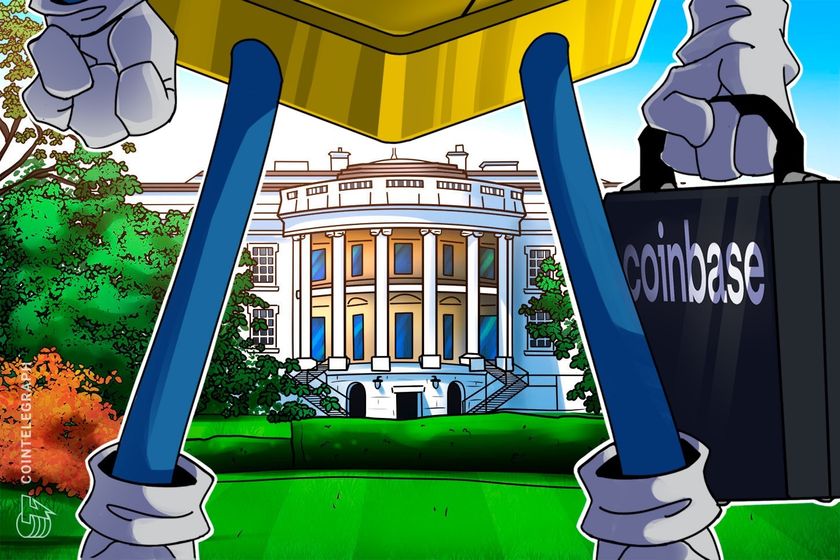 The chief policy officer said that the company was “proud to have supported the building of a new ballroom” in response to allegations of corruption from a US senator. Faryar Shirzad, chief policy officer at US-based cryptocurrency exchange Coinbase, has pushed back against many of the claims made by a US senator regarding ties to the Trump administration. In a Thursday X post, Shirzad responded to criticism from Connecticut Senator Chris Murphy, who claimed on social media that Coinbase was one of the cogs in US President Donald Trump’s “corruption factory” through its contributions to the political action committee (PAC) Fairshake and funding the 2025 inauguration. The senator drew a direct correlation between the funding and the US Securities and Exchange Commission (SEC) dropping an enforcement action against Coinbase, which was filed during the previous administration. Read more
 -
Cointelegraph.com - 16:36 Oct 31, 2025
The chief policy officer said that the company was “proud to have supported the building of a new ballroom” in response to allegations of corruption from a US senator. Faryar Shirzad, chief policy officer at US-based cryptocurrency exchange Coinbase, has pushed back against many of the claims made by a US senator regarding ties to the Trump administration. In a Thursday X post, Shirzad responded to criticism from Connecticut Senator Chris Murphy, who claimed on social media that Coinbase was one of the cogs in US President Donald Trump’s “corruption factory” through its contributions to the political action committee (PAC) Fairshake and funding the 2025 inauguration. The senator drew a direct correlation between the funding and the US Securities and Exchange Commission (SEC) dropping an enforcement action against Coinbase, which was filed during the previous administration. Read more -
Cointelegraph.com - 14:55 Oct 31, 2025
 This month saw the first “Uptober” in seven years to finish with Bitcoin in the red. Meanwhile, BNB takes off thanks to memecoins. Bitcoin (BTC) is about to disappoint investors, as it’s on the verge of ending October, a historically good month, in the red. Meanwhile, BNB Chain has seen record activity as token prices jumped at the beginning of October. In the EU, the territory is still shifting as countries decide whether to support the “Chat Control” proposal, with nine opposing it outright. Concern over the lack of support saw lawmakers in Brussels delay their decision on the controversial regulation until December. While the US government shutdown has ground to a halt most federal business, including decisions on crypto exchange-traded projects, crypto bills in four states moved ahead this month. Read more
 -
Cointelegraph.com - 14:55 Oct 31, 2025
This month saw the first “Uptober” in seven years to finish with Bitcoin in the red. Meanwhile, BNB takes off thanks to memecoins. Bitcoin (BTC) is about to disappoint investors, as it’s on the verge of ending October, a historically good month, in the red. Meanwhile, BNB Chain has seen record activity as token prices jumped at the beginning of October. In the EU, the territory is still shifting as countries decide whether to support the “Chat Control” proposal, with nine opposing it outright. Concern over the lack of support saw lawmakers in Brussels delay their decision on the controversial regulation until December. While the US government shutdown has ground to a halt most federal business, including decisions on crypto exchange-traded projects, crypto bills in four states moved ahead this month. Read more
10266 items