Cointelegraph.com
Source:
https://cointelegraph.com
Found 10266 news
-
Cointelegraph.com - 13:20 Oct 16, 2025
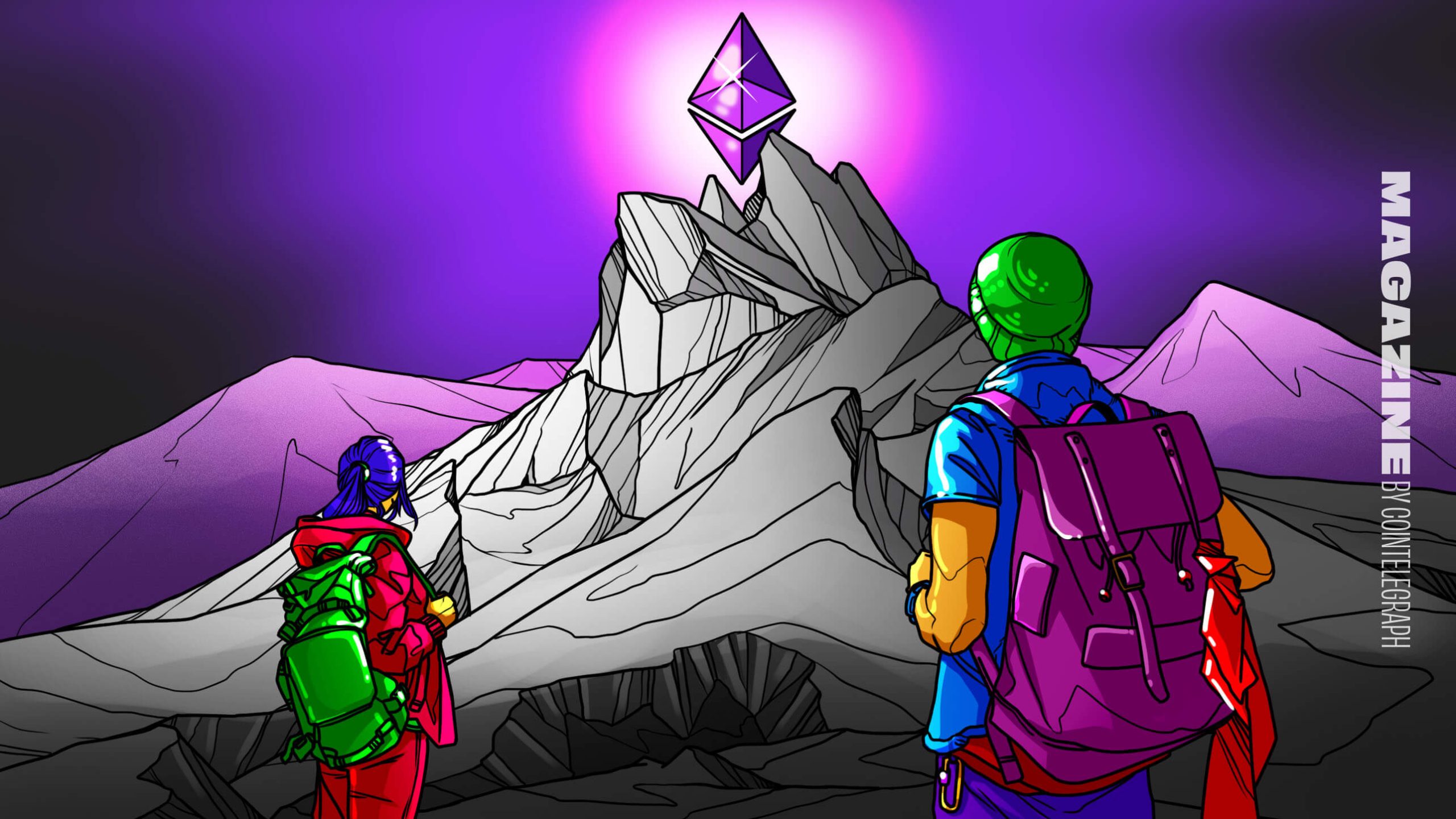 High value DeFi projects like Synthetix and Aave are making Ethereum L1 great again, as Ronin, Celo and Phala switch chains to become L2s. In recent months, a raft of alt-L1s joined Ethereum to become L2s, even as other projects on L2s switch back to the Ethereum mainnet. The Ethereum L1 is reasserting its claim to be the home of high-value DeFi it has seven times more TVL than its nearest rival while the L2 model offers millions in potential savings, along with network effects for alt-L1s that join the ecosystem. Back in March, when bearishness around the extractive L2 roadmap was at its peak, mobile payments network Celo quietly closed down its validator network to become an L2. Now, its saving almost $7 million a year in operating costs. In August, blockchain gaming L1 Ronin announced it was coming home to Ethereum in early 2026, five years after network congestion forced its popular game Axie Infinity off mainnet. Ethereum has largely delivered on the scaling roadmap, says Jeffrey “Jiho” Zirlin, co-founde...
 -
Cointelegraph.com - 13:20 Oct 16, 2025
High value DeFi projects like Synthetix and Aave are making Ethereum L1 great again, as Ronin, Celo and Phala switch chains to become L2s. In recent months, a raft of alt-L1s joined Ethereum to become L2s, even as other projects on L2s switch back to the Ethereum mainnet. The Ethereum L1 is reasserting its claim to be the home of high-value DeFi it has seven times more TVL than its nearest rival while the L2 model offers millions in potential savings, along with network effects for alt-L1s that join the ecosystem. Back in March, when bearishness around the extractive L2 roadmap was at its peak, mobile payments network Celo quietly closed down its validator network to become an L2. Now, its saving almost $7 million a year in operating costs. In August, blockchain gaming L1 Ronin announced it was coming home to Ethereum in early 2026, five years after network congestion forced its popular game Axie Infinity off mainnet. Ethereum has largely delivered on the scaling roadmap, says Jeffrey “Jiho” Zirlin, co-founde... -
Cointelegraph.com - 13:20 Oct 16, 2025
High value DeFi projects like Synthetix and Aave are making Ethereum L1 great again, as Ronin, Celo and Phala switch chains to become L2s. In recent months, a raft of alt-L1s joined Ethereum to become L2s, even as other projects on L2s switch back to the Ethereum mainnet. The Ethereum L1 is reasserting its claim to be the home of high-value DeFi it has seven times more TVL than its nearest rival while the L2 model offers millions in potential savings, along with network effects for alt-L1s that join the ecosystem. Back in March, when bearishness around the extractive L2 roadmap was at its peak, mobile payments network Celo quietly closed down its validator network to become an L2. Now, its saving almost $7 million a year in operating costs. In August, blockchain gaming L1 Ronin announced it was coming home to Ethereum in early 2026, five years after network congestion forced its popular game Axie Infinity off mainnet. Ethereum has largely delivered on the scaling roadmap, says Jeffrey “Jiho” Zirlin, co-founde... -
Cointelegraph.com - 13:20 Oct 16, 2025
High value DeFi projects like Synthetix and Aave are making Ethereum L1 great again, as Ronin, Celo and Phala switch chains to become L2s. In recent months, a raft of alt-L1s joined Ethereum to become L2s, even as other projects on L2s switch back to the Ethereum mainnet. The Ethereum L1 is reasserting its claim to be the home of high-value DeFi it has seven times more TVL than its nearest rival while the L2 model offers millions in potential savings, along with network effects for alt-L1s that join the ecosystem. Back in March, when bearishness around the extractive L2 roadmap was at its peak, mobile payments network Celo quietly closed down its validator network to become an L2. Now, its saving almost $7 million a year in operating costs. In August, blockchain gaming L1 Ronin announced it was coming home to Ethereum in early 2026, five years after network congestion forced its popular game Axie Infinity off mainnet. Ethereum has largely delivered on the scaling roadmap, says Jeffrey “Jiho” Zirlin, co-founde... -
Cointelegraph.com - 13:17 Oct 16, 2025
 Zcash and Dash prices could make an XRP-style comeback as the privacy coin narrative is helping these older “dinosaur” coins break multi-year downtrends. Key takeaways: Zcash and Dash are leading a post-crash “privacy revival,” breaking multi-year downtrends. Monero did not join the rally due to major exchange delistings. Read more
 -
Cointelegraph.com - 13:00 Oct 16, 2025
 What’s the real tension in blockchain, total transparency or total privacy, and how do we unlock both? One of the core tenets of blockchain protocols has been the provision of privacy for users, even if the chains are publicly verifiable and relatively transparent. This is becoming increasingly important as personal privacy rights seem to be eroding, evidenced by the European Union’s recent push for a chat control law that would allow mass scanning of private communications and encrypted messages. The latest episode of The Clear Crypto Podcast delves into the importance of privacy-preserving protocols in conversation with Yannik Schrade, co-founder and CEO of Arcium. Read more
 -
Cointelegraph.com - 12:52 Oct 16, 2025
 BlackRock is expanding into the stablecoin market with a redesigned money market fund, compliant with the new GENIUS Act, to provide a secure reserve vehicle for issuers. BlackRock has redesigned one of its flagship money market funds to meet new US stablecoin rules. The $13.5 trillion asset manager said the revamped fund, called the BlackRock Select Treasury Based Liquidity Fund (BSTBL), will help manage reserves for companies behind US dollar-pegged stablecoins, offering them a safe place to park customer funds, according to CNBC. “We want to be — and we believe we are — a preeminent reserve manager” for stablecoin issuers, Jon Steel, the global head of product and platform for BlackRock’s cash management business, told CNBC. Read more
 -
Cointelegraph.com - 11:38 Oct 16, 2025
 October’s crypto crash has reignited the “Wild West” narrative, but OKX and Standard Chartered are here to prove it’s not the case, OKX Europe’s Erald Ghoos said. Standard Chartered, a major global banking group, is deepening ties with cryptocurrency exchange OKX, becoming its institutional custodian in the European Economic Area (EEA). Standard Chartered and OKX launched a collateral mirroring program in the EEA, allowing local institutional clients to keep their crypto directly in Standard Chartered’s custody, OKX announced on Wednesday. The launch marks an expansion of a pilot initially launched in Dubai in April, aiming to enable institutions to keep their assets with a globally systemically important bank (G-SIB) while mirroring the balances into OKX for trading. Read more
 -
Cointelegraph.com - 11:03 Oct 16, 2025
 The memecoin market lost almost 40% in a day before slightly rebounding, as top tokens like DOGE and SHIB remained deep in the red. The memecoin sector’s market capitalization fell to levels last seen in July, as meme-based tokens struggled to recover from losses incurred during the crypto market’s sharp crash on Friday. CoinMarketCap data showed that on Saturday, the memecoin sector dropped to a low of $44 billion, an almost 40% plunge from $72 billion the previous day. On Sunday, the memecoin market slightly recovered to $53 billion, a level last seen in July before a Solana-based memecoin frenzy ignited the sector’s late-summer rally. Over the last four months, the memecoin market cap has consistently remained above $60 billion, as meme-based tokens have maintained strong retail interest, fueled by Solana and BNB Chain. However, the recent plunge marked a shift in momentum. Read more
 -
Cointelegraph.com - 10:58 Oct 16, 2025
 Despite recent all-time highs and volatility, search interest for “Bitcoin” on Google remained low as the crypto sentiment index returned to “fear.” Key takeaways: Bitcoin retail interest lags despite 2025 all-time highs. Declining spot demand shows a “shift into bearish conditions.” Read more
 -
Cointelegraph.com - 10:52 Oct 16, 2025
 The Trump family’s crypto ventures have generated over $1 billion in profit, led by World Liberty Financial and memecoins including TRUMP and MELANIA. US President Donald Trump’s second term in office has coincided with an extraordinary increase in his personal wealth, much of it linked to a sprawling cryptocurrency empire built by the president and his family. According to a Financial Times investigation, Trump’s crypto ventures have generated more than $1 billion in pre-tax profit over the past year. Trump’s son, Eric, confirmed to the outlet that the family’s actual profits were “probably more.” At the center of this new fortune is World Liberty Financial, a crypto company founded by Trump’s sons and allies, which has sold billions of dollars in tokens and stablecoins. The project, whose website identifies President Donald Trump as “co-founder emeritus,” launched last year with plans for a crypto-lending app. Read more
 -
Cointelegraph.com - 09:53 Oct 16, 2025
 SEC Chair Paul Atkins said the US is a decade behind on crypto and that building a regulatory framework to attract innovation is “job one” for the agency. During a recent event in Washington, DC, US Securities and Exchange Commission (SEC) Chair Paul Atkins said the United States is a decade behind in crypto and that addressing the issue is a priority for the regulator. During the DC Fintech Week event on Wednesday, Atkins said he thinks the United States is “probably 10 years behind” on cryptocurrency. “The crypto aspect is our job one,” he said. Atkins said the SEC aims to “build a strong framework to actually attract people back into the United States who may have fled.” The agency wants this framework to allow innovation to thrive. Read more
 -
Cointelegraph.com - 09:39 Oct 16, 2025
 After acquiring NinjaTrader for $1.5 billion, Kraken expands its derivatives offerings in the US with a $100 million acquisition of Small Exchange. Cryptocurrency exchange Kraken has expanded its derivatives trading offering in its home jurisdiction through a new acquisition. Kraken acquired Small Exchange, a designated contract market maker (DCM), from the trading company IG Group for $100 million, the company announced on Thursday. With the DCM licensed by the US Commodity Futures Trading Commission (CFTC), the Small Exchange acquisition authorizes Kraken to build markets for exchange-listed derivatives in the US. Read more
 -
Cointelegraph.com - 01:46 Oct 16, 2025
 Crypto executives have tipped Ether to rise as high as 200% by the end of the year, led by corporate Ether purchases, ETF accumulation and Ether locked in staking. Nearly all of the Ethereum accumulated by public companies to date occurred within a three-month window between July and September, according to recent data. This comes as several crypto executives predict that Ether’s (ETH) price will rise by as much as 200% before the end of the year. “95% of all ETH held by public companies was purchased in the past quarter alone,” Bitwise Invest said on Wednesday, referring to the $19.13 billion held in public treasuries, equivalent to roughly 4% of Ether’s total supply. Read more
 -
Cointelegraph.com - 22:17 Oct 15, 2025
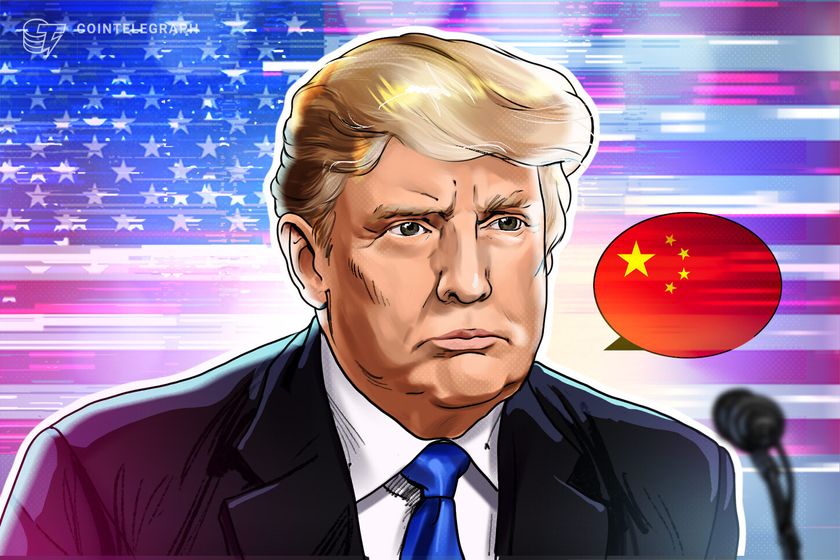 Asked by reporters whether the US is preparing for a trade war with China, US President Donald Trump responded: “Well, we’re in one now.” Update Oct 15, 10:55pm: This article has been updated to include comments from US Treasury Secretary Scott Bessent and the impact of tariffs on the Bitcoin mining industry. US President Donald Trump has confirmed the US is in an active trade war with China after threatening a 100% tariff on all Chinese imports last week. “Well, we’re in one now,” Trump said after being asked by White House reporters whether the US is preparing for a “sustained trade war with China.” ”If we didn’t have tariffs, we would be exposed as being a nothing, we would have no defense,” Trump explained, calling the tariffs an important measure for America’s national security. Read more
 -
Cointelegraph.com - 22:13 Oct 15, 2025
 The company accepted Bitcoin and SolvBTC from investors in a private share deal, adding crypto assets to its corporate treasury. Zeta Network Group said on Wednesday that it raised about $230.8 million through a private share sale, with investors paying in Bitcoin (BTC) or SolvBTC — a wrapped Bitcoin-backed token issued by Solv Protocol. Under the deal, investors will receive newly issued Class A ordinary shares and warrants allowing them to buy additional shares later at $2.55 each. Each share and warrant pair was sold at a combined price of $1.70. According to Zeta, the arrangement will strengthen its balance sheet with Bitcoin-based assets as part of a broader treasury strategy. “By integrating SolvBTC into our treasury, we’re enhancing financial resilience with an instrument that combines Bitcoin’s scarcity with sustainable yield,” said Patrick Ngan, Zeta Network’s chief investment officer. Read more
 -
Cointelegraph.com - 21:52 Oct 15, 2025
 James Wynn, famous for his leveraged crypto bets, said he was "back with a vengeance," but was liquidated just one day after opening new positions. James Wynn, a pseudonymous high-leverage crypto trader, was liquidated for about $4.8 million on Wednesday, according to blockchain analytics company Lookonchain. Wynn opened up $4.8 million in leveraged positions with $197,000 in stablecoins on Tuesday, Lookonchain reported. “Back with a vengeance, coming to get what’s rightly mine,” Wynn said on Tuesday as he placed his bets. Wynn opened a 40x long position on 34 Bitcoin (BTC), valued at $3.85M, a 10x long on 122,000,000 KingPepe (kPEPE) meme tokens, valued at $917,000, and a 10x position on 712 Hyperliquid (HYPE), valued at $28,000, before losing nearly all of it by Wednesday. Read more
 -
Cointelegraph.com - 21:21 Oct 15, 2025
 Brad Garlinghouse has asked that Ripple be “held to the same regulatory standards as a bank” as the company awaits a decision on a national charter from the OCC. Ripple CEO Brad Garlinghouse said at a recent conference that crypto companies should receive the same benefits as traditional financial institutions when following the same laws and regulations. Speaking at DC Fintech Week on Wednesday, Garlinghouse said it was unlikely for regulators such as the US Securities and Exchange Commission (SEC) to roll back their policies after the potential departure of Chair Paul Atkins or US President Donald Trump, who nominated the head of the agency. However, he also criticized the disparity between the treatment of crypto companies and traditional financial institutions, like banks. Read more
 -
Cointelegraph.com - 21:02 Oct 15, 2025
 Crypto users were left scrambling on Wednesday after Paxos minted 300 trillion of PayPal's PYUSD stablecoin, then sent it all to a burn address. Blockchain data showed stablecoin issuer Paxos both minted and burned 300 trillion tokens of the PayPal USD stablecoin within 30 minutes, leaving many crypto users scratching their heads. In a Wednesday X post following the mint and burn, Chaos Labs founder Omer Goldberg said Aave would be temporarily freezing trades for PayPal USD (PYUSD) after an “unexpected high-magnitude transaction” of minting and burning the stablecoin. Ethereum blockchain data showed Paxos minting 300 trillion of the US dollar-pegged stablecoin at 7:12 pm UTC and then burning the entire amount 22 minutes later by sending it to an inaccessible wallet. PYUSD, pegged 1:1 to the US dollar, makes the supply of the burned coins worth about $300 trillion. The stablecoin has a market capitalization of more than $2.3 billion at this writing, making it the sixth-largest coin behind Tether’s USDt (USDT),...
 -
Cointelegraph.com - 21:00 Oct 15, 2025
 The real winner of last week’s crypto flash crash is the CME. Cointelegraph explains how the exchange is increasing its crypto market share. Key takeaways: CME’s futures open interest in the top four cryptocurrencies reached $28.3 billion, surpassing Binance’s $23 billion and Bybit’s $12.2 billion. Despite CME’s lead in open interest, unregulated exchanges still dominate trading volumes, especially in altcoin and perpetual futures. Read more
10266 items