Dawn
Source:
https://www.dawn.com
Found 10444 news
-
Dawn - 09:29 Mar 07, 2026
GAWADAR: At least seven people, including a child, were killed and eight others were injured in a road accident at Manjhi on the Makran Coastal Highway in Balochistan, police said on Saturday. The accident occurred when two cars collided after a broken-down gas tanker was left standing on the road. One of the cars was traveling from Gwadar to Karachi, while the other was coming from Karachi to Gwadar, police said. Makran Coastal Highway Police SP Muhammad Aslam Bangalzai said the injured and the bodies were shifted to Ormara Hospital. Earlier this week, three people — including a husband and wife, and another woman — were killed, and two others were injured in a road accident in the province’s Bakhtairabad area. In another incident on February 10, a local journalist from Balochistan, Aziz Lasi, was killed when three vehicles collided on the Quetta-Karachi National Highway in Winder. Additionally, four people, including two brothers, were killed when a passenger bus coming from Karachi hit their car in the Dar... -
Dawn - 07:57 Mar 07, 2026
Chief of Defence Forces (CDF) and Chief of the Army Staff (COAS) Field Marshal Asim Munir met with Saudi Defence Minister Khalid bin Salman Al Saud in Saudi Arabia on Saturday to discuss the ongoing Middle East conflict and Iran’s attacks on Saudi Arabia. A statement by the Inter-Services Public Relations (ISPR) issued on Saturday said that the CDF visited the Kingdom and met with the defence minister. The two “discussed the gravity of the security situation accruing from Iranian drone and missile attacks on the Kingdom”, as well as joint measures needed to halt them within the framework of the strategic mutual defence agreement signed by Pakistan and Saudi Arabia last year. According to the statement, it was emphasised that unprovoked aggression undermined efforts for regional security and stability and foreclosed options for the peaceful settlement of disputes. “Both sides expressed hope and desire that brotherly country Iran would manifest prudence and sagacity to avoid any miscalculation and strengthen th... -
Dawn - 07:54 Mar 07, 2026
• Media investigation, officials suggest American forces ‘most likely’ responsible • At least 150 killed in Saturday strike • Washington to investigate the incident GENEVA: The United Nations rights chief demanded a swift and transparent probe Friday into the killing of at least 150 people in a deadly strike on an Iranian elementary school, as a media investigation and US officials indicated the United States was likely responsible. The strike hit the Shajare Tayyebeh elementary school in the southern Iranian town of Minab on the first day of a war last Saturday, according to Iranian officials. UN rights chief Volker Turk condemned “this absolutely tragic incident” and said he hoped investigations would be “prompt, and that they will be done in full transparency”. “We also expect accountability to be served, because obviously mistakes were clearly made,” he told reporters in Geneva. Neither the US nor Israel has claimed responsibility for the attack, which occurred near sites controlled by the Islamic Revolut... -
Dawn - 05:23 Mar 07, 2026
WASHINGTON: Virginia’s legislature has passed a new education law that bars public schools from teaching former President Donald Trump’s version of recent history, particularly regarding the January 6, 2021, attack on the US Capitol. Under the measure, approved by the Democratic-controlled Virginia General Assembly, schools cannot present the attack as a “peaceful protest” or claim that the 2020 presidential election was stolen through widespread fraud. Instead, teachers are required to describe January 6 as a violent assault on democratic institutions aimed at overturning the election results. Similar efforts are underway in New York. Democratic Representative Chuck Lavine of Long Island has introduced a bill that would require all public school students in the state to learn about the insurrection and its consequences. Lavine said failing to teach an accurate account would be a “grave disservice” to students and to the nation. Trump and his allies have characterised the events of January 6 as patriotic and ... -
Dawn - 03:41 Mar 07, 2026
• Prices of petrol and diesel increased by Rs55 per litre • Levy on petrol raised, diesel lowered by Rs20 each • ‘Highest-ever hike’ announced mere hours after govt assured adequate fuel stocks • Move comes as crude prices drift closer to psychological barrier of $100 per barrel on international market • Proposed fuel conservation plan, including ‘work from home’ and online learning, deferred • PM asks provincial govts to crack down on hoarding of petroleum products ISLAMABAD: Pakistan felt the first direct economic impacts of the US-Israel war on Iran in a big way on Friday, as the government announced a Rs55 per litre increase in petrol and high-speed diesel prices, mere hours after PM Shehbaz Sharif and Finance Minister Muhammad Aurangzeb assured the nation that petroleum reserves were sufficient and the situation remained under control. Earlier on Friday, the government shelved a proposed national action plan that envisaged work from home and distance learning measures in response to a potential fuel cris... -
Dawn - 02:47 Mar 07, 2026
ISLAMABAD: In a significant step to protect witnesses from abusive cross-examination practices and physical hardship, the Supreme Court on Friday directed trial court judges to act as vigilant supervisors rather than silent spectators, ensuring that court proceedings are not used to scandalise, insult or annoy witnesses. “The courtroom must remain a place where justice is administered not only with authority but with humanity,” observed Justice Salahuddin Panwhar in a judgement he authored, adding that presiding judges should not allow irrelevant, indecent or insulting questions to be put to persons standing in the witness box. Justice Panwhar was a member of a three-judge SC bench, headed by Justice Muhammad Hashim Khan Kakar, which heard an appeal filed by Maham Fatima against the Lahore High Court’s June 25, 2025 decision rejecting her plea to consolidate trials arising from two FIRs registered at the Faisalabad women police station and the FIA cyber crime wing. The complainant, Khadija Ghafoor, a medica... -
Dawn - 02:43 Mar 07, 2026
• ‘Cooperation’ with UK authorities has kept Islamabad off visa ban list so far • Rejection rate of asylum claims by Pakistanis at 70pc, but very few deportations • Shadow home secy pushes for tougher measures LONDON: As the UK bans visas to a handful of countries that have high asylum cases, Pakistan has come under renewed scrutiny after questions were raised about the low number of deportations. The development comes days after the UK put an ‘emergency brake’ on visas for the first time on nationals from four countries following a surge in asylum claims from legal routes. In a move described as “unprecedented” by the government, the Home Office will end sponsored study visas for all nationals of Afghanistan, Cameroon, Myanmar and Sudan and also end skilled worker visas for Afghan nationals. Earlier this week, a journalist asked UK Home Secretary Shabana Mahmood why Pakistan had not yet been targeted by proposed visa restrictions, noting that the country accounted for the largest share of people who ente... -
Dawn - 02:42 Mar 07, 2026
KARACHI: Industrialists and businessmen criticised the government’s decision to suspend gas supply to industries for two days a week, along with curtailment to fertiliser plants, claiming it would further strain Pakistan’s fragile economy, especially with a recent power tariff increase. Pakistan is already confronting major economic difficulties due to the steadily increasing cost of doing business, especially the exorbitant prices of gas and electricity, which have significantly diminished the competitiveness of local industries. Businessmen Group (BMG) Chairman Zubair Motiwala and Karachi Chamber of Commerce and Industry (KCCI) President Muhammad Rehan Hanif emphasised that at a time when the country desperately needs to enhance exports and stabilise its external accounts, suspending gas supply would severely disrupt industrial operations, reduce production capacity, and ultimately cause delays or cancellations of export shipments. Referring to the government’s decision to establish a high-level Action Comm... -
Dawn - 02:29 Mar 07, 2026
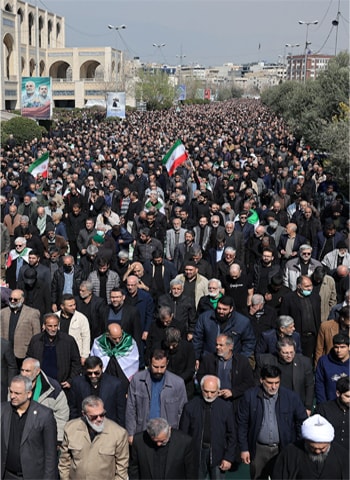 THOUSANDS of Iranians rally after Friday prayers in Tehran, even as US-Israeli bombing continues unabated.—Reuters • Dar phones Araghchi; Pezeshkian says some nations have begun mediation efforts • Markets tumble as Trump demands ‘unconditional surrender’, says ‘waste of time’ to send ground troops • White House says operations could take ‘four to six weeks’; claims intel agencies ‘looking at potential leaders’ • Gulf states, Azerbaijan reel from drone attacks, missile strikes • US media claims Russia supplying intelligence to Iran’s forces • Iran thanks Saudis for not letting airspace be used for offensive actions TEHRAN / WASHINGTON: Even as the US and Israel unleashed cataclysmic bombing raids across the country, thousands of Iranians defiantly took to the streets of Tehran after Friday prayers, rallying in memory of their assassinated supreme leader and railing against the invasion of their country. Footage aired by Iranian media showed crowds of men and women dressed in black, some carrying Iranian flags...
 -
Dawn - 20:10 Mar 06, 2026
LAHORE: Pakistan put up an impressive performance to edge Japan 4-3 in the semi-final of the FIH Hockey World Cup qualifier at the Suez Canal Authority Hockey Stadium in Egypt on Friday. The win has guaranteed the Green Shirts a place in the World Cup and marks their return to the global event after eight years. The tournament will be hosted jointly by Belgium and the Netherlands in August. The Pakistan team, led by Ammad Butt, was trailing 3-1 in the third quarter of the match against Japan, when it smashed three goals in the last nine minutes of the final quarter to edge ahead 4-3, snatching victory from the jaws of defeat. Ammad gave his side an early lead in the ninth minute with an impressive field goal. The lead, which remained intact till the end of the first quarter, was neutralised in the second quarter (21st minute) when Japan’s Ryoma Ooka scored a field goal. In an inspiring show, Japan took control of the match in the penultimate quarter when Shota Yamada (35th minute) and Yamasaki Koji (40th minu... -
Dawn - 20:07 Mar 06, 2026
The government announced a Rs55 per litre hike in the price of petrol and high-speed diesel each on Friday. Consequently, the ex-depot high-speed diesel rate has been fixed at Rs335.86 per litre for next week while the ex-depot petrol price has been revised to Rs321.17 per litre from Rs266.17 per litre, with an increase of 17pc. The announcement was made by Petroleum Minister Ali Pervaiz Malik during a press conference alongside Deputy Prime Minister and Foreign Minister Ishaq Dar and Finance Minister Muhammad Aurangzeb. Dar said during the press conference that the new prices will come into effect from 12am on Saturday. He began by talking about the ongoing war between Iran and the US and Israel, adding that the conflict had spilt over. In this scenario, he said, the prices of petroleum products were soaring. “There has been an increase of 50 per cent to 70pc in various products’ prices,” he noted, adding that in other countries, the trickle-down effect was visible with an “automatic increase in [petroleum] ... -
Dawn - 15:49 Mar 06, 2026
MIRANSHAH: At least one person was killed and 19 others, including two security personnel, were injured in a blast near the Chashma Sarbandki checkpost on the Bannu–Miranshah main road in Khyber Pakhtunkhwa’s North Waziristan district on Friday, police and hospital officials said. Police sources told Dawn that initial information showed that the blast was caused by the detonation of explosives in a vehicle near the checkpost. The Bannu–Miranshah road was closed for traffic following the incident. Miranshah district headquarters hospital Medical Superintendent Dr Asif Iqbal told Dawn that the condition of four people among the injured was critical. He said an emergency had been declared at the hospital following the incident. Police officials told Dawn that the area where the incident took place had been cordoned off, further investigation was under way and evidence was being collected. The incident comes roughly three weeks after two people were killed and 17 others injured in a powerful explosion near Miryan... -
Dawn - 14:55 Mar 06, 2026
German media group Axel Springer said on Friday it had agreed to buy Britain’s Telegraph Media Group for 575 million pounds ($766.3 million) in cash, bringing to an end a prolonged period of uncertainty over the newspaper’s ownership. The deal gatecrashed Daily Mail owner DMGT’s attempt to buy its broadsheet rival, which had been facing regulatory probes in Britain amid concerns about media plurality. Axel Springer said it would preserve the Telegraph’s legacy while providing a platform for expansion, including in the US, and reaffirmed its commitment to “high-quality, independent journalism” and media plurality in Britain. After buying Politico in a deal valued at around $1 billion in 2021, the Telegraph purchase becomes Axel Springer’s second-largest investment since its founding in 1946, following an earlier failed attempt to acquire the paper in 2004. ‘Swift and efficient’ negotiations Mathias Dopfner, Axel Springer’s CEO, said owning the Telegraph was “a privilege and a duty”. He said the group aimed to ... -
Dawn - 14:09 Mar 06, 2026
ISLAMABAD: The Election Commission of Pakistan (ECP) on Friday rejected the Khyber Pakhtunkhwa government’s plea to postpone the delimitation exercise in 24 districts of the province for the upcoming local government elections. According to informed sources, the KP government had sought a delay of 180 days in conducting the delimitation exercise in 24 districts. Meanwhile, the province’s chief secretary had also written to the electoral watchdog, seeking a delay in local body polls due to the provincial government’s plan to amend the Local Government Act, 2013. In his letter, the chief secretary had also written that the ECP had not consulted the provincial government before initiating the delimitation process. In addition, bad weather and law and order situation in some districts were also cited as reasons for the delay. However, sources said the electoral body deliberated upon the letter and emphasised that the ECP was bound to conduct delimitation and local government elections in accordance with the exist... -
Dawn - 13:46 Mar 06, 2026
‘Mortgaged to American interests’: US approval for Russian oil sparks outrage from Indian opposition
The Indian National Congress on Friday assailed the Narendra Modi-led BJP government after the US temporarily allowed Russian oil stranded at sea to be sold to India, saying the move called into question the country’s autonomy in matters of national interest. The waiver, which the US Treasury Secretary Scott Bessent said was issued to “enable oil to keep flowing into the global market,” comes under heightened tensions in the Middle East following the US-Israeli attack on Iran, sparking uncertainty around oil. It should be noted that India had earlier said it would stop purchasing Russian oil as part of a trade deal with the US. In a post on X, the Congress, citing the development, criticised the Indian government, and stressed that the BJP-led government “has led the country to a situation where the US is now deciding where India can buy oil from and where it cannot”. “This decision is not being made by Prime Minister Modi, nor by the Indian government,” it said. Congress said the Indian citizens were asking,... -
Dawn - 13:30 Mar 06, 2026
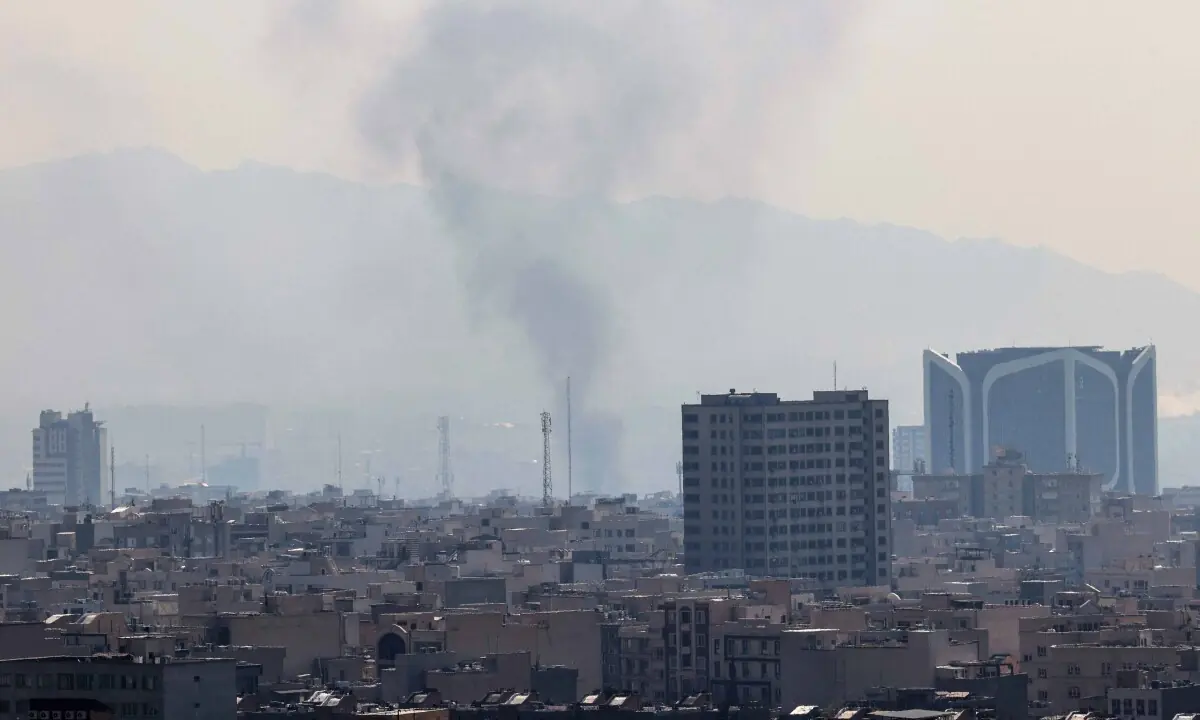 Seven days into the war between the United States-Israeli coalition and Iran, the conflict has transitioned from initial high-intensity exchanges to a phase defined by the former’s air and naval dominance and the latter’s asymmetric resilience. The coalition, over the past twenty-four hours, maintained clear conventional superiority, including sustained strikes on Tehran, buried targets, and Hezbollah strongholds in Lebanon. Still, at the same time, Iran has adapted effectively. The Iranian ballistic missile volume has been reported by Centcom and other sources in the region to be down 80–90 per cent, yet verified penetrations with cluster munitions on Tel Aviv and confirmed strikes on Bahrain’s BAPCO refinery demonstrated Iran’s capability to impose meaningful political, economic, and psychological costs. Iran’s multi-nodal command structure and underground “missile cities” appear to have helped sustain operations despite heavy losses. Tehran has clearly adjusted its approach and is now fighting a different ...
 -
Dawn - 12:29 Mar 06, 2026
Soon after the first Iranian missile and drone attacks on Dubai last week, two Indian entrepreneurs based there tried to move more than $100,000 each from their local bank accounts to Singapore to hedge risk. Technological glitches in the aftermath of the Iranian attacks initially scuppered those plans, the entrepreneurs, who did not wish to be identified due to the sensitivity of the matter, told Reuters. One of them said he managed to subsequently transfer the sum to his Singapore bank account via another Emirates-based bank. Scores of other wealthy Asians are making enquiries or taking similar steps to move their Dubai-parked assets to the regional financial hubs of Singapore and Hong Kong, industry advisers and lawyers said, as the US-Israel war on Iran clouds the Gulf’s safe-haven aura and rattles investors. While the rich typically diversify their investments across regions and asset classes, they choose where to be based depending on tax, regulatory, privacy and operational considerations. Towards that... -
Dawn - 12:05 Mar 06, 2026
Qatar expects all Gulf energy producers to shut down exports within weeks if the Iran conflict continues and drives oil to $150 a barrel, the country’s Energy Minister Saad al-Kaabi told the Financial Times in an interview published on Friday. Qatar halted its production of liquefied natural gas on Monday, as Iran continued to strike Gulf countries in retaliation for Israeli and US attacks. The country’s LNG production is equivalent to about 20 per cent of global supply and plays a major role in balancing both Asian and European markets’ demand for the fuel. “Everybody who has not called for force majeure we expect will do so in the next few days if this continues. All exporters in the Gulf region will have to call a force majeure,” Kaabi told the FT. “If this war continues for a few weeks, GDP growth around the world will be impacted,” he said. “Everybody’s energy price is going to go higher. There will be shortages of some products and there will be a chain reaction of factories that cannot supply,” Kaabi s... -
Dawn - 12:01 Mar 06, 2026
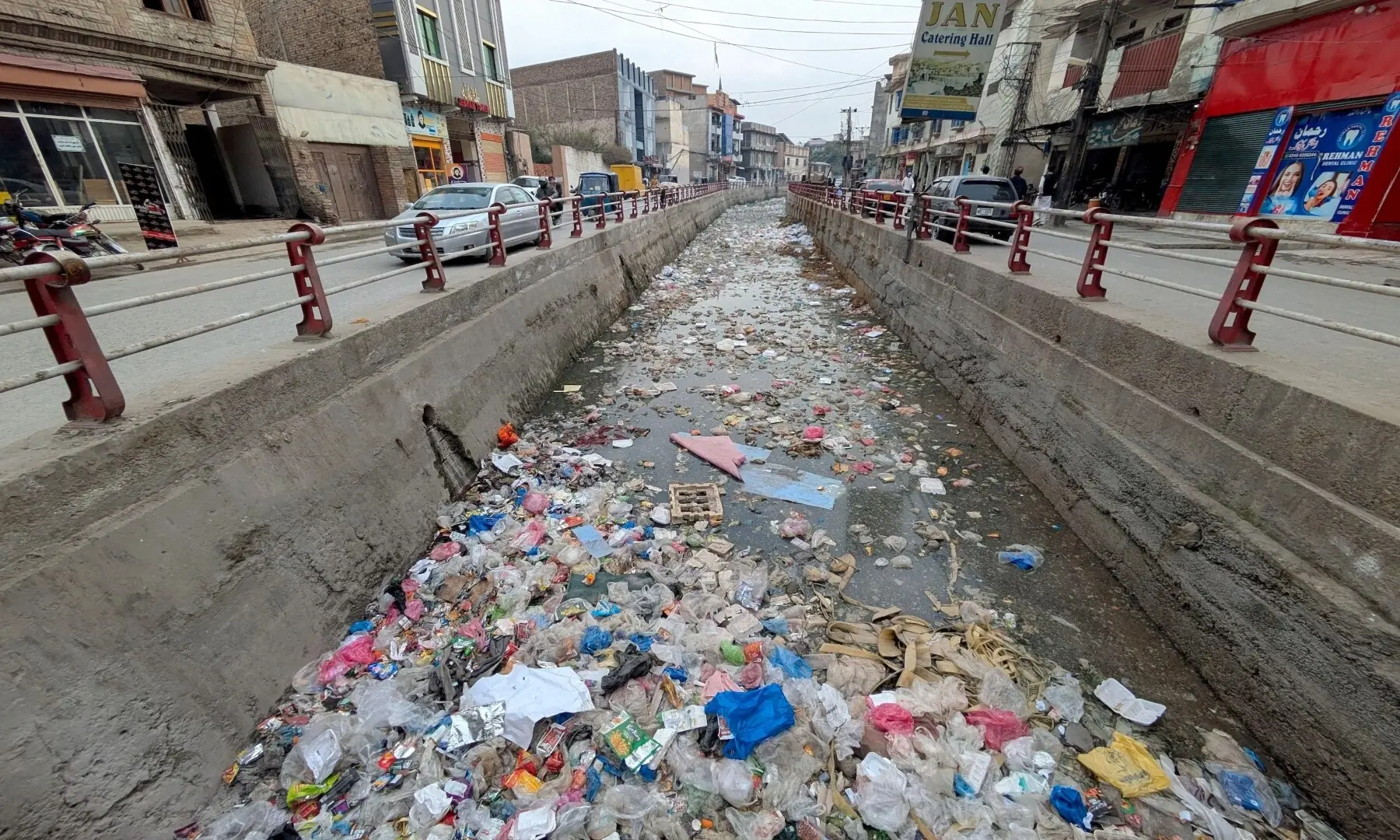 On a balmy winter day, Irfanullah Wahid and his cousin Faisal Asadullah amble through a maze of carts in Karachi’s Shireen Jinnah neighbourhood. They are young – only 11 and 10 years old respectively – and the white bags they carry are almost as tall as they are. They laugh and joke, but their eyes are peeled. Every few steps, they pause, bend, pick something up off the street and slip it into the bags. Wahid collects only metal cans. Asadullah sticks to thick plastics. Asadullah stoops to pull out a flimsy plastic bag, commonly known as ‘shopper’ across Pakistan, stuck in the wheel of a cart. His practised hands rip it off with ease. “I don’t collect these”, he says, holding it up to show the difference with the sturdier material he rummages for. Around him, there is scattered litter. Chips packets, sachets of shampoo and of saunf-supari (mouth freshener). Most are made of non-recyclable laminates which has no use for. “The kabadiwallah (recycler) won’t pay for this,” he says. In Pakistan, about 2 million to...
 -
Dawn - 11:41 Mar 06, 2026
India face New Zealand on Sunday in Ahmedabad, looking to become the first side to lift the T20 World Cup for a third time but under huge pressure with the weight of a nation on their shoulders. Standing in the way of Suryakumar Yadav’s side are a team who have already upset the odds with a thumping nine-wicket win over the previously unbeaten South Africa to reach the final. New Zealand believe, after Finn Allen’s record 33-ball century in the semi-final in Kolkata, that they are capable of taking down the hosts to win their maiden T20 World Cup title. “We’ve got a lot of momentum going into the weekend,” warned Allen. “I think if we play our best cricket, we can beat anybody.” India will not only have to withstand the expectations of 100,000-plus cricket-obsessed fans in a packed Narendra Modi stadium and hundreds of millions more watching on TV, but also the weight of history. The world’s top-ranked T20 team are attempting to become the first to win back-to-back T20 World Cups and the first to lift the tro...
10444 items