Dawn
Source:
https://www.dawn.com
Found 10444 news
-
Dawn - 17:02 Jan 23, 2026
• Ruling covers 62 models across Apple, Samsung, Google Pixel, OnePlus • iPhones see steepest cuts • Values apply regardless of condition; accessories not included • Phones must be activated six months before import ISLAMABAD: As mobile phone prices remain elevated for new buyers due to higher assessed values, the Customs Valuation Department has reduced assessment rates for duties and taxes on the commercial import of used and old mobile phone sets to ease pressure on consumers in the used smartphone market. At the same time, fresh assessment values have been set for high-end used iPhone models, ranging from the iPhone 14 and its variants to the iPhone 15 series. For Samsung, Google Pixel and OnePlus, the assessed rates have largely been left unchanged or fixed for the first time. The revised rates were notified through Valuation Ruling No. 2035 of 2026, which will come into effect from Jan 16, 2026. Customs officials said the revision reflects a decline in international prices of older smartphones, particul... -
Dawn - 16:28 Jan 23, 2026
A Spanish court has sentenced a Pakistani man to 36 years in jail for murdering three elderly siblings over debts reportedly linked to an online romance scam. A jury in October convicted Dilawar Hussain of killing the two sisters and their disabled brother in Morata de Tajuna, near Madrid, in December 2023. In November, a Madrid court sentenced Hussain to 12 years in jail for each murder, citing a “psychological alteration” as a mitigating factor, according to a copy of the ruling seen by AFP on Friday. Hussain has appealed the sentence. Hussain, 44, turned himself in to police and admitted the killings after the siblings’ partially burned bodies were found in their home. The siblings, who were in their 70s, had been beaten to death, possibly with an iron bar. When he took the stand at his trial, Hussain asked for forgiveness, saying he had “heard voices” and “was not in my right mind”. Neighbours told Spanish media the tragedy was linked to a fake online love affair, in which the two sisters believed they we... -
Dawn - 16:16 Jan 23, 2026
KHYBER/ SHANGLA/ RAWALPINDI: Commuters and residents faced difficulties on Thursday as snow blanketed several parts of Khyber Pakhtunkhwa and Murree. While a restriction was placed on the entry of vehicles into Murree, a rescue operation was under way in Tirah. Meanwhile, the Met Office said more rain and snowfall was expected in different areas from Sunday night till Tuesday under the influence of a westerly wave. Rescue efforts in Tirah Khyber Pakhtunkhwa Rescue 1122 Spokesperson Bilal Faizi said on Friday that a comprehensive rescue operation was ongoing to help the people affected by heavy snowfall in the province. “The operation is ongoing in Tirah valley, Painda Cheena, Dawatoi and Bagh Maidan on the directives of Rescue 1122 director general,” he said in a statement. “Twenty-three operational vehicles of Rescue 1122 and rescue teams comprising more than 100 personnel are taking part in the rescue operation,” he said. In an update at 5:30pm, Rescue 1122 said 50 stranded vehicles and around 100 affected ... -
Dawn - 16:14 Jan 23, 2026
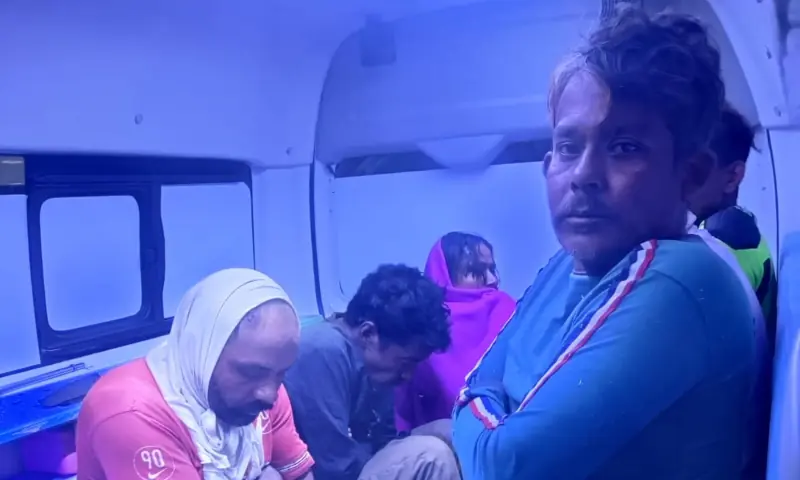 KARACHI: Seven people were rescued while a search operation was underway to find four others missing after a merchant vessel hit a fishing boat off Manora Beach on Friday morning. South Deputy Inspector General (DIG) Syed Asad Raza told Dawn that seven people had been rescued, with four still missing, in the incident. In a statement, an Edhi Foundation spokesperson said that their divers had continued the search operation during the day but it had to be halted once night fell. He said the resuce operation would resume on Saturday morning. DIG Raza detailed that the incident took place in a channel of the Karachi Port Trust (KPT) at about 2am, when a civil fishing boat named Al-Shahbaz was hit by merchant vessel Kang Huan. “All fishermen on the boat jumped into the sea, and the fishing boat toppled down,” the police officer added. Subsequently, rescue operations were initiated by HPO, the Pakistan Maritime Security Agency and the KPT. “Seven persons were rescued by another fishing boat,” DIG Raza said, adding ...
 -
Dawn - 16:12 Jan 23, 2026
ISLAMABAD: The government on Friday again defended its decision to join the Board of Peace led by US President Donald Trump, with Planning Minister Ahsan Iqbal saying that Pakistan being at the “centre stage” along with its brother Muslim countries to contribute towards peace in Gaza and Palestine was a “diplomatic win”. Prime Minister Shehbaz Sharif was among the leaders and senior officials of 19 countries, including Pakistan, who gathered in Davos on Thursday and put their names to the founding charter of the Board of Peace — a move that has been denounced by the opposition. Trump had originally proposed establishing the board when he announced his plan last September to end the onslaught in Gaza. It was originally meant to oversee peace in Gaza after Israel’s two-year onslaught on the Palestinian enclave, but the board’s charter envisions a wider role in resolving international conflicts. Parliamentary Affairs Minister Dr Tariq Fazal Chaudhry on Thursday had defended the move in the National Assembly, say... -
Dawn - 16:12 Jan 23, 2026
Lawyers Imaan Mazari, Hadi Ali Chattha sent to jail on judicial remand following arrest in Islamabad
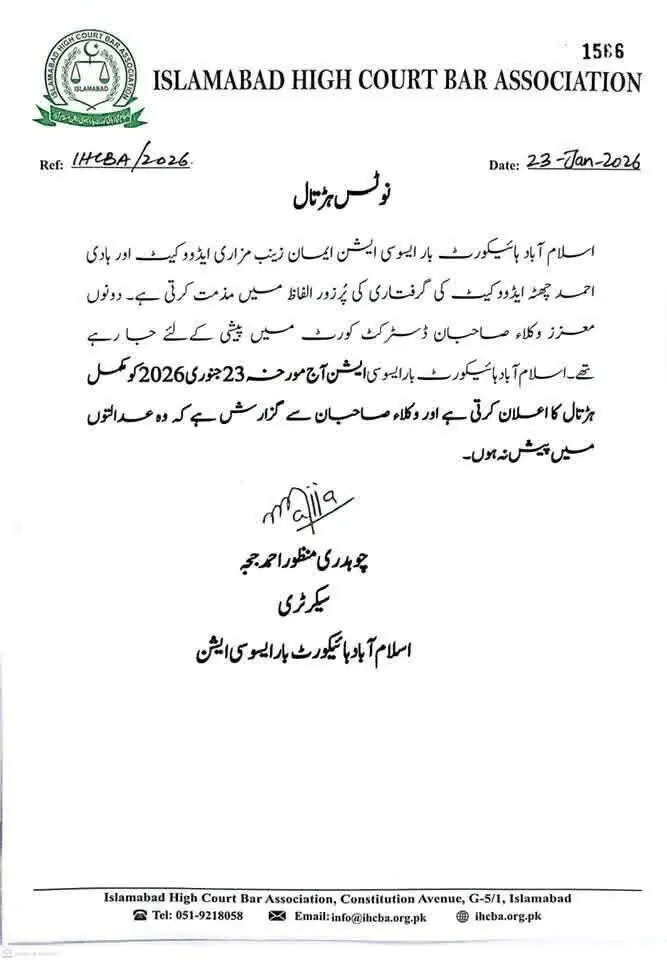 ISLAMABAD: Hours after the arrest of activist and lawyer Imaan Zainab Mazari-Hazir and her husband Hadi Ali Chattha on Friday, the couple was sent to jail on judicial remand by an anti-terrorism court. The development came in a case registered against the two for protesting outside the Islamabad High Court (IHC) and allegedly manhandling the IHC Bar Association (IHCBA) president. Strict security was enforced during the proceedings and lawyers and media persons were not allowed to enter the courtroom. The case was heard by ATC Judge Abual Hasnat Muhammad Zulqarnain. It should be mentioned that prior to Imaan and Hadi’s arrest on Friday morning, the two had spent three nights at the office of IHCBA President Syed Wajid Ali Gilani. Their arrest subsequently prompted lawyers’ bodies to announce a complete strike, strongly condemning the action. Imaan and Hadi were scheduled to appear in a trial court on Friday in the controversial social media posts case, in which Additional District and Sessions Judge (ADSJ) Moh...
 -
Dawn - 16:11 Jan 23, 2026
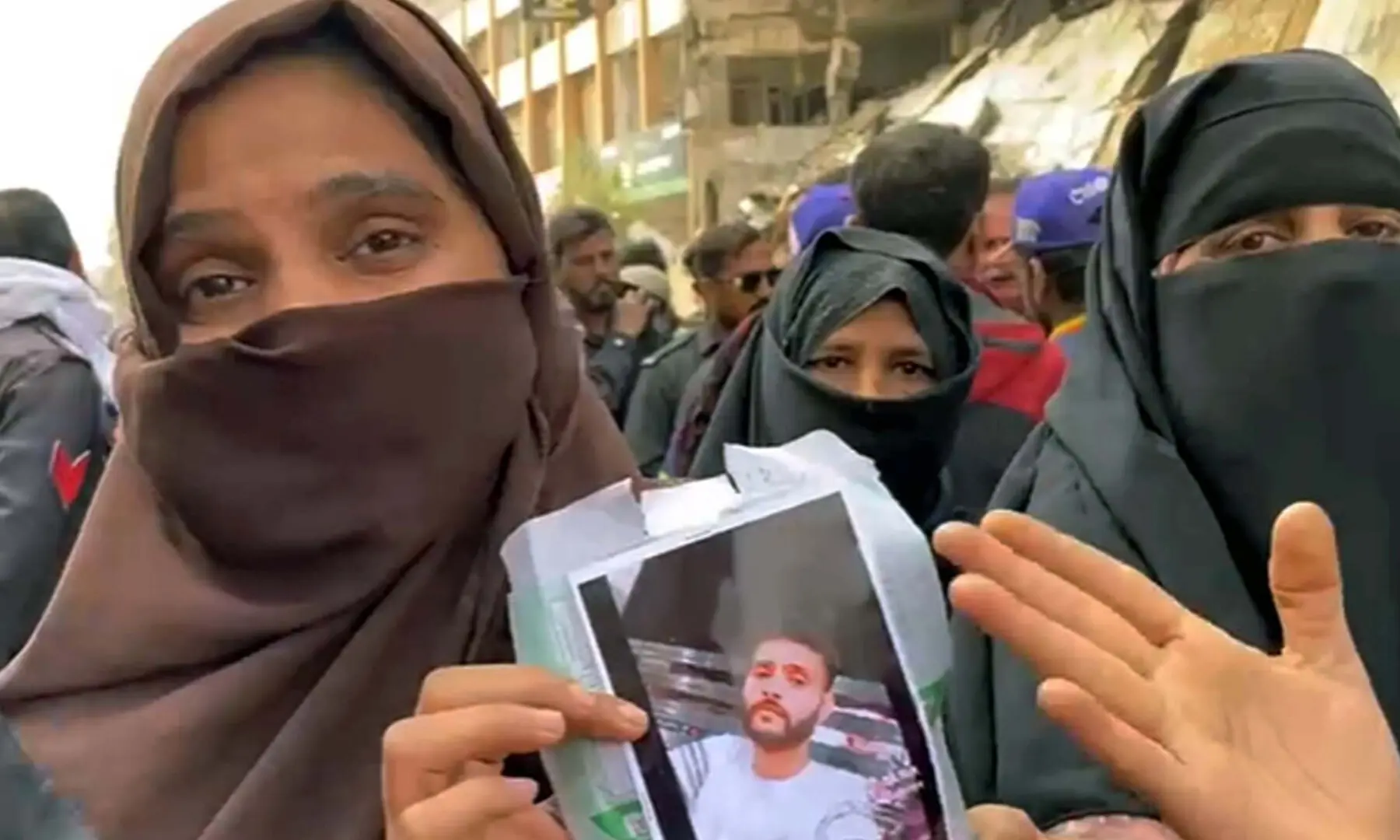 KARACHI: The death toll of Karachi’s Gul Plaza blaze crossed 70 on Friday as rescuers found more remains from the rubble of the gutted shopping centre. Police Surgeon Dr Summaiya Syed issued an updated list of 71 deceased. Of the 16 identified so far, nine were identified through DNA tests, which have been performed for 49 samples. The deadly inferno, which erupted on the night of January 17 at the mall and took nearly two days to be fully extinguished, has left the ground-plus-three-storey building in ruins, with some sections collapsed. As more bodies were recovered from different parts of the building, officials cautioned that the final toll can only be determined once the identification of the remains is completed. Meanwhile, officials expressed the hope to complete their search efforts on Friday. South Deputy Commissioner (DC) Javed Nabi Khoso told reporters that the search operation was in the “final stages”. “The search in the wreckage will be completed today,” he said. Stating that a total of 77 missi...
 -
Dawn - 16:02 Jan 23, 2026
ISLAMABAD: Barbs flew in the Senate on Friday with the opposition taking the government to task over its policies and demanding a parliamentary probe into “institutional overreach” and “election fraud”. In response, the government accused the opposition of committing “economic terrorism” while also chiding it for the Results Transmission System (RTS) fiasco in the 2018 general polls. Speaking on a calling-attention notice, PTI’s Ali Zafar, the party’s parliamentary leader in the Senate, said Parliament had been made irrelevant and meaningless. His speech was interrupted several times by the members of the treasury benches, who loudly objected to his remarks. “Matters pertaining to the country’s economy, security and foreign policy are not brought before Parliament; [instead] decisions are taken in drawing rooms,” he said, regretting that even agreements linked to the country’s future were signed while keeping Parliament in the dark. “This is a betrayal of the constitutional concept of civilian supremacy,” he ... -
Dawn - 14:59 Jan 23, 2026
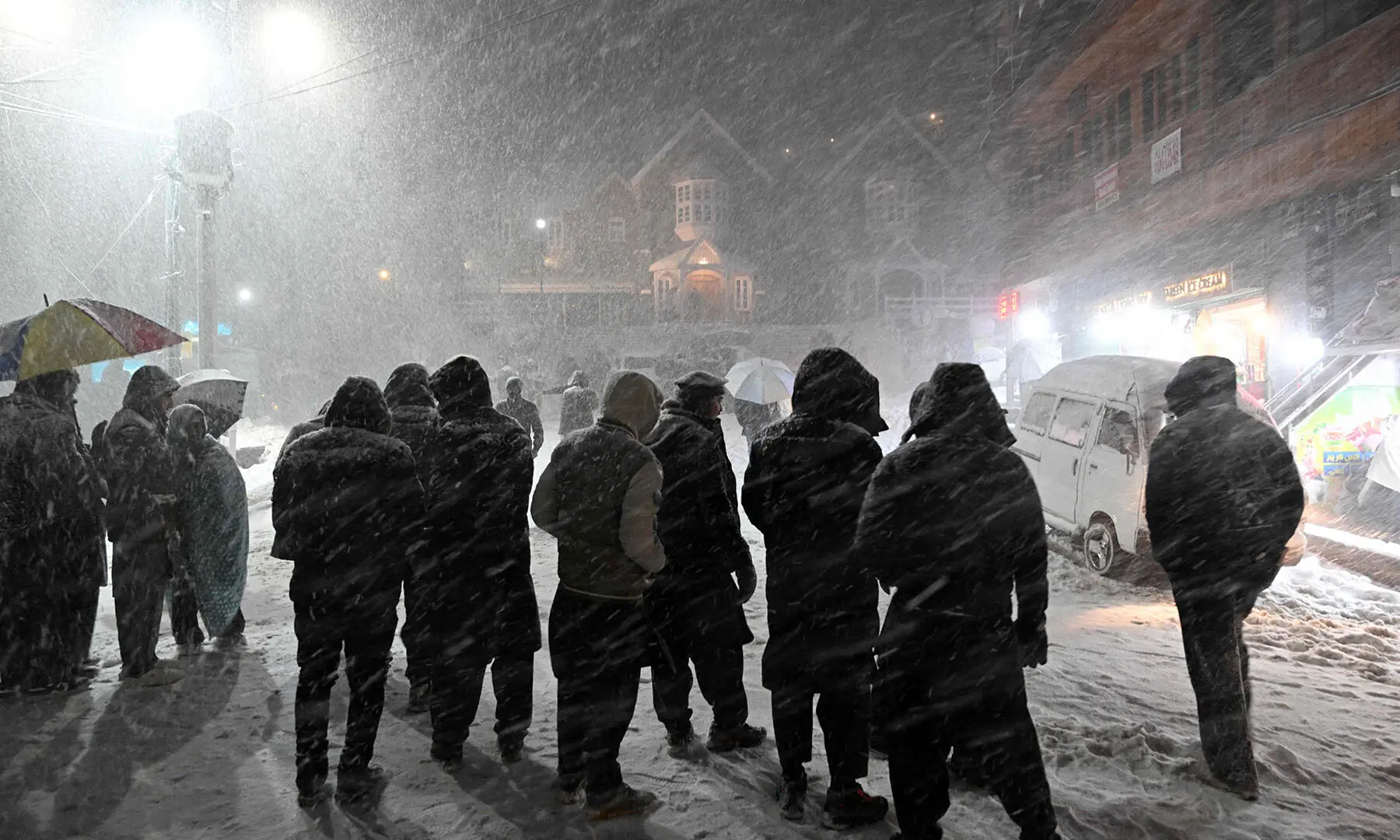 Heavy snow has been reported in Balochistan, Khyber Pakhtunkhwa and other parts of Pakistan over the past two days, with the Meteorological Department on Friday forecasting more rain and snowfall from Sunday night till Tuesday. Amid the extreme weather, the Met department has advised tourists to remain extra cautious and avoid unnecessary travelling during this period. It has also asked the authorities concerned to remain vigilant and take necessary measures to avoid any untoward situation. Tourists gather during a snowstorm in Murree on January 23, 2026. — AFP Locals gather and enjoy the snow on the outskirts of Quetta on January 22. — AFP A citizen is blanketed during a snowstorm in Murree on January 23,. — AFP Children play in a snow-covered area on the outskirts of Quetta on January 22. — AFP A bulldozer is used to clear heavy snow from a road in Murree on January 23. — AFP A man helps a motorcyclist to steer out of a snow-covered road on the outskirts of Muzaffarabad, Azad Jammu and Kashmir on January 23...
 -
Dawn - 14:30 Jan 23, 2026
Punjab Chief Minister Maryam Nawaz on Friday warned citizens against violating the rules set for Basant, which is set to be celebrated in Lahore from February 6 to 8. The festival is returning to Lahore after 18 years. The Punjab government has announced that there are no plans to celebrate Basant across the province and also notified a host of rules for the three-day festival. Addressing a meeting on preparations for Basant, which was broadcast live on television, the Punjab CM said, “Basant was an 800-year-old festival; it is not just a festival but a metaphor for renewal.” She said the festival was “our heritage” and celebrated around the world. “I want to give the good news to the people that for the first time, we are celebrating a government-sponsored and government-organised Basant from February 6 to 8,” she said. She regretted that due to negligence, the festival became associated with accidents. She said that she would give a detailed briefing to the people of Punjab on a plan for Basant in a few day... -
Dawn - 13:44 Jan 23, 2026
Britain said United States President Donald Trump was “wrong to diminish” the role of Nato troops in Afghanistan, as his claims that they did not fight on the front line sparked outrage. In an interview with Fox News aired on Thursday, Trump appeared unaware that 457 British soldiers died during the conflict, following the September 11 attacks on the United States. “They’ll say they sent some troops to Afghanistan,” Trump told the US outlet, referring to Nato allies. “And they did, they stayed a little back, a little off the front lines,” he added. Trump also repeated his suggestion that Nato would not come to the aid of the United States if asked to do so. In fact, following the 9/11 attacks, the UK and several other allies joined the US in Afghanistan from 2001 after it invoked Nato’s collective security clause, Article 5 of the North Atlantic Treaty, which treats an act of aggression against one or more members as an attack on all. As well as British forces, troops from other Nato ally countries, including... -
Dawn - 12:27 Jan 23, 2026
The central bank is expected to cut its key policy rate by 50 basis points at its upcoming meeting, a Reuters poll showed, as easing inflation, improving foreign exchange buffers and a stabilising rupee bolster the case for further monetary easing despite lingering risks. The State Bank of Pakistan’s (SBP) Monetary Policy Committee is scheduled to meet on Jan 26 (Monday). Of the 10 analysts surveyed, seven expect the SBP to cut rates by 50 basis points, two see a deeper 75 basis point reduction, while one expects the central bank to hold rates unchanged, following a surprise cut in December that ended a four-meeting pause. The median forecast points to a 50 bps cut. That would cement a change in direction from the SBP’s aggressive tightening cycle after rates peaked at a record 22 per cent in 2023, with cumulative cuts since mid-2024 totalling 1,150 bps so far. Analysts projecting a 50 bps move cited moderating inflation, higher foreign exchange reserves and a better balance of payments outlook, while flaggin... -
Dawn - 11:40 Jan 23, 2026
British counter-terrorism police are investigating a series of what authorities have described as “highly targeted” attacks against two Pakistani dissidents living in the United Kingdom, according to a report published by The Guardian on Friday. Scotland Yard’s counter-terrorism command took over the investigation following four attacks that began on Christmas Eve in Cambridgeshire and Buckinghamshire. One person has been arrested, and one of the incidents involved the use of a firearm. The attacks targeted two prominent supporters of former Pakistani prime minister Imran Khan, who is currently incarcerated. One of the victims told The Guardian that his attackers appeared to be “fair-skinned, white or wearing masks” and said he feared for his life. The first two attacks took place on Christmas Eve. In Chesham, Buckinghamshire, two men broke into the home of a dissident shortly after 8am and vandalised the property. The second attack occurred at the Cambridgeshire home of rights lawyer Mirza Shahzad Akbar, a h... -
Dawn - 11:01 Jan 23, 2026
Senior players Babar Azam and Shaheen Shah Afridi have returned to the Pakistan team for the T20I series against Australia this month, as national selectors on Friday announced the 16-member squad. The duo were left out of the squad for the three-match T20I series against Sri Lanka earlier this month, where all-rounder Shadab Khan made his comeback. He will form part of a strong spin-bowling contingent along with Abrar Ahmed, Mohammad Nawaz and Usman Tariq, the Pakistan Cricket Board (PCB) said in a statement today. The matches will take place at Lahore’s Gadaffi Stadium on January 29, 31 and February 1 and will begin at 4pm PKT. Pakistan squad and player support personnel are expected to convene in Lahore on Jan 24 and will begin their preparations for the series the following day, PCB said today. Meanwhile, Australia is set to arrive in Pakistan on January 28 and will play just their second series in the format on Pakistani soil after a solitary T20I in April 2022, also at Gaddafi Stadium. A day earlier, Ba... -
Dawn - 11:00 Jan 23, 2026
Being surrounded by many loved ones is like sharing a busy home kitchen; there is warmth, laughter, and support, but there is also crowding, noise, and the occasional clash. This, in essence, captures the experience of the traditional joint family system in South Asia. Legend has it that the joint family system in South Asia has roots in ancient and medieval agrarian societies, where extended families living together made economic and social sense. Nowadays, the traditional joint family, though increasingly rare, is part of our cultural legacy — something many families take pride in. It represents a tradition where multiple generations live together in the same household, where grandparents, uncles, aunts, or cousins continue living together under one roof, a practice not commonly seen in the Western part of the world. A nuclear family, on the other hand, usually consists of just two parents and their children, living together. As someone from a nuclear family, I have the first-hand experience of cherishing t... -
Dawn - 10:52 Jan 23, 2026
CM Murad approves Rs21.5bn for Karachi infrastructure upgrades, including Rs13bn for improving roads
KARACHI: Sindh Chief Minister Murad Ali Shah on Friday approved a comprehensive package worth Rs21.53 billion, including a Rs13bn grant-in-aid for rehabilitating and improving Town Municipal Corporations’ (TMCs) road infrastructure in Karachi. According to a press release by the CM’s office, the initiative aims to ease traffic congestion, improve public safety, and boost economic activity in the provincial capital. The meeting, held at CM House, was attended by Local Government Minister Nasir Shah, Karachi Mayor Murtaza Wahab, Chief Secretary Asif Hyder Shah, Karachi Commissioner Hassan Naqvi, Finance Secretary Fayaz Jatoi, Secretary to the CM Raheem Shaikh, and other relevant officers. Nasir informed the chief minister that 24 TMCs across Karachi had requested funding to repair severely dilapidated roads and streets. Due to financial constraints, these TMCs were unable to carry out the works independently. Wahab reported that 409 roads across seven districts of Karachi needed rehabilitation, including 400 re... -
Dawn - 09:17 Jan 23, 2026
A British man is due to appear in court on Friday accused of drugging and raping his ex-wife over 13 years, alongside five other men also charged with sexual offences against her. Philip Young, 49, is charged with 56 sexual offences against his former wife Joanne Young, 48, including rape and administering a substance with the intent to stupefy or overpower to allow sexual activity. Joanne Young has waived her legal right to anonymity. Voyeurism, possession of indecent images of children and possession of extreme images are among the other charges filed against Young, who is reportedly a former Conservative councillor. He is yet to enter a plea, and was remanded in custody after a hearing in December. Young is set to be joined by five other men, aged 31 to 61, also accused of various sexual offences against his ex-wife, at Winchester Crown Court, a criminal court in southeast England. The alleged crimes took place between 2010 and 2023. Norman Macksoni, 47, pleaded not guilty to one count of rape and possessi... -
Dawn - 08:30 Jan 23, 2026
TikTok announced on Thursday that it has established a majority American-owned joint venture to operate its US business, allowing the company to avoid a ban over its Chinese ownership. The video-sharing app is a global digital entertainment powerhouse, but its mass appeal and links to China have raised concerns over privacy and national security. The TikTok USDS Joint Venture LLC will serve more than 200 million users and 7.5m businesses while implementing strict safeguards for data protection and content moderation, the company said. The new structure responds to a law passed under US President Donald Trump’s predecessor Joe Biden that forced Chinese-owned ByteDance to sell TikTok’s US operations or face a ban in its biggest market. Trump welcomed and claimed credit for the deal, but also thanked Chinese President Xi Jinping for approving it. “I am so happy to have helped in saving TikTok!” Trump said in a post on Truth Social late Thursday. “It will now be owned by a group of Great American Patriots and Inv... -
Dawn - 08:09 Jan 23, 2026
President Donald Trump said a US “armada” was heading toward the Gulf and that Washington was watching Iran closely, even after downplaying the prospect of imminent military action and saying Tehran appeared interested in talks. Trump has repeatedly left open the option of new military action against Iran after Washington backed and joined Israel’s 12-day war in June aimed at degrading Iranian nuclear and ballistic missile programmes. The prospect of immediate American action seemed to recede in recent days, with both sides insisting on giving diplomacy a chance. On his way back from the World Economic Forum in Davos, the president told reporters on Air Force One the United States was sending a “massive fleet” toward Iran “just in case.” “We’re watching Iran,” he said. “I’d rather not see anything happen but we’re watching them very closely.” Addressing the WEF on Thursday, Trump said the United States attacked Iranian uranium enrichment sites last year to prevent Tehran from making a nuclear weapon. Iran den... -
Dawn - 07:29 Jan 23, 2026
KHYBER: With hundreds of displaced families stranded on the road due to prolonged registration process, the Khyber district administration on Thursday suspended the evacuation of more families from Tirah valley due to heavy snowfall that began in early hours of the day. A note issued by Khyber House in Peshawar asked Tirah families to refrain from travelling to Bara until Friday evening due to the inclement weather. It added that the process of evacuation and registration would restart after weather improvement. Sources in Tirah had earlier informed that law-enforcement agencies made announcements in the valley about speedy evacuation of families as the Jan 25 deadline for displacement neared. Stranded families complain they had sleepless nights on the road Announcements caused panic and worry among Tirah families as the weather turned hostile and LEAs wanted them to leave without delay. Gul Mand Khan, who reached Bara on Wednesday evening, told Dawn that it took him and his extended family six days to cover ...
10444 items