Dawn
Source:
https://www.dawn.com
Found 10418 news
-
Dawn - 17:09 May 25, 2026
ISLAMABAD: Mehmood Khan Achakzai, opposition Leader in the National Assembly and leader of the Tehreek Tahaffuz Ayeen-i-Pakistan (TTAP), on Monday hinted that the opposition alliance might quit the assemblies if the government did not change its attitude towards former prime minister Imran Khan. Speaking on Dawn News programme “Doosra Rukh”, he said: “I fear that if the current attitude towards Imran Khan continues, we will not be able to stay in the assembly.” “What has he [Imran] done? Has he committed murders, as you are threatening that a 50-year prison sentence can be announced? He has only said that his snatched mandate should be returned to him. But you have been saying that a 50-year prison term can be announced.” “You want to try him in a military court. Tell me if he is a general or a colonel,” Achakzai said. “If the PTI’s central committee suggests quitting the assemblies in Punjab, Sindh and the Centre, and only running the government in Khyber Pakhtunkhwa, it will be implemented,” he said. He lam... -
Dawn - 16:50 May 25, 2026
A newly married couple was shot dead in Karachi’s Malir area soon after appearing before a local court on Monday, according to a senior police official. According to Korangi Senior Superintendent of Police (SSP) Fida Hussain Janwari, the couple was returning from the court when assailants, who were chasing their car, opened fire on them in the Saudabad locality near the RCD ground. SSP Janwari said that the woman’s family had lodged a complaint at Sachal Police Station over her disappearance. However, the woman had recorded a statement before the Malir court that she had married of her own free will. The couple had also submitted their Nikahnama in the court. “The couple suffered critical injuries and died on the spot,” he said. SSP Janwari added that the suspected assailants had been identified as the woman’s relatives, and concerted efforts were underway to arrest them. He further said that the couple belonged to Sindh’s Dadu district and had been living in the Sachal Goth area in Karachi. Meanwhile, Police... -
Dawn - 15:40 May 25, 2026
Deputy Prime Minister and Foreign Minister Ishaq Dar will depart from Beijing on Tuesday for New York to participate in UN meetings, according to a press release from the Ministry of Foreign Affairs. In New York, Dar is set to participate in the United Nations Security Council’s open debate on “Maintenance of International Peace and Security: Upholding the Purposes and Principles of the UN Charter and Strengthening the UN-centred International System.” The debate will be chaired by Chinese Foreign Minister Wang Yi. “Pakistan welcomes this timely initiative by China, which highlights the importance of strengthening multilateralism and upholding the central role of the United Nations in addressing today’s complex global challenges,” the ministry’s press release stated. On Thursday, Dar is scheduled to attend a meeting of the Group of Friends on Global Governance. The theme of the meeting is “Reforming and Improving Global Governance, Working Together to Address Global Challenges.” The group comprises 43 countri... -
Dawn - 12:57 May 25, 2026
World Health Organisation (WHO) Director-General Tedros Adhanom Ghebreyesus said on Monday that there had been 220 suspected deaths in the current Ebola outbreak and that a delay in detecting cases meant responders were now “playing catch-up”. “We are urgently scaling up operations, but at the moment the epidemic is outpacing us,” Tedros said, adding that countries bordering the Democratic Republic of Congo — the epicentre of the outbreak — should take immediate action. The WHO has declared the outbreak of the rare Bundibugyo strain of Ebola a public health emergency of international concern. Ebola is a deadly viral disease that spreads through direct contact with bodily fluids. It can cause severe bleeding and organ failure. The Bundibugyo strain has no approved vaccine or treatments. Tedros said he would travel to Congo on Tuesday and that addressing the fast-moving outbreak was complicated by the fact that Congo’s Ituri and North Kivu provinces were highly insecure and there were no approved vaccines for t... -
Dawn - 12:22 May 25, 2026
DERA ISMAIL KHAN: Unidentified militants blew up a government middle school and a basic health unit (BHU) with explosive material late on Sunday night in the Chesan Kech area of Khyber Pakhtunkhwa’s Tank district, local sources said. According to local sources, the attackers targeted the Government Middle School for Boys and a BHU, causing severe damage to both buildings within the jurisdiction of Saddar police station. Local sources confirmed that no casualties were reported in the incident as the buildings were empty at the time of the explosions. Police and security personnel reached the area after the blasts and launched an investigation into the incident. Officials said evidence was being collected from the sites while efforts were underway to identify those involved. Amid a surge in terrorism in KP, militants have also targeted civil infrastructure in the region, including bridges and schools. In March, unidentified miscreants blew up a government school in KP’s Bannu district. A month before that, an e... -
Dawn - 12:12 May 25, 2026
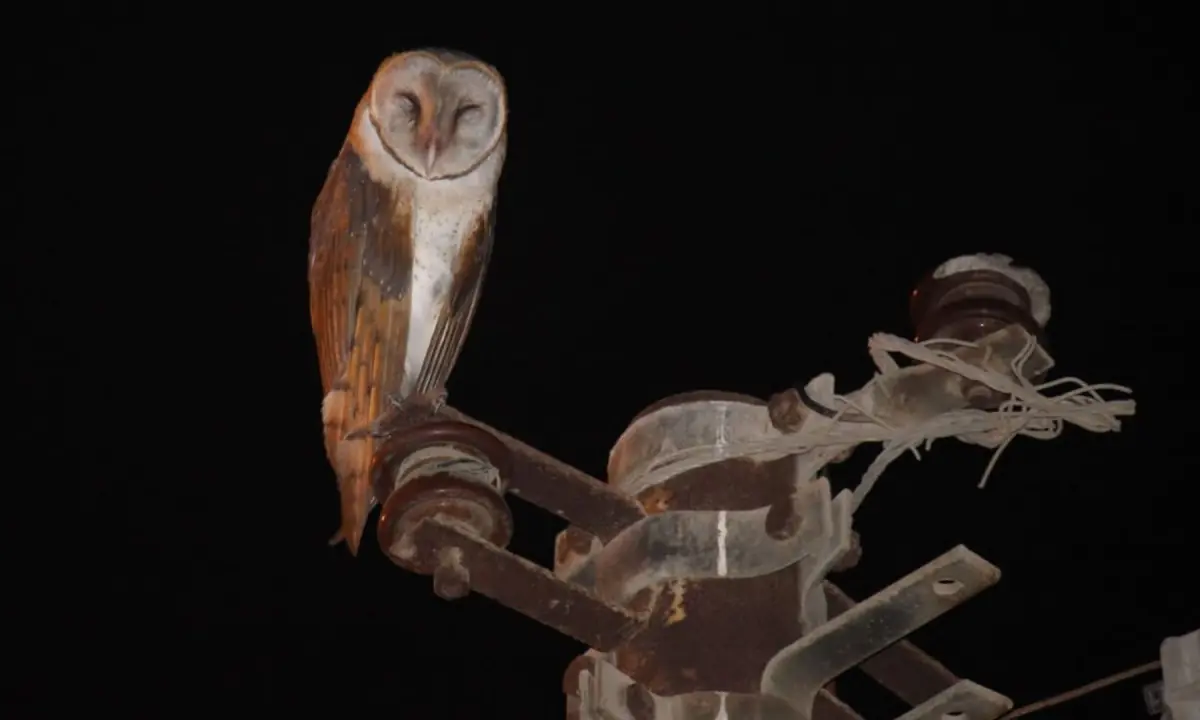 We reached the old wolf in time to watch a fierce green fire dying in her eyes. I realised then, and have known ever since, that there was something new to me in those eyes — something known only to her and to the mountain. I was young then, and full of trigger-itch; I thought that because fewer wolves meant more deer, that no wolves would mean hunters’ paradise. But after seeing the green fire die, I sensed that neither the wolf nor the mountain agreed with such a view. These are the most moving lines from forester and philosopher Aldo Leopold’s A Sand County Almanac, his breakthrough work in ecological preservation which was published in 1949, almost a year after his death and has since become a cornerstone of environmental ethics. At one point in time, wolves were persecuted in the United States to the extent that by 1926, Gray Wolves had completely vanished from Yellowstone National Park and the 2.2 million acres of wilderness was left to elk and deer who roamed freely without fear of an apex predator. Th...
 -
Dawn - 11:48 May 25, 2026
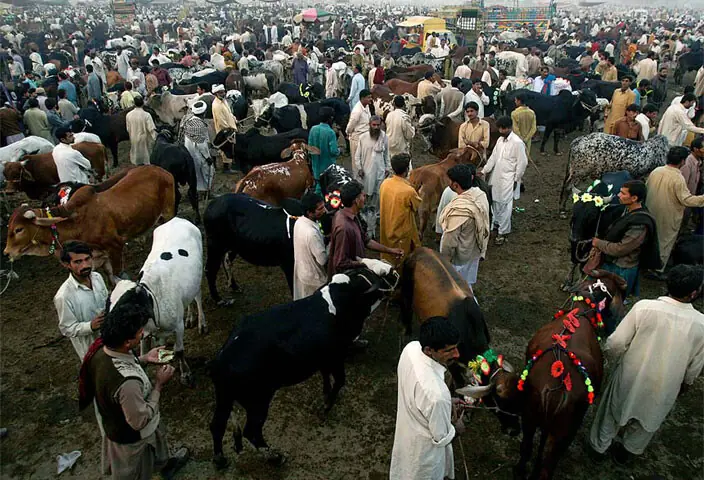 The animals arrive before the city wakes. By three in the morning, a few weeks before Eidul Azha, the livestock markets on the periphery of Karachi are already dense with noise and colour, the restless lowing of cattle from Sindh’s interior, the sharper bleating of goats driven down from Balochistan, the occasional camel standing in imperious silence while traders haggle beneath fluorescent lights. The men who have brought these animals have been travelling for days. They have fed these animals, watered them, negotiated their passage across provincial checkpoints and absorbed the cost of fodder — the price of which has only increased in the past three years — and the ever-increasing cost of transportation, courtesy a sovereign that refuses to be fiscally responsible. They are supply-side participants in one of Pakistan’s largest annual markets. But no official body counts them with any precision. Every Eidul Azha, millions of Pakistanis participate in a decentralised economic event larger than half the federa...
 -
Dawn - 11:45 May 25, 2026
A viral social media account focusing on the concerns of India’s Gen Z has come under attack, with its founder alleging hacking and threats to his family after it won millions of followers disenchanted with Prime Minister Narendra Modi’s government. The satirical “Cockroach Janta Party” (CJP) account garnered more than 22 million followers on Instagram within days, reflecting mounting unease among young users on issues it highlighted, from unemployment to the leaks of exam questions. “The government has taken down our iconic website,” founder Abhijeet Dipke wrote on X, adding that its X account had been withheld in India while the group’s Instagram account had been compromised and his family had received threats. Reuters could not independently verify the claim of a government takedown. The government has not publicly confirmed any action against the website or the Instagram account. India’s home and IT ministries did not respond to requests for comment. State electoral wins by Modi’s party The surge in popul... -
Dawn - 10:38 May 25, 2026
The Pakistan Stock Exchange’s (PSX) benchmark index began the week on a strong note on Monday, gaining over 4,000 points during intraday trading. KSE-100 gained 4,013.17 points or 2.39 per cent to stand at 171,857.41 points at 3:24pm from the previous close of 167,844.24 points. The market opened with bullish momentum, gaining 3,594 points at 9:30am from Friday’s close. It then dipped to an intraday low of 170,161.66 points at 12:47pm, still in the green with a gain of 2,317.42 points. The development comes amid hopes that a deal between the United States and Iran to open the Strait of Hormuz could be announced soon. Earlier today, Tehran acknowledged that both sides have “reached a conclusion” on many issues, but cautioned that an agreement was not necessarily imminent. Oil prices also fell on Monday. The price of North Sea Brent crude and West Texas Intermediate slipped close to 5pc to $99.41 and $92.49 a barrel, respectively. Despite last-minute jitters, the stock market had closed last week in green terri... -
Dawn - 10:07 May 25, 2026
MARDAN: At least 16 people were killed and seven others were injured after a Swat-bound passenger coach collided with a bus parked by the roadside of the Swat Motorway in Khoro Kotay Saeedabad area on Monday, Rescue 1122 said. Rescue 1122 Public Relations Officer Syyed Abbas Shah confirmed the number of casualties. According to the motorway police, the passenger coach crashed into a bus that was parked by the roadside after developing a mechanical fault. The motorway police, Rescue 1122 officials and locals of nearby areas rushed to the spot after the incident was reported and shifted the dead and injured to Mardan Medical Complex Hospital. Hospital and Rescue 1122 officials said that the identities of the dead and injured persons had yet to be ascertained. However, they said that the majority of the victims hailed from Dir and Bajaur, and were headed home for the Eid holidays. Khyber Pakhtunkhwa Minister for Information and Public Relations Shafi Jan expressed grief at the incident. He said that the injured ... -
Dawn - 10:07 May 25, 2026
 A local election in an industrial city in northern Italy is exposing differences over immigration between governing coalition parties and showing how the country’s rapidly changing social fabric is shaping politics. Surrounded by factories and rice paddies, Vigevano is a city of 62,000 people where 15 per cent of the population is foreign, including many people from Egypt and Romania. Many more are naturalised Italians and second-generation immigrants. Once a Communist Party bastion, the city is held by the League, a far-right junior partner in Italy’s ruling coalition whose leader Matteo Salvini has said citizenship should be revoked for second-generation immigrants who commit crimes. Then-deputy PM of Italy, Matteo Salvini, attends a news conference for the government’s first budget in Rome, Italy on Nov 22, 2022. — Reuters/File But the League’s mayoral candidate, Riccardo Ghia, a jeweller, made headlines last month when he put two Muslim candidates on his list of prospective councillors — with an eye to at...
 -
Dawn - 10:03 May 25, 2026
ISLAMABAD: The Islamabad High Court (IHC) on Monday restrained the Capital Development Authority (CDA) from dispossessing the residents of One Constitution Avenue and issued a stay order on intra-court appeals filed against the dismissal of their writ petitions. A division bench comprising Justice Muhammad Azam Khan and Justice Raja Inaam Ameen Minhas heard the appeals filed by the residents of One Constitution Avenue. During the proceedings, the court directed the CDA not to take any coercive action against the occupants till the next hearing. The residents’ counsel, Sardar Taimur Aslam, said, “We want the CDA board to hear us and give us an opportunity to prove our innocence.” Justice Khan inquired about the process of sub-leasing and whether it was documented with an institution or done informally. Senior lawyer Ali Raza, another counsel representing the residents, contended that the CDA had leased out the land and subleases were executed while the original lease was intact. He argued that the CDA had rece... -
Dawn - 09:13 May 25, 2026
Iran said on Monday that Tehran and Washington had reached understandings on many issues in exchanges over a deal for ending the war, but warned an agreement was not imminent. “It is correct to say that we have reached a conclusion on a large portion of the issues under discussion,” foreign ministry spokesman Esmaeil Baqaei said, during a weekly news briefing. “But to say that this means the signing of an agreement is imminent — no one can make such a claim,” he said, accusing Washington of “contradictions” and shifting its positions. The remarks come after Iran said it was finalising a 14-point framework for a deal on ending the war. US Secretary of State Marco Rubio said a deal to end the war with Iran could materialise on Monday as US President Donald Trump told his negotiators not to “rush”. During the press conference, Baqaei insisted that the framework being drafted “is focused on ending the war” across the region, including in Lebanon. He reiterated that details on Iran’s nuclear programme — a key stic... -
Dawn - 08:19 May 25, 2026
India’s ruling Hindu-nationalist party has ordered detention centres for undocumented Bangladeshis and Rohingyas in West Bengal state, sparking fear among minorities that it could lead to arbitrary expulsions. The directive comes just days after Prime Minister Narendra Modi’s Bharatiya Janata Party (BJP) won power in the eastern state for the first time since the country’s independence in 1947. The order calls on local authorities to set up “holding centres” for “apprehended foreigners” awaiting deportation, as part of a broader crackdown on illegal migration. The government has defended its “detect, delete, deport” principle, saying those targeted are migrants staying illegally in the country. “Illegal migration has security and socio-economic ramifications which are often well beyond law enforcement” read the order, issued last week. The decision has fuelled anxiety among West Bengal’s roughly 35 million Muslims, many of whom share linguistic and cultural ties with neighbouring Bangladesh. Critics say the m... -
Dawn - 07:15 May 25, 2026
Over 1.5 million Muslims began filling a vast tent city in Makkah on Monday for the annual Haj pilgrimage carried out against the backdrop of hopes for an end to the war in the Middle East. The white-robed pilgrims on buses or on foot arrived at the sprawling encampment in Mina after performing the tawaf. The start of the Haj came as US President Donald Trump continued to send mixed signals over a possible agreement to extend an uneasy ceasefire with Iran and a deal to reopen the Strait of Hormuz. This year’s rites, drawing Muslim worshippers from across the world, including Iran, follow waves of attacks on targets in Saudi Arabia and its Gulf neighbours. Saudi officials have been keen to keep conflict far from the minds of visitors, many of whom have travelled long distances for one of the world’s largest annual pilgrimages. Despite the uncertainty triggered by the conflict, Saudi officials noted over the weekend that more pilgrims had travelled from abroad to participate in this year’s Haj than in 2025. But... -
Dawn - 05:25 May 25, 2026
Travis Head and his wife Jessica have been subjected to a barrage of online abuse after the Australian cricketer was embroiled in a spat with India great Virat Kohli during an Indian Premier League (IPL) match. The players clashed during the T20 match between Head’s Sunrisers Hyderabad and Kohli’s Royal Challengers Bengaluru on Friday. Heated words were exchanged between the two before Kohli was dismissed for 15 and his team slumped to a 55-run defeat. As the two sets of players lined up for the post-game handshakes, Kohli ignored Head’s outstretched arm but shook hands with the other players. The Instagram accounts for Head and Jessica have since been flooded with abusive comments, apparently from fans of the former India captain. Jessica told The Advertiser newspaper that her friends and family had also received hateful private messages. “I woke up to my socials blasting … we are fine but they are attacking my friends and family,” she said Monday, according to the reports. “Passion will always be part of sp... -
Dawn - 03:22 May 25, 2026
• Pezeshkian says supreme leader will make final decision, insists no plan for nuclear bomb • Rubio expects ‘good news’ soon; Trump says ‘time is on their side’, tells his team ‘not to rush into deal’ • Iranian media reports suggest disagreements persist on ‘two to three’ clauses TEHRAN/WASHINGTON: Amid reports that both sides are close to reaching an agreement to end the war, Iranian President Masoud Pezeshkian said a final decision to sign an agreement with the US will be made by Supreme Leader Mojtaba Khamenei. Meanwhile, US President Donald Trump insisted that time was on their side and that the negotiations with Tehran were underway in an “orderly and constructive manner”. The remarks by both men came as global leaders hailed progress made towards reaching a peace deal in light of reports that an agreement between the two was “largely negotiated”. On Sunday, President Pezeshkian said that no decision will be made without the permission of Mr Khamenei, who was injured at the start of the war and has rem... -
Dawn - 02:44 May 25, 2026
MADRID: Around two thousand protesters took to the streets of the Spanish city of Bilbao on Sunday to condemn the Basque police’s treatment of activists from a Gaza aid flotilla on their return from detention in Israel. When a relative of one of the six returning activists tried to approach them at Bilbao airport on Saturday, a police officer forcefully prevented him from doing so, leading to scuffles between both sides, images from state broadcaster TVE showed. Images showed police striking people with batons and pinning others to the ground while being jeered by onlookers. Before this, activists appeared to have blocked the exit for other passengers and police tried to move them. Four people were arrested for serious disobedience, resisting arrest and assaulting law enforcement officers, the Basque regional police force, the Ertzaintza, said in a statement on Sunday. Two of those arrested were activists who had just arrived from Turkiye, TVE reported. The police force also launched an investigation into the... -
Dawn - 02:26 May 25, 2026
• Chinese workers, engineers to get enhanced security • Force to guard dams, plants, project sites • Bill sent to parliament for approval • Move follows attacks on Dasu hydel workers ISLAMABAD: The government has decided to create a new “Wapda Security Force” to provide dedicated security to major water sector infrastructure projects across the country and associated workers, particularly those from China. The force is being created through the Wapda Security Force Act, 2026, which has already been forwarded to parliament. “The Wapda Security Force is being constituted to ensure the protection and security of critical infrastructure managed by the Water and Power Development Authority,” reads the statement of objects and reasons. The decision to create a standalone force follows two terrorist attacks on engineers and workers of the over $6 billion Dasu Hydropower Project in November 2021 and March 2024, in which several Chinese and Pakistani workers were killed. Initially, CPEC-related security was extended ... -
Dawn - 02:22 May 25, 2026
• Insiders claim premier has received ‘serious indications’ delegation-level talks are on the cards • PMO source says no preparations yet for such a high-level meeting ISLAMABAD: After indications that Tehran and Washington will soon reach an understanding to end the weeks-long war in the Middle East, Prime Minister Shehbaz Sharif on Sunday expressed hope for another round of peace talks between the US and Iran in Islamabad “very soon”. Background conversations with sources privy to developments suggested that while Islamabad may yet serve as the venue for another round of talks between the warring sides, there were no immediate signs of preparations for such a high-level event. A source close to PM Shehbaz told Dawn that during his four-day visit to China, the premier had received “serious indications” from the US and Iran regarding delegation-level talks, which could be held soon in Pakistan. However, another source claimed that not received any such indications. “The prime minister is currently in Chin...
10418 items