Dawn
Source:
https://www.dawn.com
Found 10418 news
-
Dawn - 21:27 Mar 27, 2026
The war in the Gulf is still expected to last weeks, not months, and Washington can meet all its objectives without using ground troops, US Secretary of State Marco Rubio said on Friday. Rubio told reporters after meeting G7 counterparts in France that Washington was “on or ahead of schedule in that operation, and expect to conclude it at the appropriate time here — a matter of weeks, not months.” While he said Washington could achieve its aims without ground troops, he acknowledged that it was deploying some to the region “to give the president maximum optionality and maximum opportunity to adjust the contingencies, should they emerge”. Washington has dispatched two contingents of thousands of Marines to the region, the first of which is due to arrive around the end of March aboard a huge amphibious assault ship. The Pentagon is also expected to deploy thousands of elite airborne soldiers. The deployments have raised concern that an air war that has already disrupted global energy supplies could turn into a ... -
Dawn - 19:01 Mar 27, 2026
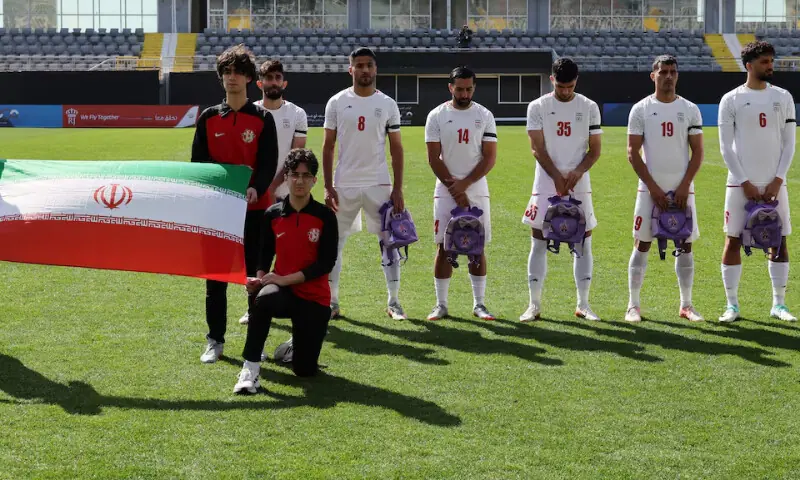 Iran’s men’s national football team wore black armbands and held schoolbags as their anthem played ahead of a match in Turkey on Friday, in what a team official said was a protest over the killing of schoolgirls on the first day of the Iran war. Iran were playing a friendly against Nigeria in the Mediterranean resort town of Belek ahead of the World Cup in the US, Mexico and Canada, at which their participation is in doubt due to the conflict. Iran players line up before the match as school bags are laid in memory of the victims of the girls school bombing in Minab, Iran, March 27, 2026. — Reuters The men lined up holding pink and purple bags with ribbons on them — a reference to the attack on the Shajareh Tayyebeh School that Tehran says killed more than 175 people, including children and teachers, on the first day of joint US-Israeli strikes on the country. Mehdi Mohammad Nabi, a vice president of the Iranian football federation, told Reuters that the players had decided to stage the protest as a symb...
 -
Dawn - 18:34 Mar 27, 2026
The Pakistan Cricket Board (PCB) has issued a show-cause notice to fast bowler Naseem Shah for “violating the terms of [his] central contract as well as the media policy and regulations”, according to a press release. The press release, issued by the PCB on Friday, said that the show-cause notice to Naseem, who also plays for the Pakistan Super League team Rawalpindiz, had been served in accordance with the board’s disciplinary framework. “Naseem Shah is required to provide a response within the stipulated time,” the press release said, without specifying the date by when Naseem was required to submit his response. It added that upon receipt and review of Naseem’s response, the PCB would “decide on any further action in line with the regulations”. “The PCB remains committed to upholding professional standards, contractual obligations, and the integrity of the game,” the press release read. While the press release did not specify the exact violations or the events that led to the issuance of a show-cause notic... -
Dawn - 17:33 Mar 27, 2026
Prime Minister Shehbaz Sharif announced on Friday that he had rejected another recommendation for an increase in the prices of petrol and high-speed diesel (HSD). He made the announcement during an address to the nation, saying that he had been recommended to approve an increase of Rs95 per litre in the price of petrol and Rs203 per litre in that of HSD. “However, I have rejected it,” he said. The announcement comes a week after he said he rejected an increase of Rs76 per litre in the price of petrol Rs177 per litre in that of HSD. In the same instance, the premier had also said that he had rejected a similar recommendation earlier as well, following a hike in oil prices in the international market on March 13. The developments take place amid a global fuel crisis resulting from the US-Israeli war on Iran, which began on February 28. The government announced unprecedented austerity measures on March 9 and also hiked petroleum products’ prices earlier this month in the first steps to deal with the situation. M... -
Dawn - 17:20 Mar 27, 2026
Iran-linked hackers on Friday claimed they had accessed FBI Director Kash Patel’s personal email inbox, publishing photographs of the director and other documents to the internet. On their website, the hacker group Handala Hack Team said Patel “will now find his name among the list of successfully hacked victims”. The hackers published a series of personal photographs of Patel sniffing and smoking cigars, riding in an antique convertible, and making a face while taking a picture of himself in the mirror with a large bottle of rum. A Justice Department official confirmed that Patel’s email had been breached and said the material published online appeared authentic. The FBI did not immediately respond to a request for comment. The hackers did not immediately respond to messages. Handala, which calls itself a group of pro-Palestinian vigilante hackers, is considered by Western researchers to be one of several personas used by Iranian government cyberintelligence units. Handala recently claimed the hack of Michig... -
Dawn - 15:23 Mar 27, 2026
KARACHI: A judicial magistrate in Karachi handed down a collective sentence of nine years to a man after finding him guilty of sharing sexually explicit videos and pictures of a woman with her in-laws on a WhatsApp group, it emerged on Friday. Judicial Magistrate (East) Gulraiz Memon sentenced the convict, Ammad Husain, on three counts in the case that was registered with the Federal Investigation Agency’s cybercrime wing under Section 20 (dignity of natural persons), 21 (modesty of natural persons or minor), 24 (cyberstalking) of the Prevention of Electronic Crimes Act, 2016. Husain was handed a three-year prison sentence for each count, and all three sentences will run concurrently. The court also fined him a total of Rs135000 and directed him to pay another Rs1 million to the victim in compensation. In case of failure to pay the fine or the compensation, he will have to serve additional imprisonment. In his judgement, Judicial Magistrate Memon observed regarding the motive of the crime that upon the victim... -
Dawn - 14:57 Mar 27, 2026
ISLAMABAD: The Centre and the provinces on Friday agreed to immediately roll out a mobile application-based quota system for the provision of fuel for two- and three-wheelers to ensure a targeted subsidy for the low-income strata and minimise the leakage of public money into untargeted avenues. “The participants agreed to expedite efforts to finalise a targeted subsidy framework using technological solutions, while ensuring continued coordination between the federal and provincial governments”, the Ministry of Finance said after a consultative meeting on the subject with the provinces. Finance Minister Muhammad Aurangzeb, who presided over a high-level consultative meeting on the petroleum products situation, also highlighted the need to “promote responsible consumption behaviour and ensure that policy responses remain fiscally prudent while maximising relief for the public”, the statement added. The meeting was also attended by officials from the provincial governments. The meeting commenced with a detailed ... -
Dawn - 14:40 Mar 27, 2026
Prime Minister Shehbaz Sharif on Friday said that expanding the scope of the Roshan Digital Account (RDA) scheme to foreign investors would further strengthen Pakistan as “an attractive investment destination” and would expand financial markets, according to a handout from the Prime Minister’s Office (PMO). It should be mentioned that Finance Minister Muhammad Aurangzeb on March 16 had announced the government’s move to expand the scheme. According to the PMO handout issued on Friday, the government, on the directives of PM Shehbaz, had decided to expand the scope of the RDA. Foreign nationals, companies, and institutional investors would be allowed to invest in Roshan Digital Accounts and in government securities, including Naya Pakistan Certificates, it added. “This initiative reflects efforts to strengthen linkages with financial markets and promote foreign investment through a digital platform,” the handout said. It said that the overseas Pakistani community, comprising approximately 11 million people, wa... -
Dawn - 13:30 Mar 27, 2026
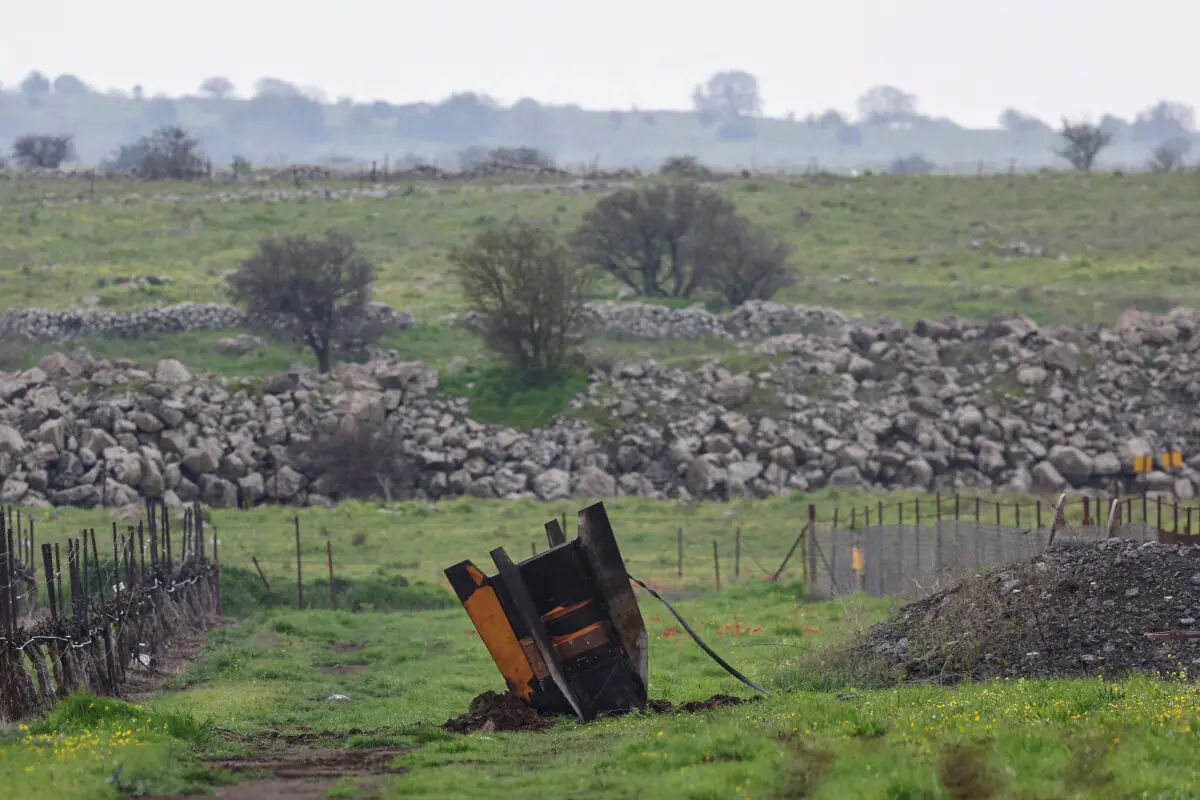 On the 28th day of the US-Israel war against Iran, US President Donald Trump’s decision to extend the “pause” on strikes against Iranian energy infrastructure until April 6 created the appearance of a diplomatic opening; but in effect, it reflected an attempt to buy time amid rising military, economic and political pressures, while keeping escalation options firmly on the table. The extension, framed by Washington as a response to “ongoing talks,” has been rejected by Tehran as psychological signalling, with Iranian officials maintaining that no such request was made and reiterating their rejection of the US proposal. This difference in itself underscores the underlying reality that the pause is less about de-escalation and more about managing the pace of escalation, allowing the US and Israel to sustain pressure through other means while avoiding an immediate dive into full-scale energy warfare. On the battlefield, the conflict continued to operate at a high intensity. Iranian ballistic missile barrages and ...
 -
Dawn - 13:28 Mar 27, 2026
US paper currency will bear President Donald Trump’s signature starting this summer, the first time a sitting president has signed American money, the Treasury Department said on Thursday. The redesigned notes, planned to mark the 250th anniversary of American independence, will also, for the first time in 165 years, drop the signature of the US treasurer, who reports to the Treasury Secretary and oversees the Bureau of Engraving and Printing, the US Mint and other Treasury functions. The first $100 bills with Trump’s signature and that of US Treasury Secretary Scott Bessent will be printed in June, followed by other bills in subsequent months. The new bills may take several weeks to circulate through banks. The Treasury is still producing notes bearing the signatures of former president Joe Biden’s Treasury secretary, Janet Yellen, and former Treasurer Lynn Malerba. Malerba will be the last of an unbroken line of treasurers whose signatures have appeared on US federal currency since 1861, when the US g... -
Dawn - 12:54 Mar 27, 2026
Initiating peace talks in the war on Iran “is no easy task,” but it would be “conducive to restoring normal navigation through the Strait of Hormuz,” Chinese Foreign Minister Wang Yi said during a call with Deputy Prime Minister and Foreign Minister Ishaq Dar on Friday. The two “agreed to jointly promote a ceasefire and cessation of hostilities and the resumption of peace talks, to ensure the safety of non-military targets and waterways,” according to a summary of the call released by the Chinese ministry. China supports Pakistan’s role as a mediator, Wang told Dar. Meanwhile, in a social media post on X, Dar said the two “reaffirmed the need to restore peace and stability in the Middle East and the wider region”. “We agreed to support all efforts aimed at ensuring an immediate end to hostilities, resumption of peace talks, protection of non-combatants, security of shipping lanes, and adherence to the United Nations Charter,” he said. “FM Wang Yi conveyed China’s appreciation and support to Pakistan for its o... -
Dawn - 12:53 Mar 27, 2026
In a phone call with Prime Minister Shehbaz Sharif on Friday, Kuwait’s Crown Prince Sheikh Sabah Al Khaled Al Hamad Al Sabah “fully endorsed” Pakistan’s efforts for mediation between Iran and the US, according to a statement by the Prime Minister’s Office (PMO). The statement said that PM Shehbaz held a phone call with the crown prince and “apprised the Kuwaiti leadership of Pakistan’s sincere diplomatic efforts to bring an end to the war in the Middle East”. During the conversation, PM Shehbaz reiterated “strong condemnation” of the attacks on Kuwait and expressed solidarity and support for the people of the Gulf country in these challenging times, the statement said. PM Shehbaz also offered condolences on the loss of precious lives and prayed for the recovery of the injured, it added. “While expressing deep appreciation of the prime minister’s leadership, the crown prince of Kuwait fully endorsed Pakistan’s efforts for mediation between Iran and the US,” the statement said. The crown prince thanked the prim... -
Dawn - 12:46 Mar 27, 2026
The Federation of Pakistan Chambers of Commerce and Industry (FPCCI) on Friday condemned statements against Pakistan’s status under the European Union’s Generalised Scheme of Preferences Plus (GSP+). The remarks come a day after as government officials bitterly criticised ex-premier Imran Khan’s son Kasim and party leader Zulfi Bukhari for allegedly attempting to derail the country’s GSP+ status in a speech he made at the sidelines of a United Nations Human Rights Council (UNHRC) moot. It should be mentioned that, according to a fact check by iVerify, the claim that Kasim demanded the suspension of Pakistan’s GSP+ status at the UNHRC summit was found to be false. Addressing a press conference in Lahore, FPCCI officials, including Vice Chairman Zaki Aijaz and United Business Group Patron-in-Chief S.M. Tanveer condemned statements against the country’s GSP+ status. In his remarks, Aijaz said that “ensuring the protection of the GSP+ status is a national responsibility”. “FPCCI and the business community con... -
Dawn - 12:19 Mar 27, 2026
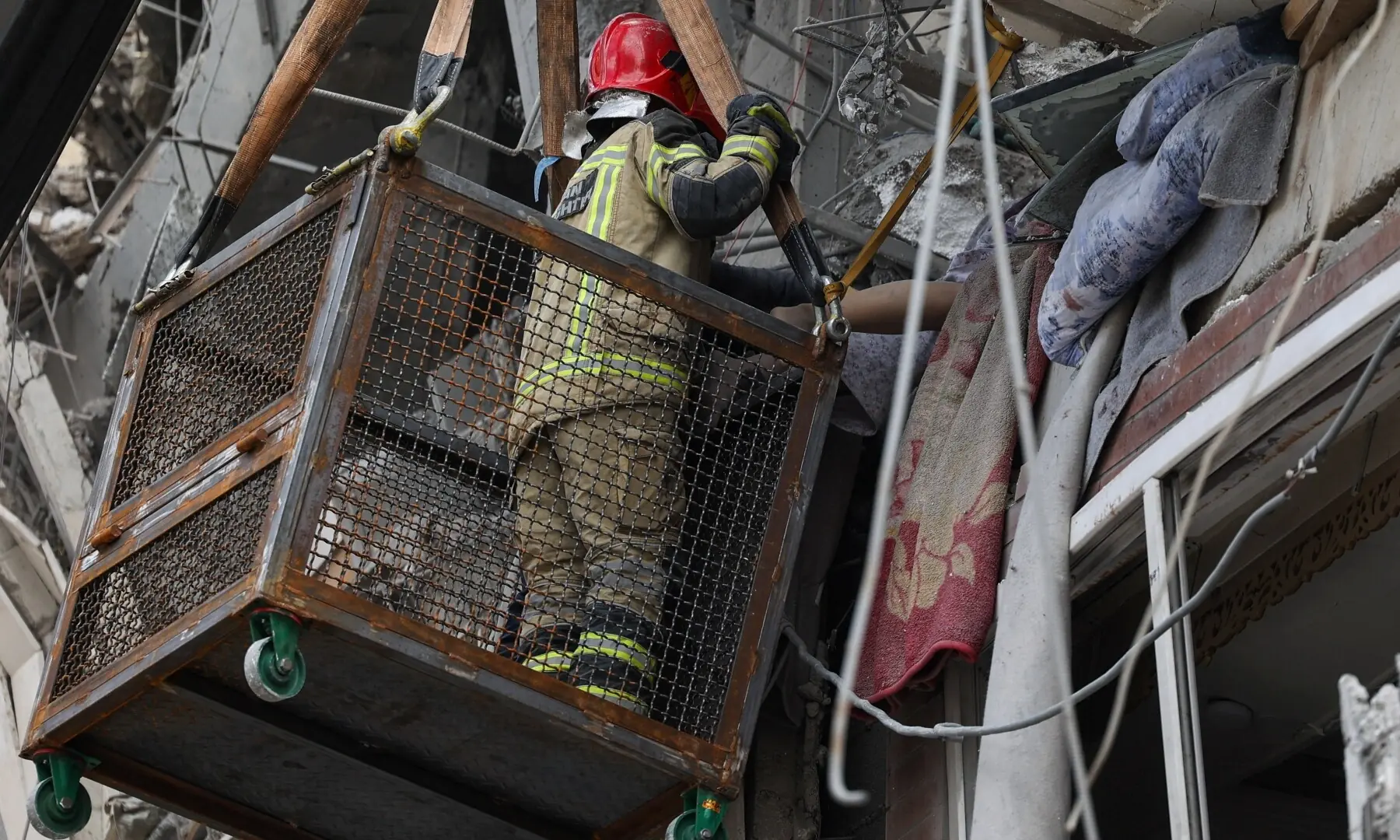 After a month of US-Israel war on Iran with no clear end in sight, Iranians tell AFP about how life has changed, about watching missiles fall, and how security forces have tightened their grip. Here is a collection of interviews conducted with Iranians, mostly people in Tehran, who shared their experiences with AFP journalists outside the country. Their names have been changed to protect their identities. Iran has been arresting and warning citizens about speaking to journalists or sending images outside the country amid an internet blackout and severe phone network restrictions. Economic pressure Iran was already suffering economically before the war, but the conflict has sparked even higher inflation and brought many industries to a standstill. “My income comes from my online shop, but for the past two months I’ve had no income at all,” Golnar from Tehran told AFP. “In our family, everyone is working and we don’t even pay rent, yet we still can’t think about things like going to restaurants or any kind of l...
 -
Dawn - 12:14 Mar 27, 2026
ISLAMABAD: The Islamabad High Court (IHC) on Friday fixed the hearing for PTI founder Imran Khan and his spouse Bushra Bibi’s petitions against their conviction in the £190 million Al-Qadir Trust corruption case on March 31. According to the cause list issued by the IHC registrar’s office, a division bench — comprising IHC Chief Justice Sardar Muhammad Sarfraz Dogar and Justice Muhammad Asif — will hear the pleas seeking suspension of Imran and his spouse’s sentences on March 31. An accountability court in Islamabad had sentenced Imran and Bushra to 14 and seven years in prison, respectively, on Jan 17, 2025, in the £190m graft case, also known as the Al-Qadir Trust case. At the last hearing of the case, held on March 11, the IHC imposed a fine of Rs100,000 on the National Accountability Bureau (NAB) for employing “delaying tactics” in the case. However, a later written order did not include any direction regarding the imposition of a fine. The court had directed the anti-graft body to come prepared on the ne... -
Dawn - 11:29 Mar 27, 2026
China’s foreign ministry accused the media of publishing “false information” on Friday following a report that said the country’s top semiconductor firm has sent chipmaking tools to Iran. The report, which cited information from two unidentified senior officials in US President Donald Trump’s administration, said contract chipmaker SMIC “began sending the tools to Iran roughly a year ago”. A US official was quoted in the report as saying they had “no reason to believe that any of this has stopped”. China is a key partner of Iran but has not announced military assistance to Tehran in the war triggered by US-Israeli strikes on February 28, repeatedly calling for a ceasefire. The chipmaker, Semiconductor Manufacturing International Corporation (SMIC), did not respond to an AFP request for comment on Friday. Asked about the report at a regular news conference in Beijing, foreign ministry spokesman Lin Jian said he was “not familiar with the situation”. “What I can tell you is that recently, some media have been k... -
Dawn - 10:19 Mar 27, 2026
Senate Chairman Yousuf Raza Gilani on Friday approved the surrender of the Rs265 million to the national exchequer in efforts to support the government’s austerity drive. On March 9, the government announced a host of austerity measures to conserve fuel in view of the global fuel crisis triggered by the US-Israel war on Iran. In a post on its X account, the Senate said that the chairman has approved the surrender of Rs265m as an “immediate measure” to the Finance Division, adding that efforts were also underway to “identify additional savings by curtailing expenses in the coming weeks to deposit in the national exchequer”. According to the statement, he directed the Senate Secretariat to ensure the implementation of the austerity measures in accordance with the austerity drive announced by Prime Minister Shehbaz Sharif. Gilani emphasised that “the Senate, as a key constitutional institution, fully recognises the importance of fiscal discipline in the current economic circumstances and remains committed to sup... -
Dawn - 10:04 Mar 27, 2026
Ukraine and Saudi Arabia have signed an air defence agreement during President Volodymyr Zelensky’s visit to the kingdom, which is facing Iranian drone attacks, two senior officials told AFP on Friday. Kyiv has sought to leverage its expertise in downing Russian drones to help Gulf nations, which are being attacked with the same kind of Iranian-designed Shahed drones that Russia fires on Ukraine. “The point of the agreement is that Ukraine will support them in developing all the necessary components of air defence, which they currently lack,” one official said of the document which, according to another was signed on Thursday. Both spoke to AFP on the condition of anonymity. Kyiv has been using a mix of cheap drone interceptors, electronic jamming tools and anti-aircraft guns to down Russian drones fired at its cities on a nightly basis for four years. It touts its anti-drone defences as the best in the world. Ukraine has proposed swapping its interceptors for vastly more expensive air-defence missiles that G... -
Dawn - 10:01 Mar 27, 2026
The Pakistan Meteorological Department (PMD) has forecast chances of rain and thunderstorms in Karachi and across Sindh on Saturday, as a westerly wave continues to affect the country. According to its three-day weather outlook issued on Friday, the PMD said that Saturday would likely bring thunderstorms or rain “of light to moderate intensity” to the province due to a westerly wave entering the country from southwestern Balochistan. Mostly sunny weather is expected in Karachi today, with a maximum temperature of 32-34 degrees Celsius and a minimum of 24°C. Humidity will reach 76 per cent before dropping to 45-55pc in the evening as a northwesterly wind is expected to turn west/southwesterly. On Saturday, the PMD forecast “partly cloudy” weather with “chances of isolated wind [or] thunderstorms/rain”. Temperatures will stay similar, at around 31-33°C highs and 22-24°C lows. Humidity is predicted between 75-85pc in the daytime and 55-65pc in the evenings. Sunday is not expected to be rainy, but the maximum tem... -
Dawn - 09:49 Mar 27, 2026
Interior Minister Mohsin Naqvi met with Chinese Ambassador Jiang Zedong at the Chinese Embassy in Islamabad on Friday, where the two discussed matters pertaining to counter-terrorism, security cooperation and the Police Exchange Programme. The interior ministry posted on social media that Naqvi arrived at the embassy in Islamabad’s Diplomatic Enclave earlier today, where he was welcomed by the ambassador. It also shared a video of him being received by Jiang at the entrance. “Discussion on the overall situation of the region also took place in the meeting,” the ministry said. The interior ministry said it was decided to hold a business conference to address security issues faced by Chinese investors in Pakistan, according to the ministry. It elaborated that in the first phase, meetings will be held with the Chinese business community present in Pakistan; the second phase will involve meetings with those who are interested in investing in Pakistan. The interior minister also said that a Special Protection Unit...
10418 items