Iran | Pakistan
"Iran" in Pakistan feed
-
Dawn - 02:38 Mar 11, 2026
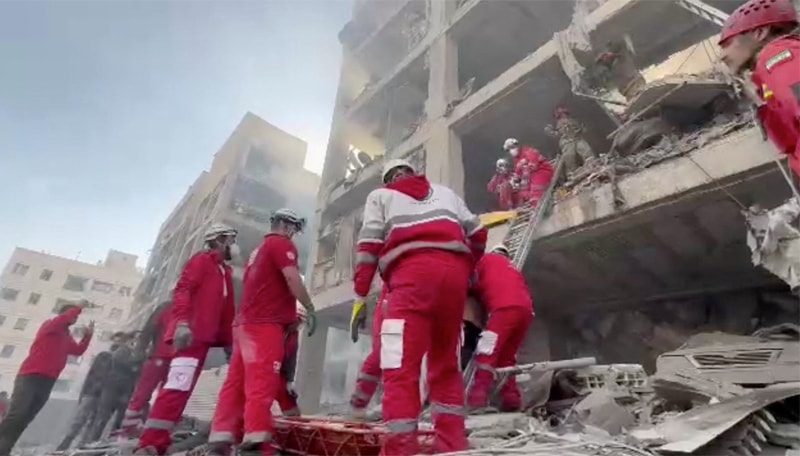 TEHRAN: Rescuers work in the rubble of a residential building after air strikes in the Resalat area.—Reuters • Energy secretary claims US Navy escorted ship through ‘troubled waters’, later deletes X post • Araghchi shoots down Trump’s signal for talks, says will fight as long as necessary • Israel says ‘not done with offensive’ yet; Hegseth claims unleashing ‘most intense strikes’ yet • US ‘unhappy’ with Israeli strikes on Iranian oil facilities • Pakistan continues diplomatic efforts; slams invasion of Lebanon TEHRAN / WASHINGTON: The US continued to put out more mixed signals on Tuesday, as US President Donald Trump told Fox News that it was possible he would be willing to talk with Tehran, while his Pentagon chief vowed to ramp up strikes against Iran, promising “the most intense day of strikes” yet. Iran’s forces, however, vowed to fight on, declaring that not one litre of oil would be exported from the Gulf while its war with the United States and Israel continues. The vow came as the US energy secretar...
 -
Dawn - 19:01 Mar 10, 2026
In a letter to Iran’s new Supreme Leader Mojtaba Khamenei on Tuesday, Prime Minister Shehbaz Sharif reaffirmed Pakistan’s commitment to continue to work “closely” with the Islamic republic, a statement by the Prime Minister’s Office (PMO) said. A day earlier, Iran’s Assembly of Experts named Mojtaba Khamenei as the new supreme leader to succeed his father, Ayatollah Ali Khamenei, who was assassinated in US-Israeli coordinated strikes on Iran days ago. The PMO statement said that the premier congratulated Mojtaba on his appointment as the supreme leader and voiced optimism that he would lead his country towards “peace, stability, and prosperity”. He also offered “condolences on the martyrdom of his revered father, the Supreme Leader of the Islamic Republic of Iran, Ayatollah Seyyed Ali Khamenei”. PM Shehbaz noted that the martyrdom of the former supreme leader had “deeply saddened the people of Pakistan, who stand in solidarity with the leadership and people of Iran during this difficult time”. He expressed fa... -
Dawn - 07:54 Mar 10, 2026
Deputy Prime Minister and Foreign Minister Ishaq Dar, on Tuesday, in a phone call with his Bahraini counterpart, reiterated Pakistan’s call for de-escalation and dialogue for stability in the Middle East amid escalating tensions in the region. Iran, Pakistan’s western neighbour, has been embroiled in a war with the United States and Israel since the latter’s February 28 strikes that assassinated its supreme leader, Ayatollah Ali Khamenei. In retaliation for the strikes, Iran resorted to targeting neighbouring countries, which house US bases, including Bahrain. According to a statement by the Foreign Office (FO), Dar spoke with Bahrain’s Foreign Minister Dr Abdullatif Bin Rashid Al Zayani last night, and the two “exchanged views on the developments in the Middle East and the wider region, conveying grave concern over recent attacks, including in Bahrain”. FO added that during the call, Dar “reaffirmed Pakistan’s solidarity with Bahrain and its people”. He also underscored the need for “de‑escalation, dialogue,... -
The Nation - National - 06:45 Mar 10, 2026
ISLAMABAD - Pakistan’s Ambassador to Iran, Muhammad Mudassir Tipu, yesterday urged Pakistani nationals residing in Iran to immediately register with the embassy if they wish to return home, citing increasing logistical difficulties in arranging transportation. -
The Nation - National - 06:33 Mar 10, 2026
Pollution resulting from the recent US-Israeli strikes on Iran’s oil sites could worsen air quality in Pakistan's western parts, the country's official weather agency cautioned on Monday. -
Dawn - 05:34 Mar 10, 2026
WASHINGTON: US President Donald Trump on Monday declined to say whether Iran’s newly appointed supreme leader has a “target on his back,” but made clear his dissatisfaction with Tehran’s choice, calling it “going to lead to more of the same.” Asked at a news briefing in Doral, Florida, whether Iran’s new leader was a target, Trump replied: “The new leader, you mean the son?… I was disappointed to see their choice,” before adding, “I don’t want to say whether he has (a target on his back).” Pressed again at the end of the session, he repeated that he would not comment on any targeting decision but reiterated his broader frustration, saying the Iranian people are “an amazing people but the system they have only leads to failure.” The remarks came a day after Iran’s Assembly of Experts formally appointed Mojtaba Khamenei — son of the late supreme leader Ayatollah Ali Khamenei — to succeed his father following his death in a US-Israeli strike. The succession consolidates power within the clerical circles and sign... -
Dawn - 02:45 Mar 10, 2026
• US president calls Mojtaba’s appointment ‘bad idea’; says war could be ‘over soon’ • Kremlin says Putin gave Trump proposals for a quick settlement of conflict • Israel launches more attacks on Tehran, Isfahan; Iran pledges bigger warheads in response • Bahrain oil facilities attacked; Nato defences shoot down missiles aimed at Turkiye • Two UAE servicemen killed; strike hits near Iraqi base, Baghdad airport TEHRAN / WASHINGTON: Monday was a rough day for global markets, which saw Brent crude oil prices jumping to a peak of $119.50 as Iran launched fresh strikes on energy installations in the Gulf, before coming back down to around $82 a barrel. For his part, US President Donald Trump predicted the war in the Middle East could be over soon, even as Tehran saw rallies in support of the new supreme leader, Mojtaba Khamenei. Iranian state media showed large crowds in several cities rallying behind the new leader, waving Iranian flags and holding portraits of his father Ayatollah Ali Khamenei, who was killed by... -
Dawn - 21:18 Mar 09, 2026
US President Donald Trump indicated for the first time on Monday that US military operations in Iran could be coming to an end, saying the war was “very complete” and progressing ahead of schedule. The war had sent stock markets slumping and oil prices soaring again on Monday as Tehran, under new leader Mojtaba Khamenei, fired a new barrage of missiles at its Gulf neighbours and signalled that the strategic Strait of Hormuz would likely remain closed. But Wall Street vaulted into positive territory on Monday after Trump’s remarks, despite the lack of details on any solution to the conflict still raging in the Middle East. “I think the war is very complete, pretty much. They have no navy, no communications, they’ve got no air force,” Trump told CBS News by phone, repeating battle damage assessments that he has given in previous days. Trump told the US broadcaster that the United States was “very far” ahead of his initially stated timeframe for the war of four or five weeks. On the first day in power for the 56... -
Dawn - 17:25 Mar 09, 2026
KARACHI: The Pakistan Meteorological Department (PMD) on Monday cautioned that the pollution resulting from the recent US-Israeli attacks on Iran’s oil sites could worsen air quality in western parts of the country. “Due to [the] recent situation in Iran, the winds may carry pollutants and deteriorate air quality in the western parts of the country,” read a press release issued by the PMD. Iran, Pakistan’s western neighbour, has been embroiled in a war with the United States and Israel since the latter’s February 28 strikes that assassinated its supreme leader Ayatollah Ali Khamenei. Major airstrikes on Tehran’s refineries and fuel depots on March 7 plunged the Iranian capital into a toxic gloom as black, oily rain fell on Sunday. In Tehran, the sun was blotted out by thick black smoke billowing from oil facilities that continued to smoulder. CNN correspondent Frederik Pleitgen described the scene at Tehran’s Shahran oil depot as “apocalyptic”, adding that “breathing the air feels quite toxic”. The Iranian Re... -
Dawn - 13:27 Mar 09, 2026
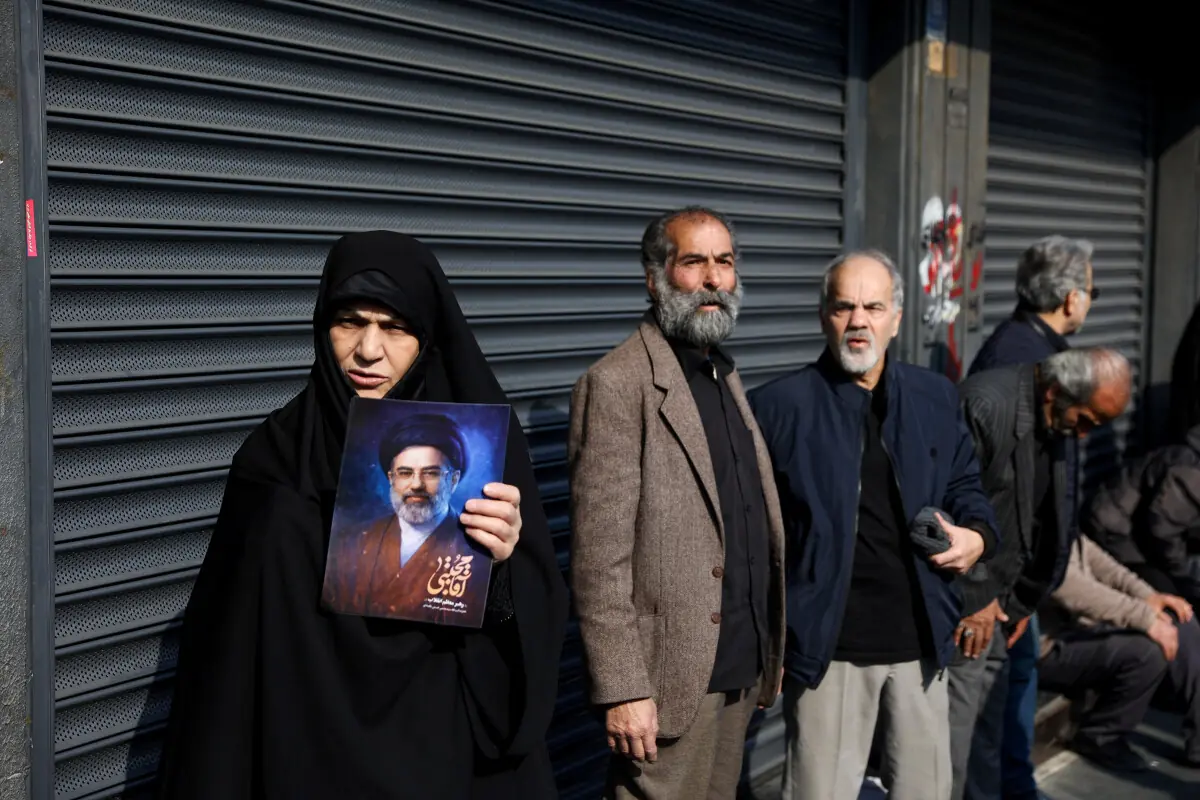 The 10th day of the war began with a development that may shape the trajectory of the conflict more than any exchange on the battlefield. Early on Monday, Iran’s Assembly of Experts selected Ayatollah Mojtaba Khamenei as the country’s new supreme leader. The transition that happened without any disruption signalled both institutional continuity and a consolidation of authority at a time when Iran remains under sustained military pressure. Within Iran, the appointment was immediately endorsed by the revolutionary core and the political and military elite that publicly pledged allegiance, while state media framed the succession as a stabilising step that ensured the continuity of the political system despite the wartime environment, and there were no signs of unrest in cities, suggesting public acceptance as well. The acceptance of the new supreme leader extended beyond Iran’s borders as well, particularly among actors aligned with Tehran’s regional network of allies in Lebanon, Iraq and Yemen who moved quickly...
 -
Dawn - 12:43 Mar 09, 2026
Qatari authorities have arrested more than 300 people for sharing images and what they described as “misleading information” during days of attacks by Iran, the interior ministry said on Monday. The arrests echo measures across the Gulf as Iran targets airports, military bases, energy installations and residential areas with daily drones and missiles. Those arrested “filmed and circulated video clips and published misleading information and rumours that could stir public opinion”, a statement said. The people of “various nationalities” were held by the Department for Combating Economic and Cyber Crimes at the ministry’s General Directorate of Criminal Investigations. The announcement follows a spate of arrests elsewhere in the region. In Bahrain, four people were arrested for “filming and broadcasting clips about the effects of Iranian attacks and spreading false news”, the interior ministry said on Friday. And in Kuwait, authorities on Saturday said three people had been arrested over a video showing them mo... -
The Nation - National - 10:19 Mar 09, 2026
Muhammad Mudassir Tipu has urged Pakistani nationals in Iran who wish to return home to register with the embassy immediately. -
Dawn - 06:16 Mar 09, 2026
Oil prices surged around 25 per cent on Monday to their highest since mid-2022, with Brent on track for a record one-day gain, while gold fell 2pc as an escalating Iran war squeezed world energy supplies, boosted the dollar and dampened hopes of interest-rate cuts. Agriculture markets, led by edible oils, rose as they took their cue from oil prices due to the extensive use of vegetable oils in making biofuels. Aluminium firmed on supply worries even as other metals faced headwinds from a stronger dollar. “The violent reaction stems from the markets seeing no obvious offramp in the escalating Middle East conflict, now a high-stakes standoff where neither side appears willing to blink first,” Tony Sycamore, IG market analyst, said in a note. “The risk of more lasting economic damage continues to build by the day.” Iran on Monday named Mojtaba Khamenei to succeed his father, Ali Khamenei as Supreme Leader. Soaring oil lift vegoils, grains Brent was on track for its biggest one-day gain ever in both percent... -
Dawn - 12:59 Mar 08, 2026
Iranian clerics involved in choosing a successor to Ayatollah Ali Khamenei after his assassination a week ago in US-Israeli strikes say they are close to naming the Islamic Republic’s new supreme leader. Iran’s revolutionary theocracy has never been in greater jeopardy, and with the clerical body tasked with naming a new leader ready for an announcement as soon as Sunday, it is hard to predict what might happen next. Israel and the United States have vowed no let-up in their war, promising to kill whoever replaces Khamenei and even those involved in selecting the new leader — a group that may include the clerics who formally make the choice and the Revolutionary Guardsmen and political insiders who influence them. The following explains how power is meant to operate in the Islamic Republic, how a new supreme leader can be chosen, some of the main candidates, and how the US and Israeli attacks have changed the equation. What is Iran’s ‘Supreme Leader’? Iran’s theocratic system dates to the 1979 revolution that... -
Dawn - 12:00 Mar 08, 2026
GWADAR: A fisherman from Gwadar was killed after the debris of an Israeli projectile intercepted by Iranian air defence systems hit his boat in Iranian waters, officials said on Sunday. Gwadar Deputy Commissioner (DC) Naqibullah Kakar confirmed the incident to Dawn that took place on Saturday, saying that the deceased was identified as Muhammad Tayyab, a resident of Gannz, a small coastal town in Balochistan’s Gwadar district. District Police Officer Attaur Rehman also confirmed the incident and told Dawn that Tayyab “went into Iranian waters for Iranian oil”. DC Kakar believes an attempt was made to attack fishing boats in a coastal area of Iran’s Sistan-Baluchistan province, but the projectile was intercepted and destroyed by the Iranian air defence system. “A portion of the debris from that drone or missile hit Tayyab’s fishing boat, resulting in his death,” he added. The officials said Tayyab’s body was taken to his native town, Gannz, via the sea, and he was later buried. Iran, a neighbour of Pakistan, h... -
Dawn - 16:23 Mar 07, 2026
Kuwait has implemented a precautionary reduction in crude oil production and refining throughput after the ongoing attacks by Iran against the country and the effective closure of the Strait of Hormuz, Kuwait Petroleum Corporation (KPC) said on Saturday. The cuts are another disruption for the global energy industry because of the US-Israeli war on Iran, as oil and gas storage at facilities in the Middle East Gulf rapidly fill. Oil fields in Iraq have already cut production and Qatar declared force majeure on its huge volumes of gas exports, while the United Arab Emirates is most likely to cut next. “In light of the ongoing aggression by the Islamic Republic of Iran against the State of Kuwait, including Iranian threats against safe passage of ships through the Strait of Hormuz, KPC has implemented a precautionary reduction in crude oil production and refining throughput as part of its risk management and business continuity strategy,” it said, adding that it would be “reviewed as the situation develops”. The... -
Dawn - 13:22 Mar 07, 2026
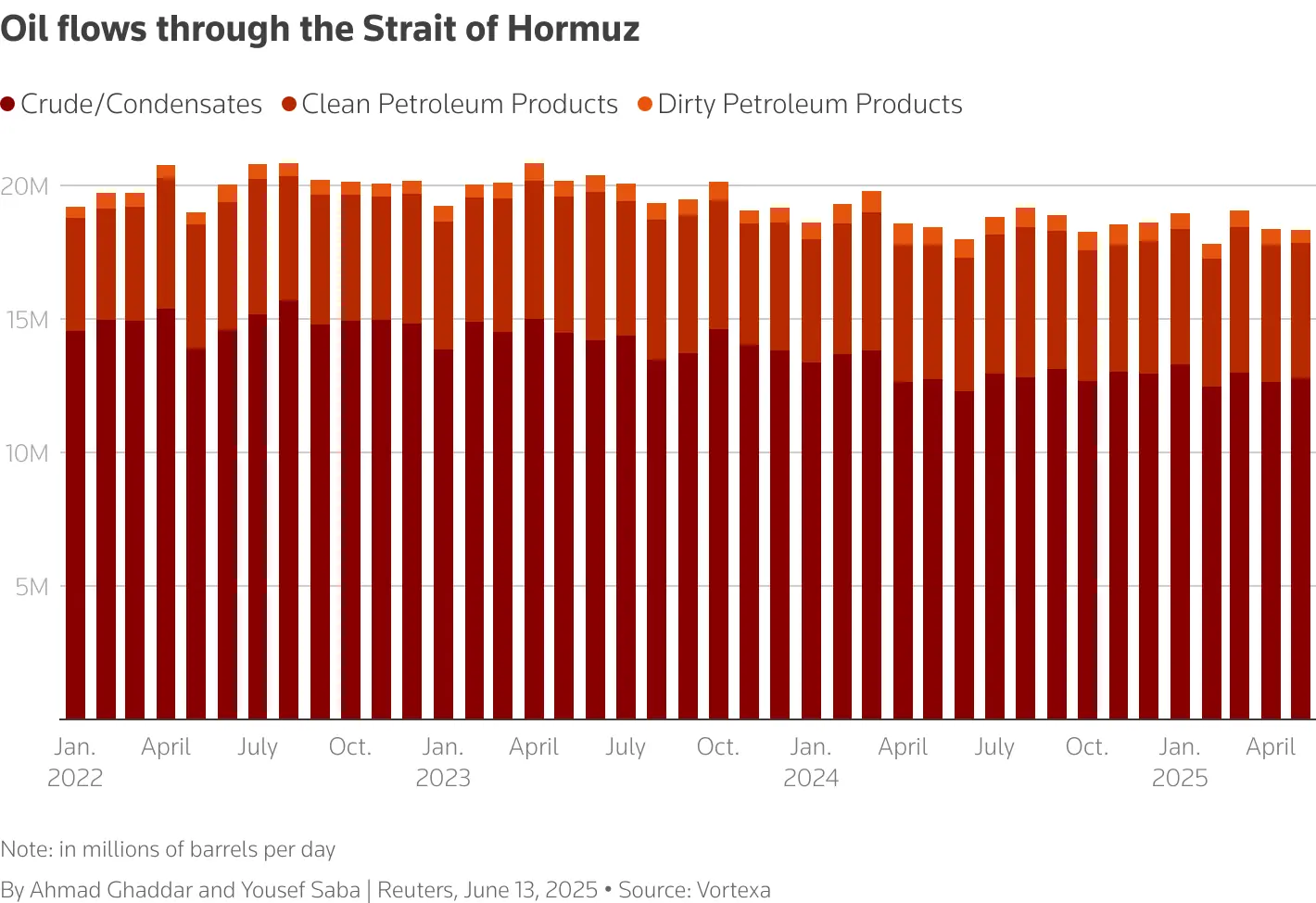 The United States and Israel’s war with Iran could leave consumers and businesses worldwide facing weeks or months of higher fuel prices even if the week-old conflict ends quickly, as suppliers grapple with damaged facilities, disrupted logistics, and elevated risks to shipping. The outlook poses a wider global economic threat, as well as a political vulnerability for US President Donald Trump leading into the midterm elections, with voters sensitive to energy bills and unfavourable to foreign entanglements. “The market is shifting from pricing pure geopolitical risk to grappling with tangible operational disruption, as refinery shutdowns and export constraints begin to impair crude processing and regional supply flows,” JP Morgan analysts said in a research note on Friday. The conflict has already led to the suspension of around a fifth of global crude and natural gas supply, as ships avoid the vital Strait of Hormuz between Iran and Oman amid Tehran’s retaliatory attacks. Global oil prices have surged 24 pe...
 -
Dawn - 09:51 Mar 07, 2026
Military consultations between Islamabad and Riyadh following Iranian drone and missile strikes on Saudi territory highlight the delicate strategic balance Pakistan must maintain as the Iran conflict expands beyond its original theatre and begins to affect the security of Gulf states. The statement issued by Inter-Services Public Relations (ISPR) after the meeting between the Chief of Defence Forces (CDF) and Chief of the Army Staff (COAS) Field Marshal Asim Munir, and Saudi Defence Minister Khalid bin Salman, on its face, looks fairly routine and predictable, but when read closely, a careful calibration of language by Pakistan becomes obvious. The Pakistani statement acknowledged the gravity of the situation arising from Iranian drone and missile attacks on the Kingdom and noted that CDF Munir discussed with the Saudi defence minister the measures required to halt them within the framework of the Strategic Mutual Defence Agreement (SMDA) between the two countries. This in itself was a signal of solidarity wi... -
Dawn - 09:40 Mar 07, 2026
Iran’s President Masoud Pezeshkian said on Saturday that his country would never surrender to Israel and the United States, as Middle East war entered its second week. Iran’s enemies “must take their wish for the unconditional surrender of the Iranian people to their graves”, Pezeshkian said, in a speech broadcast on state TV. Israel and the United States launched strikes against Iran on February 28, killing the Islamic republic’s Supreme Leader Ayatollah Ali Khamenei and triggering a regional conflict. Iran has since responded with missile and drone strikes on Israel and US interests in regional countries, mainly in the Gulf. Pezeshkian is among three members of an interim leadership council that has been in charge of Iran since Khamenei’s killing. During the speech, Pezeshkian apologised to neighbouring countries for Iran’s attacks across the region, saying that they would not be targeted unless attacks originated from them. “I must apologise on my own behalf and on behalf of Iran to the neighbouring countr... -
The Nation - National - 19:00 Mar 06, 2026
ISLAMABAD - Deputy Prime Minister/Foreign Minister Senator Mohammad Ishaq Dar spoke this evening with the Foreign Minister of Iran, Seyyed Abbas and expressed concern over the evolving regional situation.