Crypto
-
CryptoPotato - 22:11 Sep 16, 2025
The marriage of artificial intelligence and the Ethereum economy is about to get a lift from the Ethereum Foundation. -
CryptoSlate - 22:02 Sep 16, 2025
Four authors submitted Hyperliquid Improvement Proposal 4 (HIP-4) on Sept. 16, introducing “Event Perpetuals” to enable prediction markets on the platform’s order book infrastructure. The proposal lists Kalshi’s head of crypto, John Wang, among its four co-authors. The text addresses limitations in Hyperliquid’s existing HIP-3 builder-deployed perpetuals for prediction market use cases. The current infrastructure […] The post Kalshi exec submits Hyperliquid improvement proposal to solve prediction market deployment challenges appeared first on CryptoSlate. -
Cointelegraph.com - 22:02 Sep 16, 2025
 Davide Crapis says the Ethereum Foundation’s new AI team wasn’t part of the roadmap but grew out of grassroots demand. The Ethereum Foundation’s new push into artificial intelligence was not part of its roadmap, but emerged in response to demand from ecosystem projects, according to new team lead Davide Crapis. While not a direct policy shift, the move represents “another step” for the long-term success of the protocol. “Our ecosystem needs this,” Crapis told Cointelegraph. The newly formed AI team will essentially have a foot in two main sides of the Ethereum Foundation: the protocol and ecosystem divisions. The dual focus targets product development and preparing Ethereum to onboard traditional AI developers. Read more
 -
Cryptonews.com - 21:51 Sep 16, 2025
Shiba Inu whales just moved over 7 trillion SHIB in a single day – a surge in activity that supports a bullish Shiba Inu price prediction.A total of 9,330 SHIB transactions were recorded on Saturday alone, a level seen only three times this year, according to Etherscan.Nearly $91 million worth of tokens shifted between wallets, […] The post Shiba Inu Price Prediction: SHIB Whales Move 7 Trillion Tokens Overnight – Big Crash or Massive Rally Next? appeared first on Cryptonews. -
Decrypt - 21:50 Sep 16, 2025
Markets have priced in a cut from the Federal Reserve. So will crypto markets lie flat for the rest of the week? -
Cointelegraph.com - 21:31 Sep 16, 2025
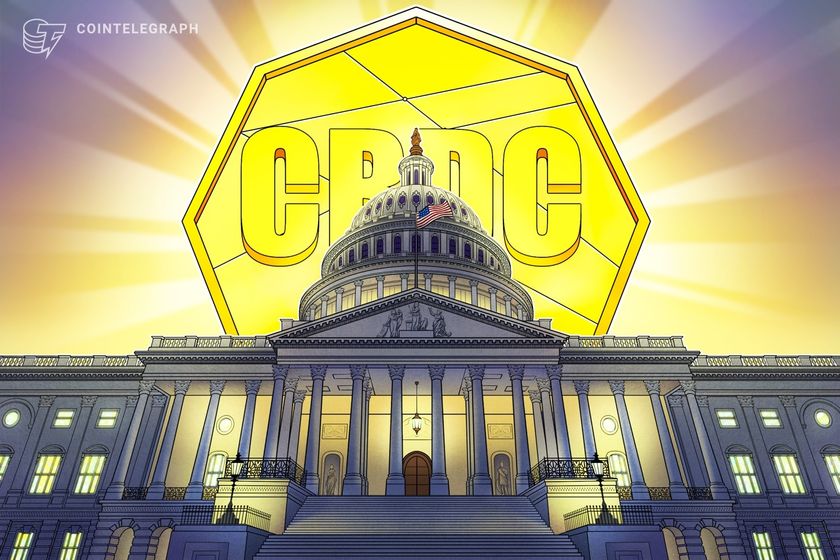 The House Rules Committee could add the CBDC bill to the final version of the market structure bill, but may not impact the Senate's own version of the legislation. The US House of Representatives may have a shorter legislative path to bar the Federal Reserve from issuing a central bank digital currency (CBDC) by using a market structure bill it passed in July. In a Monday hearing of the House Rules Committee, a draft agenda showed a proposal to add the text of the Anti-CBDC Surveillance State Act — also passed by the chamber in July, albeit by a narrow margin — to the Digital Asset Market Clarity Act. The engrossment method would add the CBDC bill to the final version of the existing market structure bill sent to the Senate for consideration. Read more
 -
CryptoSlate - 21:30 Sep 16, 2025
Defiance ETFs filed applications for Bitcoin and Ethereum related market-neutral exchange-traded funds (ETFs) called NBIT and DETH that execute a hedge fund arbitrage strategy. Bloomberg senior ETF analyst Eric Balchunas shared the filings on Sept. 16, noting that the funds operate a strategy of buying spot crypto assets while shorting futures contracts to capture premiums. […] The post Defiance files for Bitcoin and Ethereum ETF to capture hedge fund arbitrage strategy appeared first on CryptoSlate. -
Cointelegraph.com - 21:12 Sep 16, 2025
 Bitcoin’s price strength is supported by centralized exchange withdrawals, spot ETF inflows and BTC’s increasing use as a financial hedge. Key takeaways: September’s 44,000 BTC net withdrawals reduced the available supply, easing the potential short-term selling pressure. US-listed spot Bitcoin ETFs added $2.2 billion, delivering persistent daily demand that far exceeds the mined supply. Read more
 -
Decrypt - 21:08 Sep 16, 2025
Those who weathered the Pump.fun post-ICO crash are now sitting pretty. PUMP is up 63% from its launch price and 270% from July's bottom. -
CoinDesk - 21:05 Sep 16, 2025
Sui outperformed the broader crypto market following its inclusion in Google’s Agentic Payments Protocol. -
CryptoSlate - 21:00 Sep 16, 2025
Shares of SharpLink Gaming fell slightly even as the Ethereum treasury firm pressed forward with its ambitious stock repurchase program, buying another 1 million shares. The company, which trades under the ticker SBET, said the latest purchases were executed at an average price of $16.67 each. Despite the move, SharpLink’s stock slipped 2.8% to $16.32 […] The post SharpLink stock dips following latest buyback, Ethereum stash hits $3.8B appeared first on CryptoSlate. -
Cointelegraph.com - 20:52 Sep 16, 2025
 The DOJ is reportedly considering lifting a three-year compliance monitor imposed under Binance’s $4.3 billion settlement. Binance is reportedly in talks with the US Department of Justice (DOJ) to remove a key oversight measure from its 2023 settlement agreement — a change which, if approved, could ease regulatory and compliance pressures on the cryptocurrency exchange. According to Bloomberg, which cited people familiar with the discussions, the DOJ is weighing whether to lift the requirement that Binance be overseen by an independent compliance monitor. The monitor was imposed for a three-year period as part of a $4.3 billion settlement Binance reached with the DOJ in 2023, following allegations of multiple compliance failures, including insufficient safeguards against money laundering. Read more
 -
CryptoSlate - 20:24 Sep 16, 2025
A coalition of corporate Bitcoin (BTC) holders announced the first members of the Treasury Council on Sept. 16, positioning themselves as advocates for federal Bitcoin adoption. The Treasury Council includes nine chief executives from companies holding Bitcoin in their corporate treasuries, led by Strategy CEO Phong Le, MARA Chairman Fred Thiel, and Riot CEO Jason […] The post Bitcoin advocates form ‘Treasury Council’ to push for corporate adoption in Congress appeared first on CryptoSlate. -
CryptoPotato - 20:21 Sep 16, 2025
BTC still dominates treasuries (130+ firms), ETH counts 40+, but SOL is emerging as the “growth-stage” reserve asset for new adopters. -
Cryptonews.com - 20:17 Sep 16, 2025
Billionaire CZ is urging banks to adopt Binance Coin – BNB price prediction could stretch past $1,000 under the TradFi spotlight. The post BNB Price Prediction: Billionaire CZ Demands Banks Adopt BNB Coin – $1,000 Could Be Just the Start appeared first on Cryptonews. -
Cointelegraph.com - 20:15 Sep 16, 2025
 Circle is now a HYPE holder, has introduced native USDC to Hyperliquid and is considering becoming a network validator. Stablecoin issuer Circle is expanding into Hyperliquid with an investment and the launch of native USD Coin on the protocol, as stablecoin competition on the network intensifies. According to a Tuesday announcement, Circle is now a stakeholder in the Hyperliquid ecosystem, directly holding its native cryptocurrency Hyperliquid (HYPE). Circle is also considering becoming a validator for the protocol. The company, which went public on June 5, is behind the USDC (USDC) stablecoin, a digital asset redeemable 1:1 for US dollars. The token will be natively deployed on HyperEVM, Hyperliquid’s smart contract layer. Read more
 -
Cryptonews.com - 20:11 Sep 16, 2025
Fellowship PAC has pledged $100M to back pro-crypto candidates and has emphasized transparency and trust. NYT has reported a Cantor Fitzgerald treasurer and possible Tether support. It may be an alternative to Fairshake; Ryan Fournier has praised the launch. The post New Crypto Fellowship PAC Announces Launch With $100 Million Committed To War Chest appeared first on Cryptonews. -
Cryptonews.com - 20:03 Sep 16, 2025
Web3 publishing tool Mirror has said it will wind down, with content and subscribers moving to Paragraph via automatic redirects. The transition has followed a 2024 acquisition and a $5M raise from Union Square Ventures and Coinbase Ventures, combining reader coins, writer coins, and remix features. The post Paragraph Absorbs Mirror in Web3 Publishing Consolidation – What Changes for Writers? appeared first on Cryptonews. -
Cryptonews.com - 20:00 Sep 16, 2025
Cardano price prediction has strengthened as Openbank has added ADA trading for Germany, with Spain to follow. ADA has reclaimed key levels and shown TD Sequential and golden cross indicators, while open interest has risen, supporting a cup-and-handle path that has targeted $5. The post Cardano Price Prediction: Santander Openbank Offers Cardano to Customers – Technical Patterns Signal ADA to $5? appeared first on Cryptonews. -
Cryptonews.com - 19:45 Sep 16, 2025
The UK and the U.S. have discussed closer cooperation on digital assets, with stablecoins central to alignment. Crypto coordination has included plans for a joint digital-securities sandbox and capital-markets work, with announcements expected alongside high-level meetings this week. The post Breaking: UK and US Forge Crypto Alliance – Stablecoins Now in the Spotlight appeared first on Cryptonews.