Cointelegraph.com
Source:
https://cointelegraph.com
Found 10245 news
-
Cointelegraph.com - 10:37 Jan 12, 2026
 Star Xu defended freezing $40,000 in stablecoins after a user admitted buying verified accounts, with the exchange citing strict KYC and AML obligations. Update Jan. 12, 11:34 am UTC: This article has been updated to include a response from OKX. OKX founder and CEO Star Xu defended the exchange’s asset-freezing policies after a user accused the platform of locking up $40,000 in stablecoins held in accounts that were purchased rather than registered under the user’s own identity. The user, who goes by the name Captain Bunny on social media, said in a Sunday X post that OKX froze about $40,000 worth of Global Dollar (USDG) stablecoins after triggering risk controls tied to four accounts. The user said the funds were needed to cover medical expenses for his elderly father. Read more
 -
Cointelegraph.com - 10:04 Jan 12, 2026
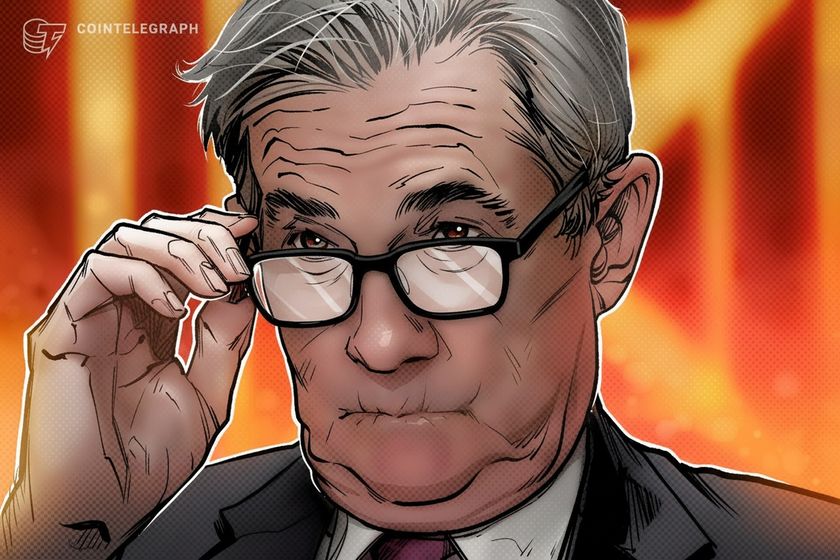
 Bitcoin’s non-sovereign narrative is gaining attention as reports of a probe into US Fed Chair Jerome Powell raise concerns over political pressure and markets. Bitcoin’s role as a non-sovereign risk asset may benefit from renewed investor focus amid a criminal investigation into US Federal Reserve Chair Jerome Powell. Federal prosecutors opened a criminal investigation into Powell over testimony he gave to a Senate committee about renovations to the Fed’s buildings. In a Sunday statement, Powell said the investigation is “a consequence of the Federal Reserve setting interest rates based on our best assessment of what will serve the public, rather than following the preferences of the President.” President Donald Trump has repeatedly attacked Powell and the Fed for refusing to grant his demands to cut interest rates. Read more
 -
Cointelegraph.com - 09:26 Jan 12, 2026
 Adam Back-backed Bitcoin treasury Future Holdings has agreed to a takeover proposal from Sweden-listed H100 Group as it eyes expansion into Switzerland. Future Holdings AG, a Switzerland-based Bitcoin treasury company backed by industry veteran Adam Back, has agreed to preliminary terms that may see it acquired by Sweden-listed H100 Group. The Swiss Bitcoin (BTC) treasury company on Monday announced it had entered a non-binding letter of intent with H100 covering the potential acquisition of 100% of its shares. “Combining Future with H100 creates a public-market platform and governance framework that we believe is essential for building long-term institutional credibility in the Swiss market,” Future Holdings’ chairman Richard Byworth said in a joint statement. Read more
 -
Cointelegraph.com - 09:14 Jan 12, 2026
 From record onchain volumes to geopolitics-driven crypto crime, 2025 structurally shifted how regulators and institutions engaged with digital assets, with stablecoins at the center. As crypto markets entered 2026, one theme became increasingly clear: Last year was less about speculation and more about infrastructure, regulation and real-world use. Across jurisdictions, regulators and institutions moved from theory to implementation, reshaping how digital assets are supervised and used. A defining feature of this shift was the rise of stablecoins. While Bitcoin (BTC) continues to dominate crypto market capitalization, stablecoins now account for more than half of all onchain transaction volumes globally. Their increasing role in payments, remittances, and trading has placed them firmly in the center of regulatory attention, particularly as governments grapple with financial stability and compliance risks. In this week’s episode of Byte-Sized Insight, Cointelegraph explores how these changes played out in prac...
 -
Cointelegraph.com - 09:01 Jan 12, 2026
 Bitcoin injected volatility as legal action against the Federal Reserve combined with market nerves over geopolitics at the start of a key week for inflation data. Bitcoin (BTC) bounces into a new week as volatility catalysts multiply worldwide. Bitcoin sees a trip above $92,000 after the weekly open, but traders are preparing for short opportunities. Liquidity hunts are the name of the game when it comes to short-term BTC price action. Read more
 -
Cointelegraph.com - 08:50 Jan 12, 2026
 The SEC delayed decisions on two crypto ETFs and opened public comments on options tied to a Grayscale multi-asset crypto fund. The US Securities and Exchange Commission (SEC) extended its decision deadline on two crypto-related exchange-traded funds (ETFs), while opening a comment window on options tied to a third in three separate filing decisions released Monday. In separate Federal Register notices, the SEC designated a longer period to consider proposed rule changes that would allow the listing of the Canary Pudgy Penguins (PENGU) ETF on Cboe BZX and the T. Rowe Price Active Crypto ETF on NYSE Arca. Both filings fall under the SEC’s standard 19b‑4 process, which lets it extend the initial decision window by up to 45 days while it evaluates market structure, investor protection and manipulation concerns. Read more
 -
Cointelegraph.com - 06:20 Jan 12, 2026
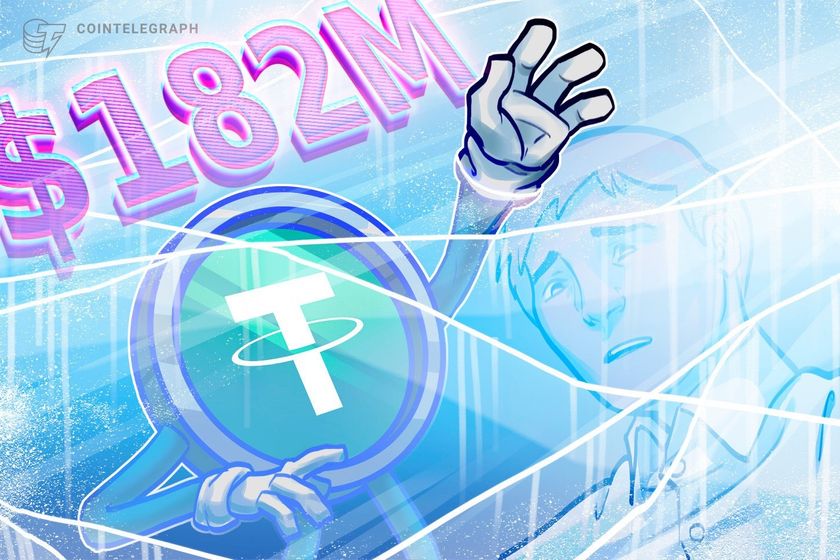 The dual life of stablecoins: A lifeline for citizens and a tool for sanctioned entities involved in Venezuela and Iran's economic crises. Recent turmoil in Venezuela and Iran has again put the spotlight on the duality of stablecoins, with the US dollar-backed assets such as Tether acting as both a savior for embattled citizens and a tool for blacklisted entities to evade sanctions. Both Venezuela and Iran have been catching headlines at the beginning of 2026 amid political uncertainty and civil unrest. With both facing a host of sanctions, inflation, political instability, and a cost-of-living crisis, crypto and stablecoins have become an important part of the ecosystem. Iran has seen protests erupt across the country over the past two weeks in response to worsening economic conditions and the Iranian rial tanking to record lows against the US dollar. Read more
 -
Cointelegraph.com - 00:49 Jan 12, 2026
 Smart Cashtags will enable users to track real-time price movements of crypto tokens and stocks, building on X’s long-term vision to become an Everything App. Elon Musk’s social media platform is building a “Smart Cashtags” feature for release next month, giving users access to real-time price movements of cryptocurrencies and stocks. One of the concept screenshots has also teased a highly-anticipated in-app trading feature. In a post to X on Sunday, head of product Nikita Bier said users would be able to access smart contract information linked to crypto tokens, while all assets would have “mentions” showing recent discussion about the asset and news related to the companies and teams behind them. Read more
 -
Cointelegraph.com - 20:59 Jan 11, 2026
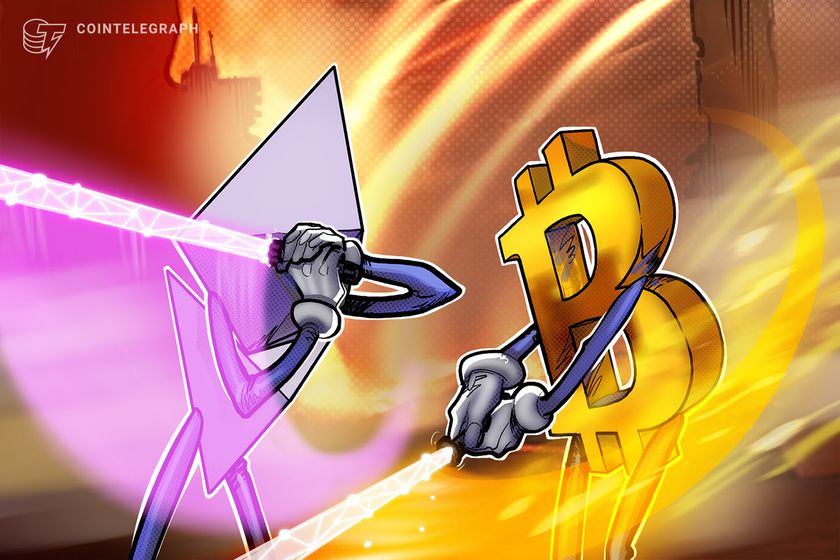 The Ethereum ecosystem continues to see increased development and value locked in tokenized assets, according to market analyst Michaël van de Poppe. The price of Ether (ETH), the native cryptocurrency of the Ethereum layer-1 blockchain network, bottomed out in April 2025, and its price action mirrors the 2019 cycle, according to market analyst Michaël Van De Poppe. A surge in stablecoins, tokenized real-world assets (RWAs), which are traditional or physical assets represented as tokens on a blockchain, and developer activity on the Ethereum network are reasons to be bullish on Ethereum’s price, Van De Poppe said. “The stablecoin supply on Ethereum has seen an increase of more than 65% in 2025. It's doubled since the peak in 2021,” he wrote in a Sunday X post. Read more
 -
Cointelegraph.com - 19:35 Jan 11, 2026
 Tax and other regulatory agencies in India claim that cryptocurrencies and permissionless blockchain tech undermine tax collection. India’s Financial Intelligence Unit (FIU), a regulatory agency that sets anti-money laundering and know-your-customer regulations, issued new guidelines tightening rules for onboarding users to crypto platforms. The new rules force regulated crypto exchanges to verify users through live selfie pictures and geographic location verification, according to The Times of India. The live selfie pictures are verified with software that tracks users' eye and head movements to prevent AI deep fakes from being used to bypass the know-your-customer (KYC) verification process. Read more
 -
Cointelegraph.com - 16:46 Jan 11, 2026
 BitMine Immersion Technologies is the largest Ethereum treasury company by holdings, with over 4 million ETH in its corporate treasury. Crypto treasury company BitMine Immersion Technologies (BMNR) staked an additional 86,400 Ether (ETH) on Saturday, valued at about $268.7 million at the time of this writing, crossing the 1 million staked ETH milestone. The 86,400 ETH was staked in four separate transactions, according to data from crypto market analytics platform Arkham Intelligence; this brings BitMine’s total to 1,080,512 staked ETH, onchain analysis platform Lookonchain said. Staking is the process of pledging or locking up crypto tokens by validators or third-party staking service providers to secure proof-of-stake blockchain networks. Read more
 -
Cointelegraph.com - 15:57 Jan 11, 2026
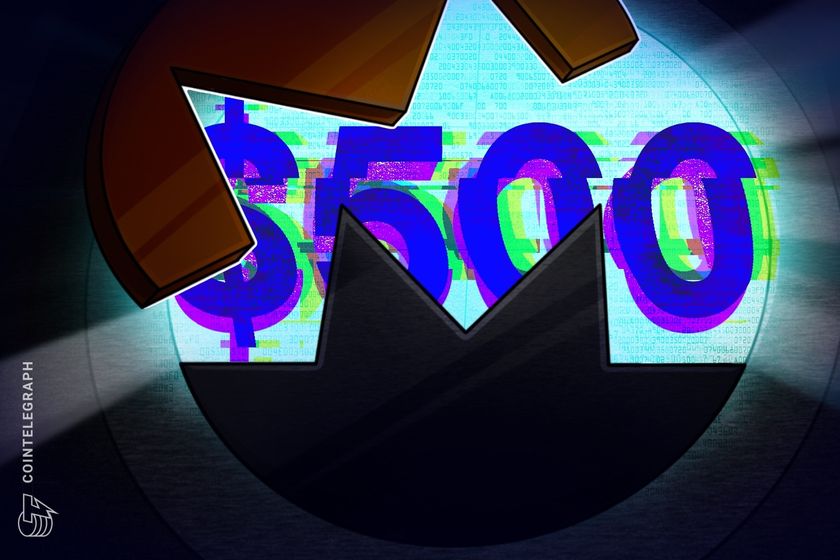 History shows XMR has repeatedly failed near record highs, risking another sharp pullback unless it decisively breaks above $500–$520. Key takeaways: Monero jumped above $500 as traders favored it over Zcash amid governance turmoil. History suggests XMR risks a sharp pullback unless it firmly breaks above $500–$520. Read more
 -
Cointelegraph.com - 14:37 Jan 11, 2026
 Bitcoin power law analysis concluded that price may face a new battle around $65,000 if BTC spends 2026 as a year of consolidation. Bitcoin (BTC) faces a “do-or-die” price point if 2026 becomes a classic bear market year. Key points: Bitcoin four-year price cycles and bear markets remain relevant, the latest power law analysis says. Read more
 -
Cointelegraph.com - 12:13 Jan 11, 2026
 Crypto-related questions about pension payments are reaching Russia’s Social Fund hotline, suggesting digital assets are entering mainstream financial concerns. Inquiries about whether pensions can be paid in crypto have become one of the most frequent non-standard requests received by the Social Fund of Russia, a state-run institution responsible for managing Russia’s public pension system. In 2025, the Social Fund’s call center handled roughly 37 million calls, the vast majority related to routine matters such as pensions, benefits and maternity capital. However, operators also increasingly fielded questions about digital assets, according to a Saturday report from Rossiyskaya Gazeta (Russian Gazette), the official daily newspaper of the Russian government. Among the most common crypto-related inquiries were whether Russian citizens could receive pension payments in cryptocurrency and whether income from crypto mining would be factored into the calculation of social benefits. The fund said these questions a...
 -
Cointelegraph.com - 10:15 Jan 11, 2026
 X’s head of product said Crypto Twitter’s reach problems are self-inflicted, blaming overposting rather than algorithmic suppression. CryptoQuant founder Ki Young Ju has criticized X for suppressing crypto-related posts while failing to rein in a surge of automated spam, arguing that the platform is punishing legitimate users instead of addressing the underlying bot problem. In a Sunday post on X, Ju pointed to a sharp spike in automated activity tied to the keyword “crypto,” citing data showing more than 7.7 million posts generated in a single day, an increase of over 1,200% compared with prior levels. According to Ju, the flood of low-quality content has triggered algorithmic crackdowns that also affect genuine crypto accounts. “As AI advances, bots are inevitable,” Ju wrote, adding that X’s inability to distinguish automated accounts from humans is the real issue. He also criticized the platform’s paid verification system, saying it has failed as a filtering tool and now allows bots to “pay to spam,” while...
 -
Cointelegraph.com - 07:03 Jan 11, 2026
 Tennessee regulator warned that failure to comply could trigger steep fines, court injunctions and potential law enforcement referrals for for further investigation. Tennessee’s sports betting regulator has ordered prediction market platforms Kalshi, Polymarket and Crypto.com to halt the offering of sports event contracts to residents of the state. In cease-and-desist letters dated Friday, the Tennessee Sports Wagering Council (SWC) accused all three platforms of illegally offering sports wagering products without holding a license issued under the Tennessee Sports Gaming Act, according to copies of the letters published on X by sports betting attorney Daniel Wallach. The SWC said the sports event contracts listed on Kalshi, Polymarket and Crypto.com’s North American Derivatives Exchange allow users to wager money on the outcome of sporting events, a practice Tennessee law reserves exclusively for licensed sportsbooks. The regulator argued that packaging the products as “event contracts” does not exempt them ...
 -
Cointelegraph.com - 06:20 Jan 11, 2026
 Jan3 founder Samson Mow’s predictions are among the more bullish outlooks compared with most recent forecasts from other crypto market participants. Jan3 founder Samson Mow anticipates billionaire investor and Tesla CEO Elon Musk will aggressively move into Bitcoin in 2026. It was one of five bold Bitcoin (BTC) predictions from Mow for 2026, coming off a year where several Bitcoin forecasts from prominent crypto executives missed the mark. “@elonmusk goes hard into BTC,” Mow said in an X post on Saturday. Read more
 -
Cointelegraph.com - 03:40 Jan 11, 2026
 Ethereum’s social media sentiment is “kind of reminiscent” of what was seen before its last major run, according to Santiment. Ethereum’s declining social media sentiment is mirroring levels similar to those seen before its 2025 price rally, which eventually pushed the asset back to its 2021 all-time highs, according to a crypto sentiment analyst. “Ethereum is actually way down, this would argue against us falling too much further,” Santiment analyst Brian Quinlivan said in a video published to YouTube on Saturday. “This is kind of reminiscent of what we saw before Ethereum went on its major run last year,” Quinlivan said. Read more
 -
Cointelegraph.com - 23:38 Jan 10, 2026
US President Donald Trump’s stance on Sam Bankman-Fried pardon, BitMine’s purchase in Ethereum shows continued confidence: Hodler’s Digest -
Cointelegraph.com - 23:38 Jan 10, 2026
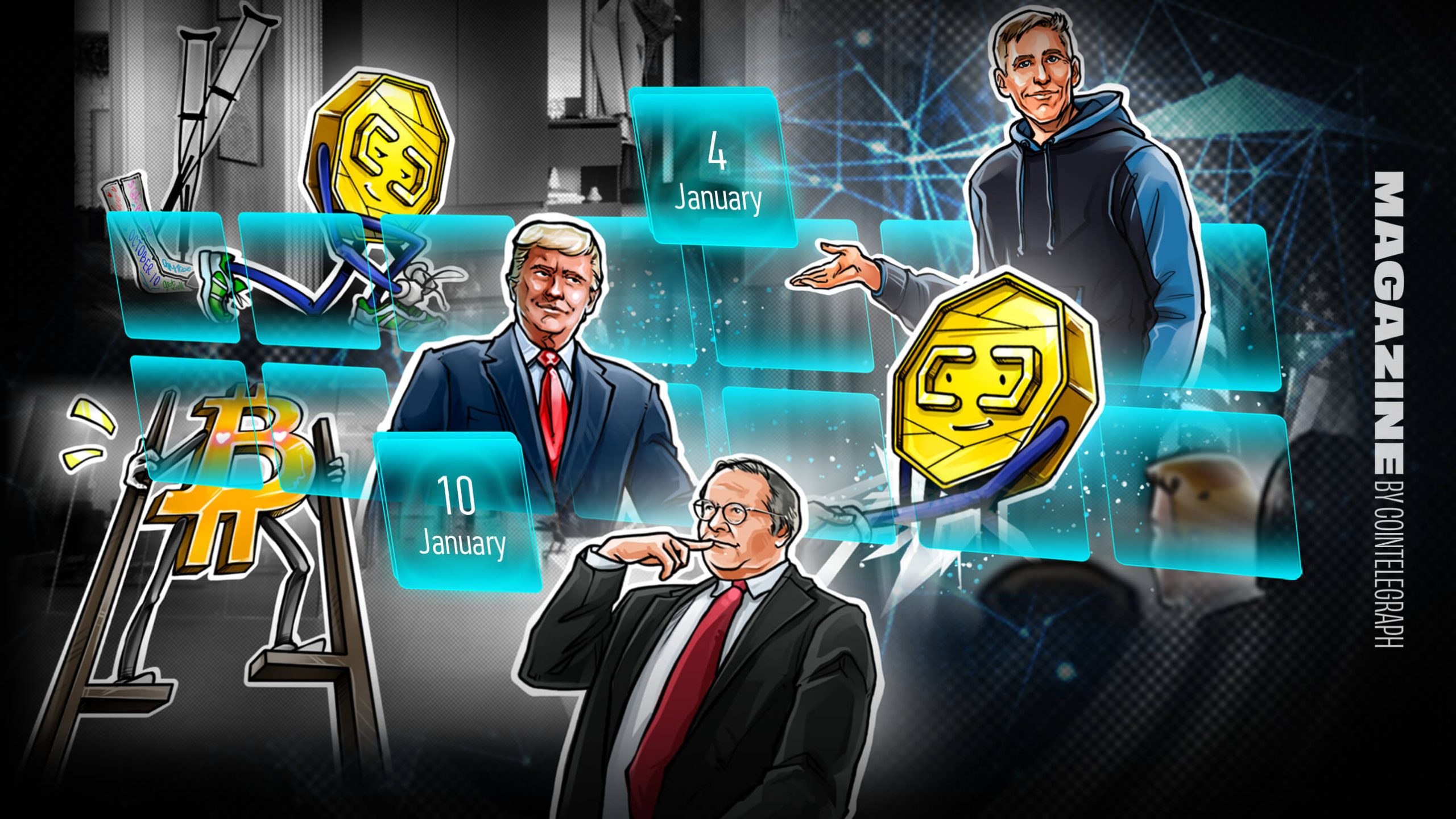 US President Donald Trump’s stance on Sam Bankman-Fried pardon, BitMine’s purchase in Ethereum shows continued confidence: Hodler’s Digest Nasdaq, CME Group join forces to launch Nasdaq-CME Crypto Index The Nasdaq Stock Exchange and the Chicago Mercantile Exchange (CME) Group joined forces to unify their crypto indexes, rebranding the Nasdaq Crypto Index (NCI) as the Nasdaq CME Crypto Index. The NCI benchmark index includes Bitcoin, Ether, XRP, Solana, Chainlink, Cardano, and Avalanche, spokespersons for Nasdaq confirmed to Cointelegraph. Read more
10245 items