Cointelegraph.com
Source:
https://cointelegraph.com
Found 10266 news
-
Cointelegraph.com - 21:22 Oct 18, 2025
 Crypto analysts mull over Ether’s price going “nuclear,” Ripple Labs seeks to buy $1 billion XRP tokens, and other news: Hodler’s Digest Several regional banks in the United States are facing renewed stress despite strengthening their finances after the 2023 banking crisis, and Bitcoin could benefit from any liquidity crisis that follows. Strike CEO Jack Mallers sees the banking stress as validation that Bitcoin is correctly pricing in an impending liquidity crisis, opining that the Federal Reserves inevitable response will drive BTC prices higher. Bitcoin is accurately smelling trouble right now, he said on the Primal social media platform on Friday. The US is going to have to inject some of that sweet, sweet liquidity soon and print a ton of money or else their fiat empire goes kaboom. Read more
 -
Cointelegraph.com - 21:22 Oct 18, 2025
Crypto analysts mull over Ether’s price going “nuclear,” Ripple Labs seeks to buy $1 billion XRP tokens, and other news: Hodler’s Digest Several regional banks in the United States are facing renewed stress despite strengthening their finances after the 2023 banking crisis, and Bitcoin could benefit from any liquidity crisis that follows. Strike CEO Jack Mallers sees the banking stress as validation that Bitcoin is correctly pricing in an impending liquidity crisis, opining that the Federal Reserves inevitable response will drive BTC prices higher. Bitcoin is accurately smelling trouble right now, he said on the Primal social media platform on Friday. The US is going to have to inject some of that sweet, sweet liquidity soon and print a ton of money or else their fiat empire goes kaboom. Read more -
Cointelegraph.com - 21:22 Oct 18, 2025
Crypto analysts mull over Ether’s price going “nuclear,” Ripple Labs seeks to buy $1 billion XRP tokens, and other news: Hodler’s Digest Several regional banks in the United States are facing renewed stress despite strengthening their finances after the 2023 banking crisis, and Bitcoin could benefit from any liquidity crisis that follows. Strike CEO Jack Mallers sees the banking stress as validation that Bitcoin is correctly pricing in an impending liquidity crisis, opining that the Federal Reserves inevitable response will drive BTC prices higher. Bitcoin is accurately smelling trouble right now, he said on the Primal social media platform on Friday. The US is going to have to inject some of that sweet, sweet liquidity soon and print a ton of money or else their fiat empire goes kaboom. Read more -
Cointelegraph.com - 21:22 Oct 18, 2025
Crypto analysts mull over Ether’s price going “nuclear,” Ripple Labs seeks to buy $1 billion XRP tokens, and other news: Hodler’s Digest Several regional banks in the United States are facing renewed stress despite strengthening their finances after the 2023 banking crisis, and Bitcoin could benefit from any liquidity crisis that follows. Strike CEO Jack Mallers sees the banking stress as validation that Bitcoin is correctly pricing in an impending liquidity crisis, opining that the Federal Reserves inevitable response will drive BTC prices higher. Bitcoin is accurately smelling trouble right now, he said on the Primal social media platform on Friday. The US is going to have to inject some of that sweet, sweet liquidity soon and print a ton of money or else their fiat empire goes kaboom. Read more -
Cointelegraph.com - 21:22 Oct 18, 2025
Crypto analysts mull over Ether’s price going “nuclear,” Ripple Labs seeks to buy $1 billion XRP tokens, and other news: Hodler’s Digest Several regional banks in the United States are facing renewed stress despite strengthening their finances after the 2023 banking crisis, and Bitcoin could benefit from any liquidity crisis that follows. Strike CEO Jack Mallers sees the banking stress as validation that Bitcoin is correctly pricing in an impending liquidity crisis, opining that the Federal Reserves inevitable response will drive BTC prices higher. Bitcoin is accurately smelling trouble right now, he said on the Primal social media platform on Friday. The US is going to have to inject some of that sweet, sweet liquidity soon and print a ton of money or else their fiat empire goes kaboom. Read more -
Cointelegraph.com - 21:22 Oct 18, 2025
Crypto analysts mull over Ether’s price going “nuclear,” Ripple Labs seeks to buy $1 billion XRP tokens, and other news: Hodler’s Digest Several regional banks in the United States are facing renewed stress despite strengthening their finances after the 2023 banking crisis, and Bitcoin could benefit from any liquidity crisis that follows. Strike CEO Jack Mallers sees the banking stress as validation that Bitcoin is correctly pricing in an impending liquidity crisis, opining that the Federal Reserves inevitable response will drive BTC prices higher. Bitcoin is accurately smelling trouble right now, he said on the Primal social media platform on Friday. The US is going to have to inject some of that sweet, sweet liquidity soon and print a ton of money or else their fiat empire goes kaboom. Read more -
Cointelegraph.com - 21:22 Oct 18, 2025
Crypto analysts mull over Ether’s price going “nuclear,” Ripple Labs seeks to buy $1 billion XRP tokens, and other news: Hodler’s Digest Several regional banks in the United States are facing renewed stress despite strengthening their finances after the 2023 banking crisis, and Bitcoin could benefit from any liquidity crisis that follows. Strike CEO Jack Mallers sees the banking stress as validation that Bitcoin is correctly pricing in an impending liquidity crisis, opining that the Federal Reserves inevitable response will drive BTC prices higher. Bitcoin is accurately smelling trouble right now, he said on the Primal social media platform on Friday. The US is going to have to inject some of that sweet, sweet liquidity soon and print a ton of money or else their fiat empire goes kaboom. Read more -
Cointelegraph.com - 20:44 Oct 18, 2025
 Current laws in the United States do not explicitly protect open source software developers and create the risk of retroactive prosecution. Roman Storm, a developer of the Tornado Cash privacy-preserving protocol, asked the open source software community whether they are concerned with being retroactively prosecuted by the US Department of Justice for developing decentralized finance (DeFi) platforms. Storm asked DeFi developers: “How can you be so sure you won’t be charged by the DOJ as a money service business for building a non-custodial protocol?” The DOJ could prosecute a case, arguing that any decentralized, non-custodial service should have been developed as a custodial service, as it did in the case against him, Storm added, citing his recent motion for acquittal, which was filed on September 30. Read more
 -
Cointelegraph.com - 17:58 Oct 18, 2025
 Jeremy Kranz, founder of Sentinel Global, a venture capital firm, said investors should be "discerning" and read the fine print on any stablecoin. Investors should exercise “discernment” when considering privately-issued stablecoins, which carry all the risks of a central bank digital currency (CBDC) plus their own unique risks, according to Jeremy Kranz, founder and managing partner of venture capital firm Sentinel Global. Kranz called privately-issued stablecoins “central business digital currency,” which feature all of the surveillance, backdoors, programmability, and controls as CBDCs. He told Cointelegraph: Overcollateralized stablecoin issuers, which back their blockchain tokens with cash and short-term government securities, can be subject to “bank runs” if too many holders attempt to redeem the tokens at the same time, Kranz added. Read more
 -
Cointelegraph.com - 15:19 Oct 18, 2025
 Bitcoin-to-gold ratio hits historic lows that previously preceded major bull runs, with past bottoms preceding 100–600% BTC price rallies. Key takeaways: Gold’s ongoing pullback could trigger Bitcoin’s rebound, according to multiple analysts. Rallying to $150,000–$165,000 by year’s end is still possible, based on technical analysis. Read more
 -
Cointelegraph.com - 14:40 Oct 18, 2025
 Crypto markets reel from a crash, Binance pledges relief, JP Morgan to offer crypto, and corporations are stacking BTC as Elon Musk praises it. After surging to a record high above $126,000, Bitcoin and the broader crypto market have been shaken by unprecedented volatility — literally. On Friday, crypto markets saw their largest-ever liquidation event, totaling roughly $19 billion. The wipeout surpassed even the worst days of the FTX collapse in 2022, underscoring both how much the market has grown since then and how fragile it remains. The sell-off began in classic crypto fashion. Reports suggest US President Donald Trump may have misinterpreted China’s export controls, sparking a sweeping tariff threat that sent risk assets tumbling. Read more
 -
Cointelegraph.com - 14:14 Oct 18, 2025
 Bitcoin steadied into weekend trading, but BTC price targets still saw a dip below $100,000 despite increasingly bullish RSI signals. Key points: Bitcoin stabilizes into the weekend, but market sentiment is anything but relaxed about the outlook. BTC price forecasts increasingly feature sub-$100,000 levels. Read more
 -
Cointelegraph.com - 13:30 Oct 18, 2025
 Corporate giants are building their own L1s, shifting blockchain from neutral infrastructure to strategic moats with regulatory advantages. Opinion by: Ray Song, founder at aPriori When you’ve been around markets long enough, you start to see patterns. The tools we trade on and the rails we build on are never static. In crypto, one of the biggest shifts happening right now is at the base layer. For years, the layer 1 conversation was dominated by Ethereum if you wanted composability and a broad developer base, Solana if you wanted speed and Cosmos if you wanted sovereignty. The choice of L1 felt like picking a trading venue, evaluating fees, liquidity and execution. Read more
 -
Cointelegraph.com - 13:30 Oct 18, 2025
 A quantum computer powerful enough to break Bitcoin could steal coins while the network runs as usual. If a quantum computer capable of breaking modern encryption were to come online today, Bitcoin would likely be under attack — and no one would know. “Everything would look like legitimate access,” David Carvalho, CEO of post-quantum infrastructure company Naoris Protocol, told Cointelegraph. “When you think you’re seeing a quantum computer out there, it’s already been in control for months.” “You wouldn’t even know,” he said. Read more
 -
Cointelegraph.com - 13:25 Oct 18, 2025
 Robinhood’s tokenization drive on Arbitrum now includes nearly 500 US stock and ETF tokens worth over $8.5 million, as the brokerage deepens its RWA push. Robinhood has expanded its tokenization initiative on the Arbitrum blockchain, deploying 80 new stock tokens in the past few days and bringing the total number of tokenized assets close to 500. According to data from Dune Analytics, Robinhood has tokenized 493 assets with a total value exceeding $8.5 million. Cumulative mint volume has surpassed $19.3 million, offset by around $11.5 million in burning activity, signaling a growing but actively traded market. Stocks account for nearly 70% of all deployed tokens, followed by exchange-traded funds (ETFs) at about 24%, with smaller allocations to commodities, crypto ETFs and US Treasurys. Read more
 -
Cointelegraph.com - 11:47 Oct 18, 2025
 OpenSea CEO Devin Finzer says the platform isn’t abandoning NFTs but expanding into a universal onchain trading hub. OpenSea CEO Devin Finzer has rejected claims that the company is pivoting away from non-fungible tokens (NFTs), saying instead that the marketplace is “evolving” into a universal platform to trade every type of onchain asset. In a Friday post on X, Finzer announced that OpenSea's October trading volume exceeded $2.6 billion, with over 90% of that amount coming from token trading, calling it the beginning of the platform’s transformation to “trade everything.” “We’re building the universal interface for the entire onchain economy — tokens, collectibles, culture, digital and physical,” Finzer told Cointelegraph. “The goal is simple: if it exists onchain, you should be able to trade it on OpenSea, seamlessly across any chain, while maintaining complete control of your assets,” he added. Read more
 -
Cointelegraph.com - 11:37 Oct 18, 2025
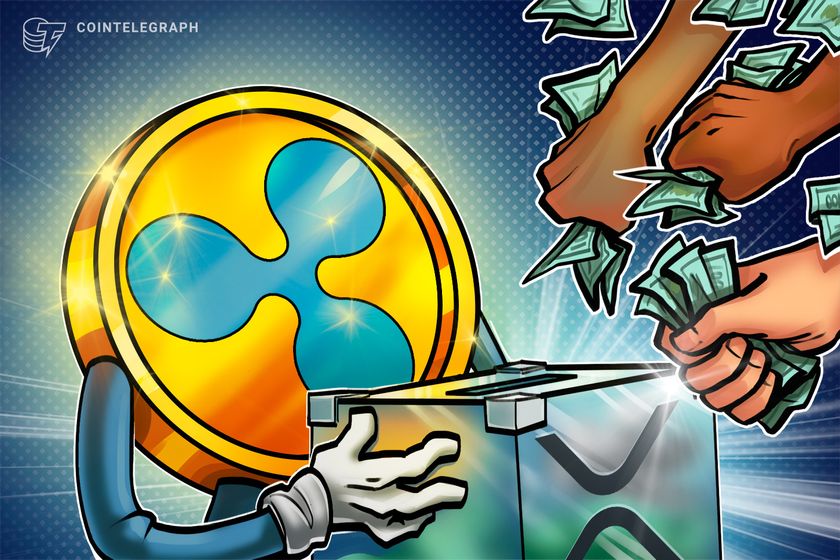 Holding above $2 increases XRP's potential to retest $3 in the coming weeks, while also maintaining a record high target of around $7.75. Key takeaways: XRP price dropped 8.75% on Friday despite Ripple’s $1 billion acquisition plans. A drop toward the $2 support level is possible in the coming days, as bulls pin their hopes on a rebound. Read more
 -
Cointelegraph.com - 07:47 Oct 18, 2025
 HMRC sent nearly 65,000 warning letters to crypto investors last year, more than double the previous year, as the UK steps up efforts to trace undeclared capital gains. The UK tax authority has ramped up its scrutiny of crypto investors, doubling the number of warning letters sent to those suspected of underreporting or evading taxes on digital asset gains. HM Revenue & Customs (HMRC) issued nearly 65,000 letters in the 2024–25 tax year, up from 27,700 the year before, the Financial Times reported on Friday, citing data obtained under the Freedom of Information Act. The letters, known as “nudge letters,” are designed to prompt investors to voluntarily correct their tax filings before formal investigations are launched. Read more
 -
Cointelegraph.com - 05:27 Oct 18, 2025
 Bitcoin ETFs lost $1.22 billion this week as BTC fell, but Schwab reported its clients now own 20% of all US crypto ETPs. Spot Bitcoin exchange-traded funds in the United States have seen more than $1.2 billion in outflows this week, but Charles Schwab is seeing more interest in the products. The eleven spot Bitcoin ETFs in the US saw an aggregate outflow of $366.6 million on Friday, which rounded off a red week for the asset and Bitcoin-associated institutional investment products. BlackRock’s iShares Bitcoin Trust saw the largest outflow as the product lost $268.6 million, according to SoSoValue. Fidelity’s fund shed $67.2 million, Grayscale’s GBTC outflowed $25 million, and there was a minor outflow from the Valkyrie ETF. The rest saw zero flows on Friday. Read more
 -
Cointelegraph.com - 04:06 Oct 18, 2025
 The Bitcoin Coinbase Premium Index turned negative as BTC’s RSI hit its lowest level since April, but it could also mark the beginning of a slow recovery. Key takeaways: The Bitcoin Coinbase Premium flipped red as BTC price dropped below $104,000. Bitcoin’s RSI hit its lowest point since April, hinting at a potential bottom zone. Read more
10266 items