Dawn
Source:
https://www.dawn.com
Found 10391 news
-
Dawn - 09:03 Jun 04, 2026
North Korean leader Kim Jong Un called for an “exponential” expansion of the country’s atomic arsenal during a visit to a newly operational nuclear material production factory, state media agency KCNA said on Thursday. Kim said production capacity for weapons-grade nuclear material had reached more than double its previous level over the past five years and instructed officials to further increase output to meet long-term strategic goals. During the visit, he was briefed on new production processes incorporating more advanced technology and reviewed current output targets and future plans, KCNA reported. Photographs published by state media showed Kim walking between rows of cylinder-shaped equipment inside the facility, which some analysts said could indicate the location is at the country’s main nuclear complex in Yongbyon. Kim said the expansion was necessary given what he called worsening security threats and long-term confrontation with “the most ferocious enemies” and reaffirmed the country’s policy of ... -
Dawn - 08:42 Jun 04, 2026
Israel and Lebanon agreed on Wednesday to implement a ceasefire but said it would require a “complete cessation” of fire by Hezbollah, according to a joint statement after US-led talks in Washington. The two sides, which do not have formal diplomatic relations, also agreed to create “pilot zones” in which the Lebanese armed forces “will take exclusive control of the territory to the exclusion of all non-state actors”. The development came despite continued cross-border attacks earlier in the day, with Hezbollah saying it targeted Israeli troops and Israeli strikes killing at least ten people in southern Lebanon. Just hours after the agreement was announced, air raid alarms sounded in northern Israel with a “suspicious aerial target” identified without causing any casualties. The joint statement said the ceasefire was “contingent on a complete cessation” of fire by Hezbollah as well as evacuation of the group’s operatives from southern Lebanon. The meetings in Washington were the fourth round of direct talks b... -
Dawn - 07:03 Jun 04, 2026
Information Minister Ataullah Tarar on Thursday assured the Christian community of the government’s commitment towards the protection of the rights of religious minorities, state broadcaster PTV reported. The information minister, along with Law Minister Azam Nazeer Tarar, met a delegation of the Christian community, during which they discussed the state of minority rights and the welfare and well-being of the Christian community. As per PTV, the delegation “commended the government’s continued commitment to protecting the rights of minority communities”, welcoming a recent legislation by the Punjab government — Child Marriage Restraint Act 2026. They also commended the government’s efforts to promote equal opportunities for religious minorities. During the meeting, the participants discussed resolution of issues faced by the Christian community, stressing the need for “effectively addressing the issues of the community through relevant law and policies”. According to the report, the meeting also reached an a... -
Dawn - 03:07 Jun 04, 2026
NEW DELHI: India is likely to order more than $2 billion worth of military drones from domestic firms this year in its biggest such purchase, an industry body working with the government said, as global and regional conflicts boost demand. The plans are in advanced stages with deliveries expected over 18 to 24 months, for a jump in value from recent government orders worth 30 billion rupees ($313 million) for tactical-class drones, said Smit Shah, president of the body. “In the next phase, tactical drone procurements in India may exceed 200 billion rupees, or more than $2 billion,” said Shah, whose Drone Federation India represents more than 550 companies and works closely with the government. Shah said the new orders may follow a fast-track procurement route designed to meet urgent operational needs, with deliveries probably needed within 24 months. The country has 600 firms making drones, with more than 100 focused on defence applications Drones in spotlight India’s push follows clashes with arch-rival Paki... -
Dawn - 02:59 Jun 04, 2026
QUETTA: Leader of the Opposition in the National Assembly Mehmood Khan Achakzai has petitioned the Balochistan High Court against the registration of a case against him in Chaman over his recent controversial speech, and termed the issues facing the country ‘political in nature’. “The establishment of a true democratic society is essential for national progress,” said Achakzai, who is chairman of Pashtoonkhwa Milli Awami Party (PkMAP), while speaking to the media and lawyers at the BHC on Wednesday. He said that interference in the electoral process had weakened democratic institutions in the country, while those advocating for constitutional supremacy and democratic principles were often subjected to criticism. Highlighting the need for a system based on genuine public representation, he said Pakistan required a truly elected parliament, where key national decisions, particularly related to internal and foreign policy, were made independently in the broader interest of the state and its people. “We... -
Dawn - 02:38 Jun 04, 2026
• Govt and mining company conducting formal review of procurement plans for project • Minister hints at gas tariff relief for domestic consumers from July 1 ISLAMABAD: Pakistan and Barrick Mining Corporation are working on upgrading the security requirements of the multi-billion dollar Reko Diq Copper-Gold Project in view of the prevailing situation, resulting in increased security costs. A team of Barrick Gold is currently in Pakistan to discuss security upgrades, confirmed Ahmad Hayat Lak, chief executive officer of the Oil and Gas Development Company Limited (OGDCL), one of the key Reko Diq partners. He told journalists that the Reko Diq project agreement had provisions for security arrangements and that the partners were discussing possible upgrades. He said both sides were conducting a formal review of security arrangements and procurement plans for the project. Lak added that the review, as required under the agreement, would suggest whether security upgrades and additional funding were needed, while st... -
Dawn - 02:24 Jun 04, 2026
• Criticises practice of frequent strike calls; terms them ‘illegal’ and violative of litigants’ rights • Dismisses Peshawar bar appeal; holds that everyone has right to counsel of choice ISLAMABAD: In a landmark judgement on an appeal filed by the Peshawar High Court Bar Association, the Federal Constitutional Court (FCC) on Wednesday ruled that bar associations and bar councils cannot suspend a lawyer’s licence solely for representing a client or appearing in court during a strike. Authored by Justice Aamer Farooq, the 20-page judgement also criticised the practice of frequent strike calls by bar associations and bar councils, observing that such strikes were not only illegal but also violated the constitutional right of access to justice of litigants and their counsel. “When a strike call is made, the lawyer bodies restrict lawyers from appearing before the courts. Consequently, a litigant, on that day, is deprived of his legal practitioner’s representation, and proceedings in his case are adjourned withou... -
Dawn - 02:19 Jun 04, 2026
• Proposals seek integration of crime data at national level, interprovincial intelligence sharing, CTD for GB • Interior ministry seeks input from all provincial police chiefs ahead of key meeting • FIA DG underscores need for uniform mechanism across provinces, notes ‘serious disconnect’ between different agencies LAHORE: The federal government has sought input from all police departments on a new internal security policy for the next five years, which aims to centralise police operations, improve interprovincial intelligence sharing, integrate crime data, and choke terror financing, among other measures. The National Internal Security Policy 2026-30, which will be discussed at an ‘extraordinary meeting’ of the National Police Management Board (NPMB) later this month, will include inputs from all provincial IGPs as well as the police chiefs of Azad Jammu and Kashmir and Gilgit-Baltistan. The interior ministry shared a set of proposals, furnished by some retired and serving police officers, with the police c... -
Dawn - 02:18 Jun 04, 2026
KARACHI: Representatives of exporters are confident that a proposal under consideration in Washington to impose 10 per cent additional duties on imports would not hurt Pakistan’s exports. The US Trade Representative (USTR) has proposed to the Trump administration to slap 10pc additional duties on imports from Pakistan, Canada, Bangladesh, Ecuador, Indonesia, Mexico, Argentina, Taiwan, Britain and the European Union. Exporters said the buyers in the US have to pay the duties making the Pakistani products costly after reaching the American market. Javed Bilwani, an exporter who is a former president of the Karachi Chamber of Commerce, said Pakistan was already facing 16.5pc tax on export of textile products to the US, while an additional 10pc duty was imposed after the US Supreme Court struck down the new tariff regime to change the world trade order. Importers in the United States had approached the Supreme Court against President Trump’s new tariff regime, which jolted the global market since the tariffs on ... -
Dawn - 01:52 Jun 04, 2026
The Republican-led US House of Representatives approved a resolution on Wednesday to block President Donald Trump from continuing the war against Iran, reflecting growing concern among members of his party about the three-month-old conflict. The House voted 215 to 208, as four Republicans voted with Democrats in favor of the war powers resolution, which directs Trump to withdraw US troops from Iran unless Congress declares war or authorises the use of military force. The move marked the first time the Republican-controlled House had approved a measure seeking to force Trump to wind down military operations against Tehran since the war began three months ago. It was the latest setback for Trump in Congress despite his party’s slim majorities in both the House and Senate. For now, the vote is largely symbolic, as legislation must pass the Senate as well as the House to become effective, and there is debate over whether war powers resolutions would be constitutional even if they are approved by Congress. The vot... -
Dawn - 20:33 Jun 03, 2026
WASHINGTON: US Secretary of State Marco Rubio told lawmakers on Wednesday that Washington’s military campaign against Iran, codenamed “Operation Epic Fury”, had concluded and that any subsequent American military action would be defensive in nature rather than part of an ongoing offensive operation. Rubio made the remarks during a House Foreign Affairs Committee hearing when members of Congress questioned the administration’s assessment of the conflict and its aftermath. His comments came amid continuing concerns over regional security, the deployment of US forces across the Middle East and the closure of the Strait of Hormuz, a vital maritime route through which a significant share of the world’s oil exports pass. During the hearing, Rubio announced, “We’re no longer conducting sustained strikes inside of Iran to degrade their military, because Epic Fury is over.” Later, he reiterated: “Epic Fury is over … that operation has concluded.” Rubio argued that the operation was a “victory” as Washington achieved i... -
Dawn - 20:31 Jun 03, 2026
ISLAMABAD: With the federal budget for the financial year 2026-27 expected to be tabled on June 10, two major ruling partners, the PML-N and the PPP, continued their consultations on the proposed fiscal measures, with another round of the pre-budget meeting scheduled for later this week. Deputy Prime Minister Ishaq Dar announced on Wednesday that the budget would be tabled on June 10. Sources said the next meeting between the PPP and PML-N would be attended by party chairman, Bilawal Bhutto-Zardari, who will be back from his election campaign in Gilgit-Baltistan before the June 7 polls. PPP sources said these were routine pre-budget meetings to discuss taxation and other measures and multiple rounds could take place before the budget session. A PPP leader also said they were trying to reach an agreement with the government on fiscal measures in light of the new IMF demands, adding that they were unhappy with the budget in its current form. Another source said the consultations were also delayed because the IM... -
Dawn - 18:43 Jun 03, 2026
The Ebola outbreak raging in central Africa had a “big head-start”, the World Health Organisation (WHO) chief acknowledged Wednesday, but insisted efforts to rein in the deadly virus were making progress. The outbreak, which was declared on May 15 in the northeastern Democratic Republic of Congo (DRC), has so far been confirmed to have infected 359 people, including 61 who have died. But the actual numbers could be far higher, with the virus believed to have been spreading under the radar for some time before it was detected. “The outbreak had a big head-start and we’re still behind,” WHO chief Tedros Adhanom Ghebreyesus told reporters at the UN health agency’s headquarters in Geneva, but insisted that “we’re catching up”. Tedros, who had just returned from a trip to DRC, where he travelled to the outbreak’s epicentre in Ituri province, said he had been “very encouraged by the level of commitment I saw everywhere I went”. But challenges remain, he said, warning that “the virus is ahead of us… we need to move ... -
Dawn - 17:31 Jun 03, 2026
ISLAMABAD: Only two in 10 Pakistanis surveyed believe the country is on the right track, with optimism higher among some groups, a survey conducted by market research company Ipsos shows. Men are more optimistic than women, while rural residents show more optimism than those in urban areas. Of the four provinces, respondents in Khyber Pakhtunkhwa were the most optimistic about Pakistan’s economy. The survey also found that confidence in the country’s direction has fallen to 22pc, following a 40pc peak earlier this year amid US–Iran tensions. The drop indicates a sharp reversal of recent gains, returning to levels broadly comparable with the Covid-19 period. The survey, conducted last month, included interviews with more than 1,000 people from all four provinces of Pakistan, as well as Islamabad, Gilgit-Baltistan and Azad Jammu and Kashmir (AJK). The most pressing issues mentioned in the survey include economic anxiety, unemployment and inflation. When asked about the current state of the economy, only one in ... -
Dawn - 16:36 Jun 03, 2026
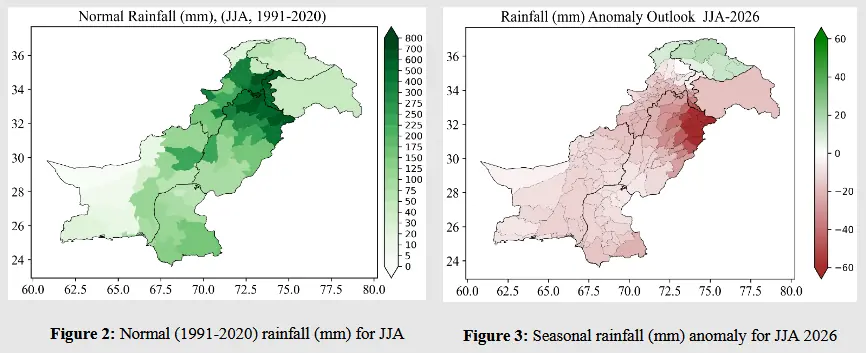 The Pakistan Meteorological Department (PMD) on Wednesday forecast below-normal rainfall and above-normal temperatures across most parts of the country during the months of June to August. The PMD said in its outlook that the Indian Ocean Dipole (IOD) is currently in a neutral phase and is expected to shift to a positive phase by July 2026, while the El Nino–Southern Oscillation (ENSO) has moved into a positive phase (El Nino) and is expected to strengthen further during the season. In view of these conditions, the PMD said that “normal to below-normal” rainfall was expected over most parts of the country during the June–July–August (JJA) season, with the largest negative departures likely over the northeastern parts of Punjab. The findings were reinforced by the Met Office’s probability outlook, which indicated a high probability of below-normal rainfall across most of Pakistan, particularly Punjab, Sindh, southern Khyber Pakhtunkhwa and most of Balochistan. “In contrast, near-normal to slightly above-normal...
 -
Dawn - 16:20 Jun 03, 2026
ISLAMABAD: The state-owned Oil and Gas Development Company Limited (OGDCL) on Wednesday said it made a significant oil and gas discovery from its exploratory well Bobi Deep-1, located in Sindh’s Sanghar district. The company is the country’s largest oil and gas producer and, in April this year, began commercial production from Pakistan’s largest-ever oil and gas discovery from a single well. In a statement issued today, OGDCL said the well successfully tested the Massive Sand interval of the Lower Goru Formation and produced 2,000 barrels of oil per day (bpd) and 1.1 million standard cubic feet of gas per day (mmscfd) through a cased-hole Drill Stem Test (DST), confirming the hydrocarbon potential of the reservoir. A Drill Stem Test (DST) is a temporary well-completion procedure used in oil and gas exploration to assess the pressure, permeability and production potential of a geological formation. It helps determine whether a well has encountered a commercially viable reservoir without the need for costly per... -
Dawn - 15:47 Jun 03, 2026
PPP Chairman Bilawal Bhutto-Zardari on Wednesday vowed to address resettlement concerns of those affected by the construction of the Diamer-Bhasha Dam on an “immediate basis” if his party emerges victorious in the June 7 polls. Bilawal made the declaration while addressing a rally in Diamer, as the PPP and other political parties have, over the past few days, ramped up efforts to garner support ahead of the polls. Addressing the rally, the Bhutto scion asserted that the project saw “great progress” during the PPP’s tenure. He added that had President Asif Ali Zardari’s government not been removed in 2013, the Diamer-Bhasha Dam would have been built by now. The PPP chairman lamented that it was “unfortunate” that affected citizens of the region had not had their resettlement issues addressed. “I would like to promise you that after June 7 — when PPP forms government in GB — we will ensure that the work is [completed] and as far as resettlement is concerned, we will address it on an immediate basis,” Bilawal sa... -
Dawn - 14:33 Jun 03, 2026
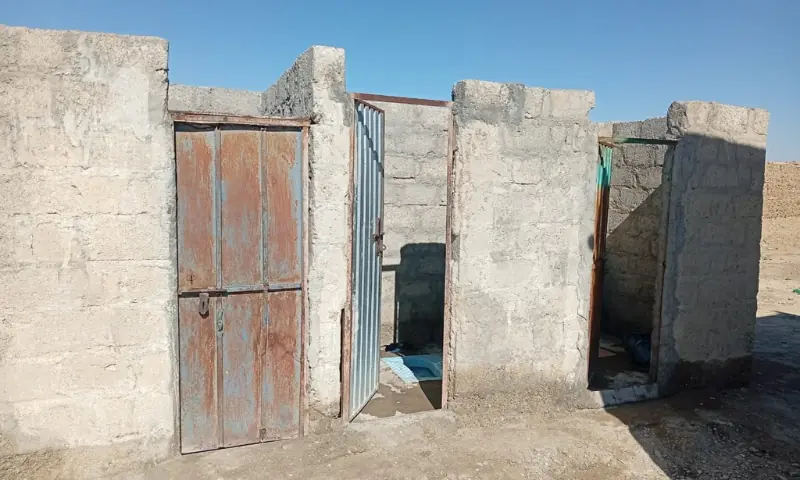 The bus lurched to a halt on the long, dry highway that takes you from Gwadar to Turbat. A clutch of men jumped out and sprinted towards the makeshift bathroom by the road. Some of them scattered into the bushes. Back in the bus, anchored to their seats, women stared out of the windows stiffly. They must have done the math before boarding: drink enough water to bear the heat, but not so much that you need to empty your bladder. Gwadar to Turbat is a short two hours. But it is eight long ones if you are heading to Karachi. A washroom on the Makran Coastal Highway between Turbat and Gwadar Balochistan’s new and smooth highways are praised as corridors of connectivity and trade and promise progress for a place that has long been politically and geographically distant from the rest of Pakistan. Motorway 8 goes from Ratodero to Gwadar, the N-10 runs along the Makran coast, the N-25 RCD Highway connects Quetta to Karachi and the N-40 that meanders towards the Iran border from Quetta to Taftan. But the praise for th...
 -
Dawn - 14:20 Jun 03, 2026
Israel’s hardline finance minister announced on Wednesday a major expansion by more than 2,000 homes of three Jewish settlements in the occupied West Bank that Palestinians hope will be part of a future independent state. Most nations consider Israeli settlements there to be illegal under international law and a major obstacle to a two-state solution for long-term peace. Bezalel Smotrich, who holds authority over parts of Israel’s civilian administration in the West Bank, said a planning committee approved the construction of 2,162 new Jewish homes. They include 1,006 units in a new settlement near Jerusalem, 922 near the Palestinian city of Nablus and 234 near Hebron. “We are continuing to build the Land of Israel in practice,” said Smotrich, an ultra-nationalist sanctioned by Britain, France and others who accuse him of inciting violence against Palestinians. Smotrich has denounced the sanctions against him, saying the measures would not change Israeli policy. The new homes would “strengthen our hold on the... -
Dawn - 13:57 Jun 03, 2026
Gilgit-Baltistan’s Chief Election Commissioner (CEC) Raja Shahbaz Khan announced on Wednesday that the region’s long-delayed local government (LG) elections have been scheduled to be held on August 2. General elections for the region’s legislative assembly were scheduled for Jan 24, 2026, while LG polls — announced after a gap of more than 20 years — were set for Feb 14, 2026. However, days after the announcements, both were postponed indefinitely due to harsh weather conditions in the region. Earlier this month, Khan said the GB Election Commission was preparing to hold the elections but had not yet set a date. In a press conference today, the CEC said that the schedule for GB’s local body polls had been issued, and returning officers (ROs), district returning officers (DROs) and assistant returning officers (AROs) had been appointed. He said a public notice would be issued by the returning officers (ROs) on June 6, while nomination papers would be accepted from June 9 to 15. The elections would be held for ...
10391 items