Dawn
Source:
https://www.dawn.com
Found 10391 news
-
Dawn - 07:35 Jun 07, 2026
 In a Tehran neighbourhood dotted with shops selling football jerseys and sporting goods, 10-year-old Helma was already feeling World Cup fever. “I’m supporting Iran because it’s always the champion!” she said, sporting a bracelet in the green, white and red of the national flag. “This year, it will be number one out of all the countries!” Holding a shopping bag containing a national team jersey, her mother explained that Helma was set to appear in a video clip supporting Iran’s side, adding: “We came to buy Team Melli outfits for the shoot.” But after weeks of war with Israel and the United States — one of the co-hosts of this year’s tournament — not to mention persistent economic hardship and stuttering efforts to bring the conflict to a final close, not every Iranian shares the grade-schooler’s excitement. This handout photograph taken and released by Iran Football Federation Press Office on June 6, 2026 shows Iran’s national football team posing at Antalya Airport in Turkiye before boarding a plane ahead o...
 -
Dawn - 07:06 Jun 07, 2026
SAHIWAL: A woman and her daughter suffered severe burn injuries after her husband and brother-in-law allegedly doused them with petrol and set them ablaze in Shadman Colony on Friday afternoon. Rescue 1122 shifted the injured mother and daughter to Sahiwal Teaching Hospital for treatment. Eyewitnesses said the fire also destroyed household furniture and utensils before the suspects fled the scene. Reports said Sobia Parveen, sister of complainant Muhammad Bilal and a resident of Vehari City, married Shaban Bhatti of Chak 65/5-L, Tehsil Sahiwal, around 15 years ago. The couple has five children. Police said domestic violence had reportedly persisted throughout the marriage, with Sobia allegedly subjected to frequent abuse and severe beatings by her husband and brother-in-law. A few months ago, she left her husband’s home due to the continued violence and started living in a rented house near Shadman Chowk along with her children. She had been working as a domestic help to support the family. On Friday, Shaban ... -
Dawn - 04:40 Jun 07, 2026
LARKANA: The Right Bank Canal System of Sukkur Barrage is currently experiencing a critical irrigation water shortage, severely impacting the command areas of Larkana an Qambar-Shahdadkot districts, as well as the lands in Balochistan, fed through the North West Canal (NWC) during the peak Kharif crop season. The impact is also affecting Dadu Canal, Rice Canal and those irrigating the Sukkur district. Sources privy to the situation told Dawn on Saturday that the prevailing shortfall across the canal network has reached an alarming level — North West Canal (-) 64.1%, Rice Canal (-) 38.0% and Dadu Canal (-) 82.0%. Credible data obtained from sources in Sindh’s irrigation department indicates that Punjab is currently drawing 53,394 cusecs against its allocated share of 44,000 cusecs — an excess withdrawal of around 21.35%. Similarly, Taunsa Barrage is lifting 25,694 cusecs against its entitled share of 24,000 cusecs, reflecting an over-withdrawal of approximately 9.3%. Meanwhile, the pond level at Chashma Barrag... -
Dawn - 04:33 Jun 07, 2026
• Prices stay high despite export disruptions • Beef hits Rs1,500-1,800 per kg, mutton Rs2,700-2,900 KARACHI: Amid disease outbreaks, export suspensions, volatile market conditions and rising feed and production costs, the poultry sector has continued to grow by eight per cent annually over the past 10 years. Higher prices for poultry might cause a slowdown in the purchasing patterns of low- and middle-income people, but they still rely on poultry as it costs much less than beef and mutton. As per the Economic Survey FY25, rural poultry had shown modest gains, but commercial production remained the main growth driver. After remaining on the higher side, poultry live bird prices have fallen by an average Rs100 per kg to Rs370-420 per kg in Karachi after Eidul Azha. Consumers were expecting a further price drop in the wake of the closure of borders with Afghanistan, but the prices of poultry continued to show an upward trend. In October 2025, when the Afghan border was closed, the live-bird price had fallen to ... -
Dawn - 04:29 Jun 07, 2026
• Police arrest at least 72 people, recover ‘weapons, suspicious documents’ • Situation tense in Poonch after trader gunned down in ‘clash with police’ MUZAFFARABAD: Authorities in Azad Jammu and Kashmir (AJK) on Saturday launched a crackdown on the proscribed Joint Awami Action Committee (JAAC), arresting scores of its leaders and activists from different areas. “In fulfilment of its responsibility to maintain public order and protect the lives and properties of citizens, police have arrested around 72 people affiliated with the proscribed JAAC over the past 18 hours,” said a handout issued by a spokesperson for police chief Liaqat Ali Malik. “During initial action, weapons, communication gadgets, suspicious documents, material related to plans that could adversely affect public order and organised mechanisms for violent agitational activities had been found, in addition to indications of questionable contacts with patrons and foreigners which are being investigated under law,” it added. The police spokes... -
Dawn - 04:00 Jun 07, 2026
KHUZDAR: Balochistan National Party (BNP-M) chief Sardar Akhtar Jan Mengal on Saturday announced a shutter-down strike across Balochistan on June 10, condemning the June 2 incident in Zehri in which the party’s district vice-president was shot dead. Speaking at a press conference here alongside senior BNP-M leaders, Mr Mengal said the killing of the party’s district vice-president, Sardarzada Khalil Ahmed Musiani, and the arrest of several members of the Musiani family represented a grave violation of both political and tribal traditions. He alleged that security personnel raided the residence of tribal elder and BNP-M leader Sardar Nasir Ahmed Musiani, violated the sanctity of the home, assaulted family members, and shot his son in front of him. He later died after allegedly being denied timely medical treatment. “Authorities claim that peace prevails in Balochistan. Is this their idea of peace… that a son is killed in front of his father and family members are not even allowed to attend his funeral?” Mr Me... -
Dawn - 03:09 Jun 07, 2026
• Cites restricted access to bombed nuclear sites as key reason for inspection gaps, denies seeking nuclear weapons • IAEA warns lack of access poses a ‘proliferation concern’, urges immediate resumption of verification activities TEHRAN: Iran has repudiated an International Atomic Energy Agency (IAEA) report as a “tool of political pressure”, following concerns over restricted access to its nuclear site. Tehran was engaged in discussions with Washington about its nuclear programme when the United States and Israel attacked it on February 28, sparking war in the region. Israel had previously struck Iran in June 2025, also while Washington and Tehran were engaged in nuclear negotiations, with Washington joining with later strikes before a ceasefire was declared. During both conflicts, Iranian nuclear sites were bombed repeatedly. “If the agency wants to be part of a diplomatic solution, it must refrain from turning a technical report into a tool of political pressure,” Deputy Foreign Minister Kazem Gharibabadi... -
Dawn - 02:57 Jun 07, 2026
BEIRUT: An Israeli strike on a military vehicle in southern Lebanon killed three soldiers, the Lebanese military said on Saturday, laying bare Israel’s continued aggression just days after the countries discussed a conditional truce during talks in the United States. Israel has launched an invasion into Lebanon, claiming it seeks to root out Hezbollah, which engaged in the wider Middle East war by launching retaliatory missiles against Israeli forces in response to US-Israeli strikes that killed Iran’s supreme leader. Meanwhile, Lebanon has vowed that it will disarm Hezbollah over time, but has also denounced Israel’s invasion, accusing it of employing scorched-earth tactics to drive civilians out of southern towns and villages. In the latest incident, the Lebanese army said two officers and a soldier were killed in a strike on a military vehicle on the road between Khardali and Nabatieh. Tehran rejects claims it is using Lebanon as ‘bargaining chip’, urges Beirut to focus on ‘real foe’ Hezbollah dubbed the a... -
Dawn - 02:53 Jun 07, 2026
UNITED NATIONS: The UN Security Council’s annual report for 2025, presented to the General Assembly on Friday, reaffirmed the continued relevance of the Jammu and Kashmir dispute and the Palestinian question, describing them as long-standing issues on the UNSC’s agenda with implications for regional and international peace and security. The report noted that more than 20 communications concerning the India-Pakistan question were brought before the UNSC during the reporting period and that the council held closed consultations on the issue in May 2025. It also documented the UNSC’s engagement with the situation in the occupied Palestinian territory, particularly Gaza, including the adoption of Resolution 2803 endorsing a Gaza peace plan. Pakistan, which coordinated and drafted the introduction to the report during its UNSC presidency in July 2025, welcomed the references to both disputes, saying they underscored the need for their resolution in accordance with UN resolutions and international law. Addressing t... -
Dawn - 02:40 Jun 07, 2026
• Iran launches fresh missile, drone attacks on Kuwait, Bahrain • Kuwait says new attack ‘dangerous escalation’; Bahrain denounces ‘blatant aggression’ • Falling debris causes ‘material damage’ in Kuwait • Centcom says four attack drones downed near Hormuz; Iranian coastal radar sites also hit • Trump says Iran has ‘22pc’ of missiles left • US okays sale of $2bn in anti-drone weapons to Kuwait KUWAIT CITY: Iran launched fresh missile and drone attacks on Bahrain and Kuwait early on Saturday, while the United States said it struck Iranian coastal radar sites after intercepting missiles and drones aimed at Gulf allies and the Strait of Hormuz, further straining a fragile ceasefire. Bahrain and Kuwait intercepted seven Iranian missiles, while Bahrain also destroyed several drones, officials said. It was the second attack on both Gulf states since Wednesday. Iran’s Revolutionary Guards said they had targeted “enemy bases” with missiles after the US military said it struck radar sites in Iran and downed drones hea... -
Dawn - 02:32 Jun 07, 2026
• IRNA says ‘important message’ meant for Iran’s supreme leader • Interior minister receives instructions from PM before departure ISLAMABAD: Pakistan on Saturday stepped up efforts to break the impasse in the US-Iran dialogue, with Interior Minister Mohsin Naqvi arriving in Tehran carrying a message from Chief of Defence Forces Field Marshal Asim Munir for Iranian Supreme Leader Mojtaba Khamenei. Mr Naqvi was received by his Iranian counterpart Eskandar Momeni. Pakistan’s newly appointed ambassador to Iran, Imran Ahmad Siddiqui, was also present. The visit comes at a delicate moment in the diplomatic process that Pakistan has been facilitating for months, as indirect negotiations between Washington and Tehran have drifted into what diplomats describe as a fragile stalemate despite both sides continuing to publicly endorse diplomacy over renewed confrontation. Iran’s official news agency IRNA, quoting an informed source, reported that Mr Naqvi was carrying an “important message” from Field Marshal Munir for M... -
Dawn - 00:19 Jun 07, 2026
ISLAMABAD: The ceramic tiles and glass industries have expressed concern over proposed duty cuts on imports of ceramic tiles and glass products. Talking to a selected group of journalists on Saturday, Atif Iqbal, Secretary General of the All Pakistan Ceramic Tiles Manufacturers Association (APCTMA), said that as the Federal Budget 2026-27 approaches, stakeholders of Pakistan’s ceramic tiles industry have urged policymakers to protect domestic manufacturing from premature tariff reductions under the National Tariff Policy (NTP) 2025-30. Similarly, the Pakistan Glass Manufacturers Association (PGMA) has raised serious concerns over the deteriorating condition of the domestic glass manufacturing sector, warning that any reduction in import duties on finished glass products could push the industry towards complete closure. In a communication addressed to the Ministry of Industries and Production, the PGMA stated that the glass sector is already operating at only 50pc of its installed capacity, while the remaining... -
Dawn - 18:41 Jun 06, 2026
Workers at SoFi Stadium in Los Angeles have overwhelmingly voted to authorise a potential strike during the World Cup, just days before football’s global showpiece begins. The Unite Here Local 11 union, which represents about 2,000 stadium food and beverage workers, is demanding better pay along with assurances that federal immigration agents will not be allowed to enter the venue. A whopping 96 per cent of voters approved the strike call, meaning they have the green light to walk off the job at any time, with the World Cup due to open on Thursday. “Contract negotiations with stadium food service operator Legends Global and FIFA have not had significant progress on key economic and workplace safety issues,” the union said in a statement. New talks are scheduled for Monday, ahead of the first World Cup match on US soil on June 12 at SoFi. Cooks, dishwashers, bartenders, and others are represented by Unite Here. SoFi Stadium — the world’s most expensive sports venue, which opened in 2020 at a cost exceeding $5 ... -
Dawn - 18:16 Jun 06, 2026
GILGIT: The people of Gilgit-Baltistan will vote in the general elections for the GB Legislative Assembly on Sunday after the polls were delayed by four months due to harsh winter weather. The PPP and other political parties have staged a series of rallies across the region and ramped up efforts to garner support ahead of the polls. All arrangements have been finalised, with elections to be contested in 24 constituencies. According to the GB Election Commission, there are 958,480 registered voters in the region, including 503,772 male and 454,708 female voters. A total of 396 candidates are contesting the elections, with 266 running as independents. Only eight women are contesting the elections, five of them as independent candidates. Meanwhile, 23 candidates from the PPP are contesting the elections, while the PML-N has fielded 22 candidates. Both parties have nominated one female candidate each. Additionally, 15 candidates from the Istehkam-i-Pakistan Party (IPP) and 10 from the PTI are in the fray. Moreove... -
Dawn - 17:34 Jun 06, 2026
The Pakistan Meteorological Department (PMD) has issued a heatwave warning for various parts of the country from June 7 to June 12. In Khyber Pakhtunkhwa, the districts of Peshawar, Mardan, Bannu, Karak, Lakki Marwat and Dera Ismail Khan are expected to record maximum temperatures four to six degrees Celsius above normal, ranging between 41°C and 46°C from June 8 to 11. Temperatures are expected to rise to 37°C-40°C in KP’s northern districts of Chitral, Dir and Swat, as well as in Gilgit-Baltistan, from June 8 to 10. In Islamabad, Rawalpindi, Attock, Chakwal, Jhelum, Gujrat, Mirpur, Bhimber, Kotli, Bagh and Muzaffarabad, maximum temperatures are expected to range between 41°C and 44°C from June 8 to 10. From June 8 to 11, temperatures are expected to range between 44°C and 48°C in Lahore, Okara, Kasur, Faisalabad, Sargodha, Joharabad, Khushab, Mianwali, Noorpur Thal, Jhang, Toba Tek Singh, Sahiwal, Dera Ghazi Khan, Multan, Khanewal, Pakpattan, Rahim Yar Khan, Rajanpur, Bahawalpur, Bahawalnagar, Bhakkar, Layy... -
Dawn - 17:17 Jun 06, 2026
ISLAMABAD: The PTI on Saturday accused the federal and Gilgit-Baltistan governments of “pre-poll rigging” over the deployment of 5,600 local police personnel and over 13,000 additional security personnel from outside the region ahead of the polls. Elections in GB are scheduled for Sunday (June 7), after a four-month delay attributed to harsh winter weather. The PPP and other political parties have staged a series of rallies across the region and ramped up efforts to garner support ahead of the polls. The PTI called upon the international community, human rights organisations and all democratic forces to take immediate notice of the gross violation of fundamental rights and the “blatant murder of democracy” in the region. Meanwhile, the party’s Information Secretary Sheikh Waqas Akram criticised the unprecedented deployment of external forces and the “systematic suppression” of the PTI. “In a region with a total population of approximately 900,000 and only 5,600 GB police personnel, the federal government has ... -
Dawn - 16:36 Jun 06, 2026
Prime Minister Shehbaz Sharif on Saturday held a meeting with Interior Minister Mohsin Naqvi, during which they discussed the latter’s upcoming visit to Tehran, according to a statement from the Prime Minister’s Office (PMO). The interior minister also briefed the prime minister on his recent engagements on the sidelines of the Shanghai Cooperation Organisation (SCO) conference in Bishkek, the capital of Kyrgyzstan, the PMO added. “Consultations also took place between the prime minister and the interior minister regarding his upcoming visit to Tehran. The prime minister provided guidance related to the visit,” the statement added. A day earlier, Naqvi met his Iranian counterpart, Eskandar Momeni. The two ministers held an important meeting focusing on bilateral relations and the current regional situation. During the talks, both ministers exchanged views on Pakistan-Iran relations and recent regional developments, according to a post by the Interior Ministry. In the meeting today, a detailed exchange of view... -
Dawn - 15:45 Jun 06, 2026
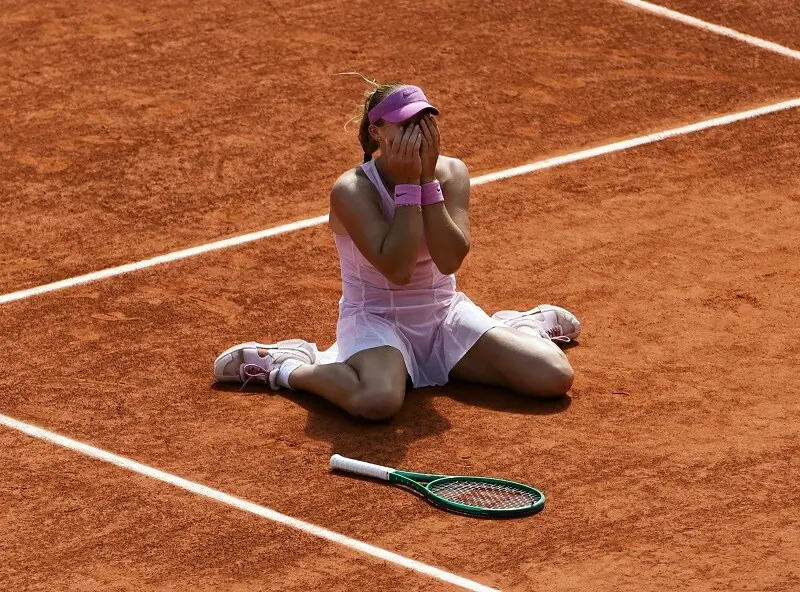 Mirra Andreeva won her first Grand Slam title on Saturday by downing Polish qualifier Maja Chwalinska in straight sets in the French Open final. The 19-year-old Russian beat Chwalinska 6-3, 6-2 to become the youngest Roland Garros women’s singles champion since Monica Seles, then aged 18, won her third straight title in Paris in 1992. With her first-ever major crown, Andreeva also became the first player, man or woman, born after 2005 to win a Grand Slam. Russia’s Mirra Andreeva reacts as she celebrates her victory over Poland’s Maja Chwalinska at the end of their women’s final singles match on day 14 of the French Open tennis tournament. — AFP The Coupe Suzanne Lenglen will now take centre spot in Andreeva’s burgeoning trophy cabinet, which already features two WTA 1000 titles. “I’ve been watching Roland Garros on TV since I was very, very young, so it’s also a big dream of mine to win this tournament and I honestly cannot believe that I’m holding this trophy right now,” Andreeva said on court, before thanki...
 -
Dawn - 14:06 Jun 06, 2026
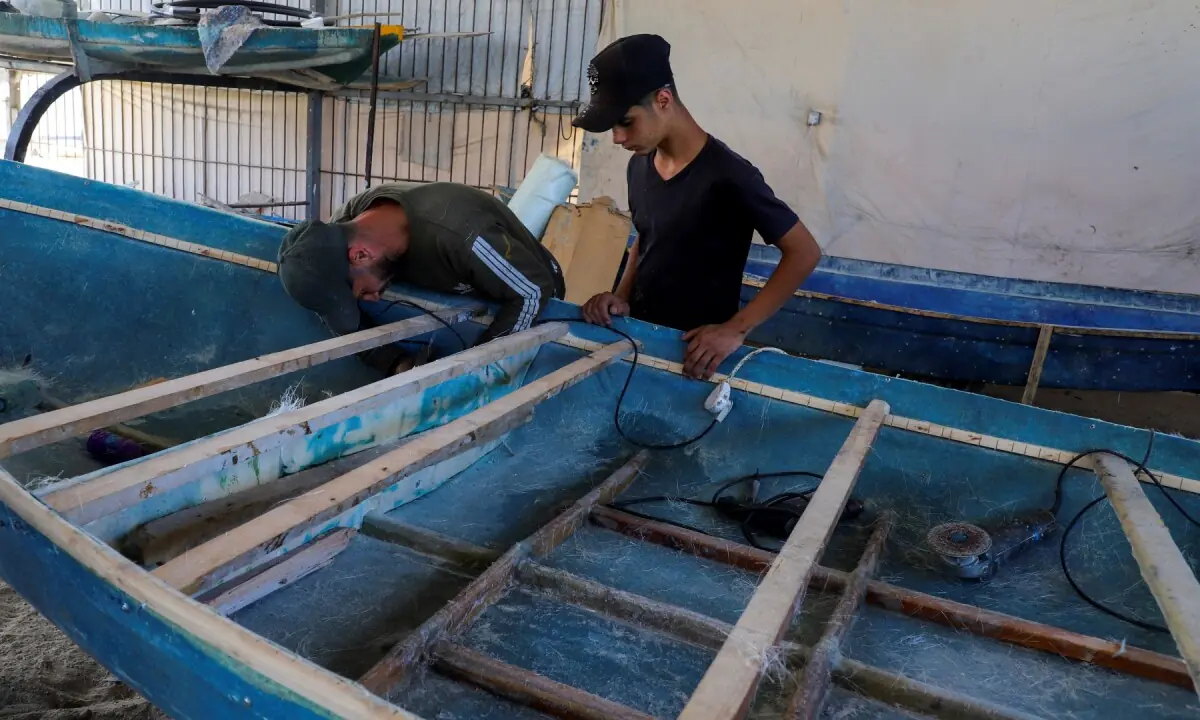 In a Gaza workshop, a group of men patch up pleasure dinghies with reclaimed fibreglass, wood and door frames pulled from the rubble, racing to get the boats ready for a tougher line of work. The small vessels, which were used by families and swimmers before the war, have become a lifeline for the enclave’s fishing industry which has been struggling to keep up its fleet. Israeli restrictions on new fibreglass and other materials entering Gaza have made it increasingly difficult and expensive to repair the larger, purpose-built boats, fishermen said. Palestinian workers repair a skiff damaged in the Israeli offensive, in Gaza City on June 3, 2026. —Reuters “A kilo of fibreglass in the era before the war was 50 or 60 shekels,” fisherman Mohammad al-Hissi told Reuters. The cost today was around 800 shekels, he added. Total catch has plummeted, say fishermen COGAT, the Israeli military agency that controls access to Gaza, told Reuters the bans cover items that could have a military as well as a civilian use. It d...
 -
Dawn - 13:51 Jun 06, 2026
QUETTA: A female doctor at the Provincial Civil Hospital in Quetta was seriously injured on Saturday when an employee of the hospital allegedly threw acid on her, police said. A senior official of the Civil Hospital told Dawn that the doctor suffered severe burn injuries to her face, chest, legs and other parts of her body. He added that she was shifted to a private hospital immediately after initial treatment at the Civil Hospital, and that arrangements were being made to transfer her to Karachi via air ambulance. Hospital sources said around 70 per cent of her body was affected in the incident. The suspect, who allegedly committed the act, escaped from the hospital after throwing acid on the doctor. According to police, the accused was killed in an encounter after law enforcers traced him to the area from where he was attempting to flee by bus. Police said they asked the suspect to surrender, but he instead opened fire on the police party. The police retaliated, and in the exchange of fire, the accused was ...
10391 items