Pakistan
-
Dawn - 08:13 May 10, 2026
KARACHI: Gas supply was disrupted in major parts of the city on Saturday evening after the Red Line construction work damaged a high-pressure gas pipeline near Jail Chowrangi. A spokesperson for the Sui Southern Gas Company (SSGC) said that a12-inch diameter high-pressure pipeline was hit during excavation for the bus rapid transit (BRT) project. The spokesperson said as a result the gas supply to Saddar, Garden, Jamshed Road, PIB Colony, Lyari, Lines Area and adjacent localities was immediately suspended. She said that the SSGC teams reached the site and cordoned off the damaged section of the supply line with safety barriers to prevent further risk. Residents in affected areas reported complete disconnection of gas at 7pm, adversely impacting mainly households, who relied on piped gas during peak cooking hours in the evening. The spokesperson said that repair work was being carried out on an emergency basis. “Gas supply will be restored gradually once repair work is completed,” she added. The spokesperson t... -
Dawn - 06:06 May 10, 2026
ISLAMABAD: The Pakistan Petroleum Dealers Association (PPDA) and the Supreme Court Bar Association (SCBA) on Saturday criticised the government over rising fuel prices and high petroleum levies, saying the measures had increased hardships for the public and affected fuel retailers. Under an official notification effective from May 9, the government has imposed a petroleum levy of Rs117.41 per litre on petrol and Rs42.60 per litre on high-speed diesel sold through retail outlets. The levy on premium fuel grades, including 97 RON and 95 RON petrol, or the high-octane blending component (HOBC), has been fixed at more than Rs305.37 per litre. The government is also charging a petroleum levy of Rs20.36 per litre on kerosene, Rs15.84 per litre on light diesel oil, and Rs77 per litre on furnace oil, equivalent to Rs82,077 per tonne. PPDA Vice Chairman Raja Waseem Shehzad criticised the government for increasing indirect taxes instead of providing relief to the public amid rising inflation. He said the heavy levies ... -
The Nation - National - 05:02 May 10, 2026
Islamabad - Prime Minister Shehbaz Sharif has said Marka-e-Haq is a day to bow in gratitude before Allah Almighty for His countless blessings upon us. -
The Nation - National - 05:01 May 10, 2026
ISLAMABAD - Minister for Interior and Narcotics Control Mohsin Naqvi met his Bangladeshi counterpart Salahuddin Ahmed in Dhaka on Saturday, where both sides signed a landmark agreement aimed at strengthening cooperation against drug trafficking and narcotics abuse. -
The Nation - National - 04:23 May 10, 2026
ISLAMABAD - The International Monetary Fund (IMF) has noted that Pakistan’s strong program implementation under the Extended Fund Facility (EFF) arrangement has continued, which has supported macroeconomic stability and the rebuilding of fiscal and foreign exchange buffers. -
Dawn - 03:50 May 10, 2026
GWADAR: Amid rising tensions in the Strait of Hormuz, the strategic importance of Gwadar Port has significantly increased due to its shorter access routes to Iran and Central Asia, along with investor-friendly incentives such as tax exemptions, free storage facilities, and modern infrastructure. This was stated by Gwadar Port Authority (GPA) Chairman Noorul Haq Baloch during a meeting with members of the All Pakistan Shipping Association (APSA) in Karachi. He said the port is increasingly being viewed as a safe alternative trade gateway for the region. He said Gwadar has the potential to become the future hub of regional trade and logistics because of its low operational costs, modern facilities, and shorter trade routes. He added that the Gabd-Rimdan border route has emerged as an effective multi-modal corridor for promoting trade with Iran and Central Asia. Mr Baloch briefed the APSA members on the prevailing regional situation, the strategic significance of Gwadar Port, and issues related to transit and tr... -
Dawn - 03:20 May 10, 2026
ISLAMABAD: After a three-day heat wave in northern parts of the country, the Pakistan Meteorological Department has forecast rain in the upper regions from Sunday evening (today) to May 12. The Met Office stated that dust storms, thunderstorms and rain are likely in the upper parts, with occasional gaps, from May 10 to May 12. According to the department, a fresh westerly wave is likely to approach the northwestern parts of the country today and persist in the upper regions until the night of May 12. Under the influence of this weather system, dust storms, thunderstorms and rain are expected across Khyber Pakhtunkhwa, specifically in Chitral, Dir, Swat, Kalam, Shangla, Buner, Kohistan, Malakand, Battagram, Mansehra, Abbottabad, Balakot, Haripur, Swabi, Mardan, Nowshera, Charsadda, Peshawar, Bajaur, Mohmand, Orakzai, Khyber, Kohat, Kurram, Hangu and Karak. Westerly wave to bring widespread relief from today; landslide warnings issued; south remains in grip of heat Similar weather is expected in Punjab and the... -
Dawn - 03:15 May 10, 2026
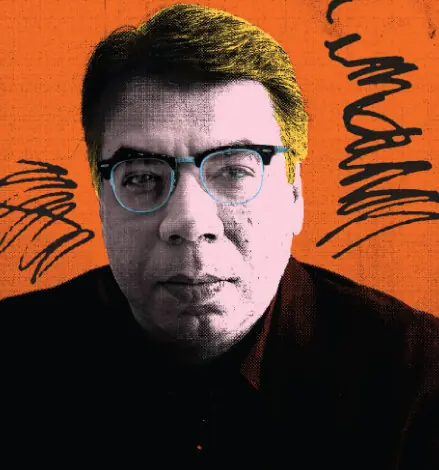 In the early 2020s, the Belgian political theorist Anton Jäger coined the term “hyperpolitics”. He noticed that, in this day and age, politics seemed to be everywhere and in everything but was not catalysing any real change. At least not the way politics used to in the 20th century. The last century was an era of mass political activity (‘mass politics’) driven by large political parties, unions and macro-ideologies. According to Jäger, until the 1980s, political life was anchored by “thick institutions” that acted as a bridge between the individual and the state. But by the 1990s, “post-politics” had set in and replaced mass politics. In the era of post-politics, the polity became increasingly consumerist in nature and governance was left in the hands of technocrats. Conflict was suppressed and political parties became hollow after delegating important economic and social tasks to ‘experts’ serving the interests of large banks and multinational corporations. Then, from the early 2010s, a sudden return of pol...
 -
Dawn - 02:42 May 10, 2026
KARACHI: Amid the ongoing Middle East conflict since Feb 28, Pakistan’s auto sector is witnessing fresh developments, with a leading tractor assembler exploring electric bike production and new vehicle models planned by Chery Master Pakistan and Pak Suzuki Motor Company Ltd. In a stock filing, Millat Tractors Ltd (MTL), responding to market reports about its entry into the electric bike segment, said one of its group companies was evaluating the feasibility of EV bike production in Pakistan. It said the matter remained at a preliminary stage. Sharp increases in petrol prices have boosted demand for electric scooters and bikes, leading to market shortages and the emergence of “on money” on some models. Social media reports claimed EV bike assemblers had received an overwhelming response from consumers, with some companies reportedly selling more than 15,000 units in April, while others sold around 5,000 units. Assemblers eye expansion as shortages trigger premiums However, bike sector expert Mohammad Sabir She... -
Dawn - 02:41 May 10, 2026
• Rules abscondence alone cannot be treated as proof of guilt • Acquits murder convict after 20 years ISLAMABAD: The Supreme Court acquitted a murder convict who had been sentenced to life imprisonment, while citing the well-recognised principle that it is better to err in acquittal than in conviction. “This principle is also deeply rooted in Islamic jurisprudence, which more than fourteen centuries ago laid down the salutary maxim that it is better to acquit ten guilty persons than to convict one innocent individual,” observed Justice Ishtiaq Ibrahim, a member of a two-judge bench, headed by Justice Muhammad Hashim Kakar. The court had taken up an appeal filed by Muhammad Iqbal, challenging the June 18, 2025 decision of the Sindh High Court (SHC), which had upheld his sentence. In his eight-page judgement, Justice Ibrahim observed that reasonable doubt in the mind of a prudent person was sufficient to entitle an accused to the benefit of doubt as a matter of right and not grace. “This manifestation also find... -
Dawn - 02:24 May 10, 2026
• Questions seriousness of American diplomacy amid naval flare-ups • CIA report claims Tehran can withstand blockade for months • Bahrain arrests over 40 ‘pro-IRGC’ individuals • UK deploys warship to Mideast with eye on potential Hormuz mission • Israel continues strikes in Lebanon, targets highway south of Beirut TEHRAN / WASHINGTON / BEIRUT: Iran questioned the seriousness of American diplomacy on Saturday in the wake of renewed naval clashes in the Gulf, while keeping Washington waiting for a response to its latest negotiating position. A state of relative calm prevailed around the Strait of Hormuz, after days of sporadic flare-ups, as the United States waited for Iran’s response to its latest proposals to end more than two months of fighting and begin peace talks. US President Donald Trump had said on Friday that he was expecting Iran’s response to Washington’s latest proposal for a deal to extend a fragile truce and launch peace talks — “supposedly tonight”. But if Iran did send Pakistani mediators a re... -
Dawn - 02:02 May 10, 2026
KARACHI: “When I think of Gaza and what happened there, I think of international efforts. Would all this have happened if international efforts worked properly. I also think about the United Nations and wonder if it has become weak in front of Benjamin Netanyahu and Israel? But it was strong when imposing sanctions on Iraq, Iran, Libya and other small ‘Third World’ countries,” said Governor of Sindh Syed Nehal Hashmi. He was speaking at the inaugural session of the two-day conference on ‘Living on the Threshold of Global Crises’ organised by the Pakistan Institute of International Affairs (PIIA) at a local hotel here on Saturday. “What is war? What is genocide?” The Governor asked aloud. “Our neighbouring country also tried playing with us a similar game as what Netanyahu is playing these days, but grace to Allah, the brave soldiers of Pakistan, under the leadership of Field Marshal Asim Munir, and the Government of Pakistan, under the leadership of Shehbaz Sharif, who taught them a great lesson,” he added. “... -
The Express Tribune - 20:36 May 09, 2026
ISPR terms it 'defining landmark' journey CDF Asim Munir to lead GHQ ceremony President, PM pay tribute to 'v