Iran | Pakistan
"Iran" in Pakistan feed
-
Dawn - 12:51 Apr 29, 2026
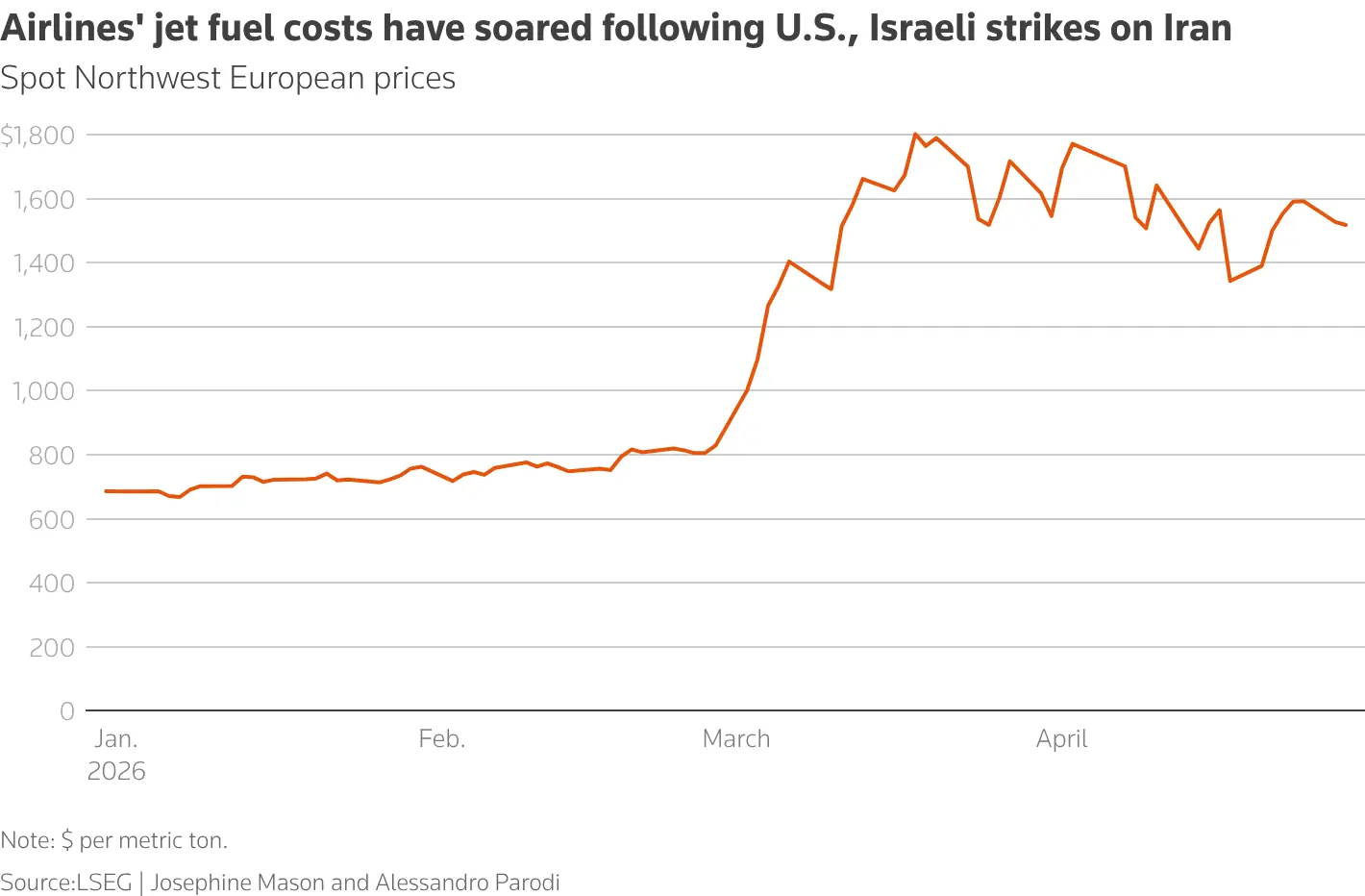 European airlines are facing their biggest challenge since the Covid-19 pandemic as the US-Israel war on Iran pushes up jet fuel prices and buffets travel through the Middle East, casting a shadow over the summer holiday season. Carriers have been largely riding out the crisis with hedges that have tamed costs even as the price of jet fuel has risen nearly 84 per cent since the start of the conflict on February 28, but they could face shortages if the war does not end soon. “There is a risk that we’ll see rationing of fuel supply, particularly in Asia and Europe,” Willie Walsh, head of the International Air Transport Association (IATA), told Reuters on Tuesday, while adding that supply remained robust for now. Walsh said, however, that the situation was not yet as bad as the disruption caused by the Covid-19 pandemic in 2020, which led to travel demand plummeting and hundreds of billions of dollars in losses for the aviation sector. “I think Covid was on a completely different scale,” Walsh added. “What ...
 -
Dawn - 04:00 Apr 29, 2026
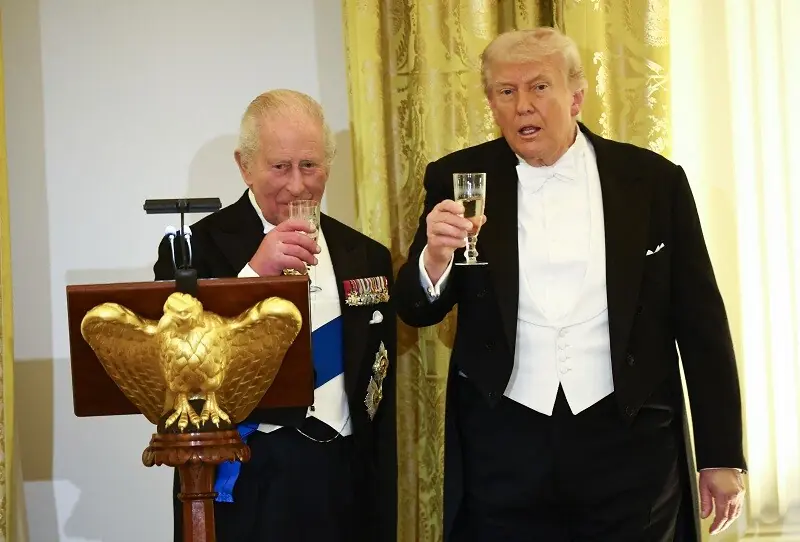 Britain’s King Charles and Donald Trump hailed their countries’ longstanding ties at a White House state dinner Tuesday – despite the US president claiming the monarch agreed with him on Iran’s nuclear weapons. Over a lavish meal, Charles echoed the tone of his earlier speech to Congress in which he urged London and Washington to stick together, without directly mentioning the tensions over the US-Israeli war with Tehran. But in his toast to a gala dinner attended by tech titans and golfer Rory McIlroy, Trump made his first public comments on the sensitive topic during the four-day visit by the British royals. US President Donald Trump and Britain’s King Charles III raise a toast during a State Dinner in the East Room of the White House in Washington, DC, on April 28, 2026. — AFP “We have militarily defeated that particular opponent,” Trump said at the White House dinner. “Charles agrees with me even more than I do — we’re never going to let that opponent have a nuclear weapon.” Trump has repeatedly lambasted...
 -
Dawn - 02:24 Apr 29, 2026
• Iranian envoy lauds Pakistan for ‘persistent labour’ to pave way for dialogue • Trump claims Tehran asked him to lift Hormuz blockade • Spy agencies studying ‘likely response’ to US declaring victory • Iran’s military says ‘still in state of war’ • Vance questions Pentagon assessment of conflict with Iran • UAE tanker evades Hormuz blockade WASHINGTON: Even as US President Donald Trump appeared reluctant to accept an Iranian offer to end the Middle East war, reports suggested Tehran would share a fresh proposal with Pakistan “in the next few days”, despite a public show of defiance. According to CNN, Foreign Minister Abbas Araghchi will consult Iranian leaders upon his return from Russia for the new proposal, but “process is slow” due to “difficulty in communicating with Supreme Leader Mojtaba Khamenei, whose location is being kept secret”. The development came as President Trump reviewed the Iranian proposals amid concerns over the Pentagon’s assessment of the ongoing war with Iran. Senior Iranian official... -
Dawn - 20:14 Apr 28, 2026
US intelligence agencies are studying how Iran would respond if President Donald Trump were to declare a unilateral victory in the two-month-old war that has killed thousands and become a political liability for the White House, two US officials and a person familiar with the matter said. The intelligence community is analysing the question along with others at the request of senior administration officials. The goal is to understand the implications of Trump potentially pulling back from a conflict that some officials and advisers worry could contribute to deep Republican losses at the midterm elections later this year, according to the sources. While no decision has been made, and Trump could easily ramp back up military operations, a quick de-escalation could ease political pressure on the president, even as it could leave behind an emboldened Iran. The sources spoke on the condition of anonymity in order to discuss sensitive intelligence matters. It is not clear when the intelligence community would c... -
Dawn - 11:27 Apr 28, 2026
Iran warned last week that submarine cables in the Strait of Hormuz were a vulnerable point for the region’s digital economy, raising concerns about potential attacks on critical infrastructure. The narrow waterway, already a chokepoint for global oil shipments, is equally vital for the digital world. Several fibre-optic cables snake across the seabed of the strait, connecting countries from Southeast Asia to Europe via the Gulf states and Egypt. What makes undersea cables important? Subsea cables are fibre-optic or electrical cables laid on the sea floor to transmit data and power. They carry around 99 per cent of the world’s internet traffic, according to the ITU, the United Nations specialised agency for digital technologies. They also carry telecommunications and electricity between countries, and are essential for cloud services and online communications. “Damaged cables mean the internet slowing down or outages, e-commerce disruptions, delayed financial transactions … and economic fallout from all of th... -
Dawn - 11:21 Apr 28, 2026
Five people were sentenced to life in Bahrain on Tuesday for plotting “terrorist and hostile acts” with Iran, which bombarded the tiny Gulf state during the Middle East war. Two Afghans and three Bahrainis were convicted and a fourth Bahraini was acquitted by the High Criminal Court, the public prosecution said. They were accused of monitoring and photographing “vital facilities” for Iran, it said. “The Public Prosecution affirms that the crime of communicating with hostile foreign entities against the Kingdom of Bahrain is considered one of the most serious crimes affecting national security,” the statement said. The public prosecution is considering appealing against the acquittal of the sixth defendant, it added. Iran launched waves of missile and drone strikes against Gulf states, including Bahrain, in response to US and Israeli attacks on the Islamic republic that sparked the Middle East war on February 28. Human Rights Watch last month expressed alarm over the arrests of “dozens of people” in the region... -
Dawn - 02:19 Apr 28, 2026
• Putin says Moscow will do everything to secure peace deal • Araghchi blames ‘excessive US demands’ for failure of dialogue • White House stays mum as Trump meets security aides to discuss Tehran’s proposal • Rubio says Iran ‘serious’ about deal, cites bleak economic outlook • Iran, US clash at NPT summit; Tehran slams EU for not lifting sanctions ST PETERSBURG / WASHINGTON: As the peace talks between the US and Iran hit a roadblock over the nuclear deal and the Strait of Hormuz closure, Russia’s President Vladimir Putin assured Iran’s top diplomat Abbas Araghchi that Moscow would do everything it could to help secure peace in the Middle East. The remarks by the Russian president came during Araghchi’s visit to Saint Petersburg, where he met the Russian president to discuss the ongoing peace negotiations with the US. Araghchi had arrived in St Petersburg on the fourth leg of a whirlwind diplomatic tour, having sandwiched a trip to Oman in between two visits to Pakistan over the past few days. In Islamabad, h... -
Dawn - 14:38 Apr 27, 2026
Iran’s Foreign Minister Abbas Araghchi on Monday said he discussed with “friends in Pakistan” the “path and conditions” under which Tehran could continue its dialogue with Washington during his recent visit to Islamabad. After visiting Pakistan twice in two days and making a trip to Oman in between, Araghchi arrived in Russia on Monday as part of his regional tour. In a statement issued on his Telegram account, the Iranian FM provided an overview of his diplomatic engagements over the past few days. Terming his trips to Islamabad and Muscat as “bilateral”, Araghchi said: “As for Pakistan, this country has recently played an important role in mediating the negotiations between Iran and the United States, and it was necessary for us to discuss the latest developments. “However, there have been developments in the negotiations, and the wrong approaches and excessive demands of the United States have prevented the previous round of negotiations from achieving their goals despite the progress. Therefore, it was ne... -
Dawn - 09:39 Apr 27, 2026
Britain’s King Charles and Queen Camilla will arrive in the United States later on Monday for a four-day trip, a tour which has taken on even greater prominence after the White House Correspondents’ dinner shooting and amid acrimony between the close allies. The state visit, by far the most high-profile and consequential of Charles’s reign, marks the 250th anniversary of the US declaration of independence from British rule, and is the first visit to the country by a British monarch for two decades. It begins with a private meeting with self-proclaimed royal fan US President Donald Trump, and includes an address to Congress and a lavish dinner at the White House. Press dinner shooting just days before visit But the long-planned trip has become enmeshed in the political spat between the two countries over the US-Israeli war on Iran, which led Trump to voice deep displeasure with the British government for failing to support the offensive. The shooting on Saturday at the White House Correspondents’ Association d... -
Dawn - 07:03 Apr 27, 2026
The conflict in the Middle East has disrupted supplies of crucial raw materials and pushed up prices of the printed circuit boards (PCB) used in almost all electronic devices, from smartphones and computers to AI servers, industry sources and executives said. The disruption is a fresh blow to electronics manufacturers which are already grappling with soaring memory chip costs and highlights the broadening impact of the Iran war that has wreaked havoc on supply chains, plastics, and oil supplies. Iran struck Saudi Arabia’s Jubail petrochemical complex in early April, forcing a halt in production of high-purity polyphenylene ether (PPE) resin a critical base material used to manufacture PCB laminates. SABIC, which accounts for approximately 70 per cent of the world’s high-purity PPE supply and operates in the Jubail complex on the Gulf coast, has been unable to resume output, severely tightening the availability of the material worldwide, according to one source. Shipping in and out of the Gulf has also been se... -
Dawn - 20:58 Apr 26, 2026
US President Donald Trump reiterated on Sunday that talks with Iran would be held remotely and commended Pakistan, which has been playing a mediatory role between Washington and Tehran, saying that Islamabad would “stay involved” in the process. The US president’s remarks came during a phone interview with Fox News, where he said: “If they (Iran) want to talk, they can come to us, or they can call us; you know, there is a telephone … If they want they can talk, but we are not sending people to travel 18 hours to meet.” His remarks come a day after he called off a planned visit of US Special Envoy Steve Witkoff and adviser Jared Kushner to travel to Islamabad for a second round of talks with Iran. The first round of historic direct US-Iran talks was held in Islamabad on April 11 and 12, following a Pakistan-brokered ceasefire on April 8. It had ended without an agreement, but also without a breakdown. Acknowledging Pakistan’s role in the process, Trump said, “Great respect for Pakistan because they have been t... -
Dawn - 16:39 Apr 26, 2026
ISLAMABAD: Pakistan has notified six routes for the transportation of goods to Iran against an encashable bank guarantee amid reports that thousands of containers destined for Iran are awaiting clearance at Pakistani ports. For this to come into force, the Ministry of Commerce has issued a statutory regulatory order, Transit of Goods through Territory of Pakistan Order 2026. According to the order, following routes have been designated for the transit of goods: Gwadar-Gabd Karachi/ Port Qasim-Lyari-Ormara-Pasni-Gabd Karachi/ Port Qasim- Khuzdar-Dalbandin-Taftan Gawadar-Turbat-Hoshab-Panjgur-Nagg-Besima-Khuzdar-Quetta/ Lakpass-Dalbandin-Nokundi-Taftan Gwadar-Liari-Khuzdar-Quetta/ Lakpass-Dalbandin-Nokundi-Taftan Karachi/ Port Qasim -Gwadar- Gabd Meanwhile, it has been reported that more than 3,000 containers destined for Iran have been stuck at the Karachi port for the past few days. This has been reported as the blockade of the Strait of Hormuz — which was the route for one-fifth of the world’s oil and gas su... -
The Nation - National - 19:00 Apr 25, 2026
US president says if Iran wants to talk, all they have to do is call Cancellation of Pakistan trip does not signal return to fighting: Trump Iran rejects direct US negotiations Iranian FM Araqchi leaves Islamabad Araqchi says he has yet to see if US is ‘truly serious about. -
The Nation - National - 12:21 Apr 25, 2026
Abbas Araghchi met with Shehbaz Sharif in Islamabad on Saturday in a high-level diplomatic engagement aimed at strengthening ties between Pakistan and Iran. -
The Express Tribune - 16:44 Apr 24, 2026
Araghchi arrives in Islamabad in major diplomatic breakthrough US envoys Witkoff, Kushner to land today Iran -
Dawn - 12:16 Apr 24, 2026
The United States has drained much of its weapons stockpile, totalling up to billions of dollars, in its war on Iran, according to a New York Times investigation. The weapons, as per the NYT, included over 1,200 Patriot interceptor missiles — each worth more than $4 million. According to the report, the US has “burned through around 1,100 of its long-range stealth cruise missiles built for a war with China, close to the total number remaining in the US stockpile”. Also included in the stockpile used were over 1,000 Tomahawk cruise missiles — around ten times the US military’s annual stock. Citing internal Defence Department estimates and congressional officials, NYT reported that over 1,000 Precision Strike and ATACMS ground-based missiles were used, “leaving inventories worryingly low”. Further, around 1,100 JASSM-ER missiles were used — each worth around $1.1m — leaving only 1,500 in the military’s stock. The report said that the existing situation had left the US military “less ready” to confront threats f... -
Dawn - 03:36 Apr 24, 2026
Israel and Lebanon extended a shaky ceasefire by three weeks, President Donald Trump said on Thursday, as the United States remained at a standstill in negotiations with Iran to end the Middle East war. Trump announced the truce extension as he met with ambassadors of the two countries and despite recent Israeli strikes in Lebanon and fresh rocket fire from Hezbollah, which was not part of the talks in Washington. “I think there’s a very good chance of having peace. I think it should be an easy one,” Trump told reporters on Thursday. The initial truce had been set to expire on Sunday. Still, the US president said earlier he was in no rush to end the war with Iran, adding that “the clock is ticking” for the Islamic republic as a third American aircraft carrier arrived in the Middle East. Iranian media reported blasts over the capital Tehran, a first since the ceasefire in the Middle East war came into effect two weeks ago. It was not clear what caused the explosions, though an Israeli security source told AFP ... -
The Nation - National - 19:00 Apr 22, 2026
ISLAMABAD - Ambassador of Iran to Pakistan Reza Amiri Moghadam called on Prime Minister Shehbaz Sharif on Wednesday to discuss the evolving regional situation and ongoing peace efforts. -
Dawn - 17:57 Apr 22, 2026
Iran’s foreign ministry spokesman Esmaeil Baqaei said on Wednesday that the Islamic republic appreciated Pakistan’s efforts to end the Middle East war, without commenting on a ceasefire extension announced by the United States. He expressed these views while answering reporters’ questions, a statement by Iran’s foreign ministry said, adding that Baqaei was asked about Pakistan’s request to extend a ceasefire agreed between Tehran and Washington on April 8. Iranian foreign ministry’s statement said that while “expressing gratitude for Pakistan’s gracious efforts and mediation attempts to end the imposed war and establish peace in the region”, Baqaei stressed that Tehran “is taking the necessary measures to safeguard Iran’s national interests and security”. He added that Iranian armed forces stood “ready to comprehensively and decisively defend the nation’s integrity against any threat or hostility”. When asked about the possibility of a second round of talks with the US, the statement said, Baqaei replied: “Di...