Cointelegraph.com
Source:
https://cointelegraph.com
Found 10245 news
-
Cointelegraph.com - 16:36 Feb 18, 2026
 The payment software company has integrated stablecoin settlement into its existing payments stack, combining USDG, USDP and USDC with traditional rails. Modern Treasury, a payments operations software provider that helps companies manage and reconcile money movement, has introduced an integrated payment service provider (PSP) that supports both traditional fiat rails and stablecoins. On Wednesday, the company announced that it has added stablecoin settlement to the same infrastructure that businesses already use for ACH transfers, wire payments and real-time payment networks. At launch, the platform supports Global Dollar (USDG), Pax Dollar (USDP) and USDC (USDC), with USDt (USDT) expected to be added in the future. Modern Treasure acquired stablecoin and fiat payment platform Beam in October. Read more
 -
Cointelegraph.com - 14:13 Feb 18, 2026
BIP-360 co-author Ethan Heilman says making Bitcoin to quantum-secure could take 7 years. Recent breakthroughs suggest time is running out. -
Cointelegraph.com - 14:13 Feb 18, 2026
BIP-360 co-author Ethan Heilman says making Bitcoin to quantum-secure could take 7 years. Recent breakthroughs suggest time is running out. -
Cointelegraph.com - 14:13 Feb 18, 2026
BIP-360 co-author Ethan Heilman says making Bitcoin to quantum-secure could take 7 years. Recent breakthroughs suggest time is running out. -
Cointelegraph.com - 13:53 Feb 18, 2026
 The ECB is set to begin selecting EU-licensed payment providers for its digital euro pilot this quarter, with the 12-month pilot set to kick off in the second half of 2027. The European Central Bank (ECB) is moving closer to a pilot for a digital euro, with Executive Board Member Piero Cipollone outlining plans to begin selecting payment service providers (PSPs) in early 2026, ahead of a 12-month test scheduled for the second half of 2027. Cipollone on Wednesday held an executive committee meeting of the Italian Banking Association. He said the pilot would involve a limited number of payment service providers, merchants and Eurosystem staff. Selection of participating providers is expected to start in the first quarter of 2026. Cipollone said the digital euro will be designed to ensure it protects European card schemes and keeps banks at the core of the Eurozone payments system, according to Reuters. Read more
 -
Cointelegraph.com - 13:51 Feb 18, 2026
 The EU regulated blockchain earlier than most major economies. Its sandbox now tests whether dialogue unlocks innovation inside legal fences. The European Union, often criticized for prioritizing rulemaking over innovation, is pointing to the European Blockchain Sandbox as an example of how regulation can boost innovation. After three cohorts of confidential dialogues, the initiative has produced a 230-page best practices report and drawn in nearly 125 regulators and authorities. The European Commission tapped law firm Bird & Bird and its consortium partners to lead the initiative, which matches blockchain use cases with regulators for confidential dialogues aimed at clearing legal challenges. Read more
 -
Cointelegraph.com - 13:04 Feb 18, 2026
 The exploit saw the Moonwell protocol exploited for $1.78 million after cbETH was mispriced at $1.12 instead of about $2,200, intensifying debate around AI-co-authored smart contracts. Moonwell, a decentralized finance (DeFi) lending protocol deployed on Base and Optimism, was exploited for about $1.78 million after a pricing oracle for Coinbase Wrapped Staked ETH (cbETH) returned a value of about $1.12 instead of $2,200, creating a mispricing that attackers were able to use for profit. Moonwell said in an incident post-mortem that a governance proposal executed on Sunday misconfigured the cbETH oracle by using the cbETH/ETH exchange rate alone, causing the system to report cbETH at about $1.12. The protocol said liquidation bots and opportunistic borrowers exploited the mispricing, leaving roughly $1.78 million in bad debt. The pull requests for the affected contracts show multiple commits co-authored by Anthropic’s Claude Opus 4.6, prompting security auditor Pashov to publicly flag the incident as an exampl...
 -
Cointelegraph.com - 12:38 Feb 18, 2026
 Social engineering and impersonation-related scams were the most frequent attack vectors targeting crypto investors in AMLBot’s investigations last year. About two-thirds of crypto incidents investigated by blockchain analytics company AMLBot in 2025 were driven by social engineering rather than technical exploits, according to a report based on the company’s internal casework. AMLBot said 65% of the incidents it reviewed last year involved access and response failures, such as compromised devices, weak verification and delayed detection, instead of vulnerabilities in blockchains or smart contracts. The company said its analysis drew on about 2,500 internal investigations and should not be read as an industry-wide measure of crypto crime, according to a Wednesday report shared with Cointelegraph. Read more
 -
Cointelegraph.com - 11:22 Feb 18, 2026
 European Central Bank President Christine Lagarde is reportedly weighing an early exit from the bank just as the EU enters a crucial phase for the digital euro. European Central Bank (ECB) President Christine Lagarde is considering leaving before her eight-year term ends in October 2027, the Financial Times reported, citing a person “familiar with her thinking.” Lagarde, who took office in November 2019, is said to be weighing an early exit ahead of France’s April 2027 presidential election so that outgoing President Emmanuel Macron and German Chancellor Friedrich Merz can agree on a successor, the FT reported Wednesday. An ECB spokesperson pushed back on the report, telling Cointelegraph: “President Lagarde is totally focused on her mission and has not taken any decision regarding the end of her term.” Read more
 -
Cointelegraph.com - 10:59 Feb 18, 2026
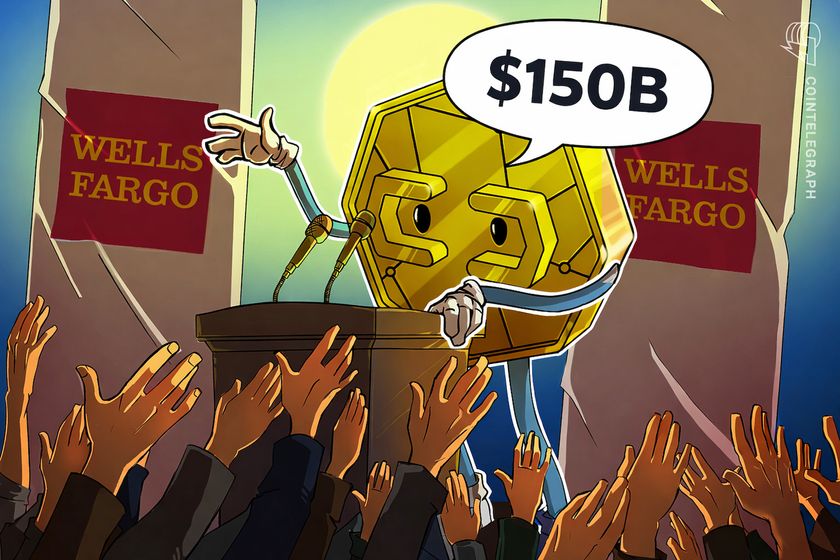 A Wells Fargo strategist said bigger US tax refunds may revive retail risk-taking by late March, potentially sending fresh cash into Bitcoin and momentum stocks. US tax filers may see bigger refunds in 2026 compared with previous years, a development one Wall Street strategist said may boost risk appetite for digital assets and tech stocks preferred among retail investors. In a note cited by CNBC, Wells Fargo analyst Ohsung Kwon said the coming refund wave may help bring back the so-called “YOLO” trade, with as much as $150 billion potentially flowing into equities and Bitcoin (BTC) by the end of March. Kwon said the extra cash could be most visible among higher-income consumers. “Speculation picks up with bigger savings…we expect YOLO to return,” wrote Wells Fargo analyst Ohsung Kwon in a Sunday note seen by news outlet CNBC. “Additional savings from tax returns, especially for the high-income consumer will flow back into equities, in our view,” he added. Read more
 -
Cointelegraph.com - 10:24 Feb 18, 2026
 US spot Bitcoin ETFs continue to see slowing outflows as investors and analysts examine Q4 2025 filings showing which institutions bought and sold crypto ETFs. US spot Bitcoin exchange-traded funds (ETFs) posted $104.9 million in net outflows on Tuesday in the first trading session this week. Total trading volume in spot Bitcoin (BTC) ETFs fell to just over $3 billion, down nearly 80% from a record $14.7 billion on Feb. 5, reflecting a continued slowdown in trading activity, according to SoSoValue data. The outflows came as another round of institutions reported their Bitcoin ETF holdings for the fourth quarter of 2025, with Jane Street ranking as the second-largest buyer of BlackRock’s iShares Bitcoin ETF (IBIT) in Q4, buying $276 million. Read more
 -
Cointelegraph.com - 08:47 Feb 18, 2026
 A new SEC filing shows Peter Thiel-linked Founders Fund entities now own zero ETHZilla shares, after disclosing a 7.5% stake in 2025. Billionaire tech investor Peter Thiel’s Founders Fund has fully exited Ether treasury company ETHZilla, according to a Tuesday filing with the United States Securities and Exchange Commission (SEC). Entities linked to Thiel now report owning zero shares in the company in a 13G amendment filed on Tuesday, after disclosing a 7.5% stake on Aug. 4, 2025. At that time, the group beneficially owned 11,592,241 shares of what was then known as 180 Life Sciences Corp., representing 7.5% of the 154,032,084 shares outstanding and worth about $40 million based on trading at around $3.50 per share in early August. Read more
 -
Cointelegraph.com - 06:16 Feb 18, 2026
 Kalshi is looking to have Nevada’s lawsuit heard in federal court, again asserting it is subject only to federal commodity exchange laws. The US state of Nevada has sued Kalshi after the prediction market company lost its court challenge to stop the state’s regulator from taking action over its sports prediction markets. The US Court of Appeals for the Ninth Circuit on Tuesday denied Kalshi’s bid to stop Nevada’s gaming regulator from taking action on its sports event contracts, removing a block on the regulator launching a civil suit against the company. After the decision, the Nevada Gaming Control Board promptly filed a civil enforcement action in state court against Kalshi, which it said sought to block the company “from offering unlicensed wagering in violation of Nevada law.” Read more
 -
Cointelegraph.com - 06:10 Feb 18, 2026
 Multiple technical, onchain and exchange-traded product data points suggest $1.12 was the generational bottom for XRP. Is it time for a trend reversal? XRP (XRP) recovered 50% to a high of $1.67 from its 15-month low of $1.12 reached on Feb. 6. While the altcoin’s intraday price of $1.43 remains more than 60% below its multi-year high of $3.66, several metrics suggest that the local low at $1.12 could be the new bottom with XRP price set for a sustained recovery. Key takeaways: XRP supply on exchanges has dropped to a five-year low as holders moved tokens to self-custody, possibly signaling reduced selling pressure. Read more
 -
Cointelegraph.com - 05:50 Feb 18, 2026
 The rewards model follows months of criticism that too few Pump.fun traders were breaking even on the platform, let alone profiting. Solana-based memecoin launchpad Pump.fun has rolled out a new feature that shifts rewards toward memecoin traders rather than its deployers — a tweak to its fee model that once generated over $15 million in a single day at its peak. In a post to X on Tuesday, Pump.fun said the platform’s memecoin creators can now decide whether a token “truly deserves” Creator Fees, or whether it’s best to redirect rewards to traders engaging with the token through “Cashback Coins.” Pump.fun’s original model features Creator Fees, giving token creators 0.3% of all fees generated by the tokens they launch. Read more
 -
Cointelegraph.com - 05:31 Feb 18, 2026
 Arthur Hayes warns that AI-related job losses will spark a credit crisis, forcing central banks to print money, which will drive Bitcoin to new all-time highs. The divergence between Bitcoin and tech stocks is a warning sign of a potential artificial intelligence-driven credit crisis that could lead to more central bank money printing, says Arthur Hayes. “Bitcoin is the global fiat liquidity fire alarm. It is the most responsive freely traded asset to the fiat credit supply,” said the crypto entrepreneur in his latest blog post on Wednesday. Hayes went on to caution that the recent divergence between Bitcoin (BTC) and the tech-heavy Nasdaq 100 Index “sounds the alarm that a massive credit destruction event is nigh.” Read more
 -
Cointelegraph.com - 03:30 Feb 18, 2026
 Two more ETF issuers have filed prospectuses for six US election prediction market ETFs, allowing investors to gain exposure to election outcomes. Exchange-traded fund issuers Bitwise and GraniteShares have filed with the US Securities and Exchange Commission to launch funds tied to event contracts on the outcome of US elections. Bitwise filed a prospectus on Tuesday for a new lineup of ETFs branded PredictionShares, comprising six prediction-market-style ETFs listed on NYSE Arca. The first two funds will pay out if either a Democrat or a Republican wins the US presidential election in November 2028. The next two will pay out if either Democrats or Republicans win the Senate in November 2026, and the final two if either party wins the House. Read more
 -
Cointelegraph.com - 01:27 Feb 18, 2026
 The ZORA token gained 6.2% to $0.022 over the last 24 hours as Zora announced its new attention markets product. Decentralized SocialFi platform Zora has launched its new attention markets platform on Solana, allowing traders to speculate on which buzzwords, hashtags, trends and topics will go viral online. “Trade what’s trending. Take positions on any topic, idea, meme, or moment before it breaks,” Zora’s newly launched platform states. One of Zora’s founders, Jacob Horne, said on Tuesday that it costs 1 Solana (SOL), currently $85, to deploy a “Trend,” aimed at disincentivizing spam. Trends have no creator rewards. Read more
 -
Cointelegraph.com - 23:09 Feb 17, 2026
 Ether adoption grows as major endowments shift capital, BlackRock launches a staking ETF and Ethereum's real-world asset dominance highlights TradFi investor interest. Key takeaways: Institutional sentiment is shifting toward ETH as elite funds reallocate capital from Bitcoin to Ether ETFs. BlackRock’s ETH ETF pairs secure staking with a low 0.25% fee, creating a major win for mainstream crypto access. Read more
 -
Cointelegraph.com - 21:50 Feb 17, 2026
 While still subject to final approval, the regulator's nod would enable Bridge to offer stablecoin and digital asset services to businesses. Stablecoin platform Bridge, owned by the payments processor Stripe, said it had received conditional approval to operate as a federally chartered national trust bank under the US Office of the Comptroller of the Currency (OCC). In a Tuesday notice, Bridge said it had received conditional approval from the banking regulator, allowing the company to “operate stablecoin products and services under direct federal oversight” once fully approved. Bridge said the charter would allow it to offer custody of digital assets, issue stablecoins and manage stablecoin reserves. “Our compliance framework already positions Bridge to be GENIUS ready,” said the company, referring to the stablecoin bill signed into law in July 2025. “Now achieving a national trust bank charter will provide our customers the regulatory backbone they need to build with stablecoins confidently and at scale.” R...
10245 items